
Brain Health Framework: The 5 Dimensions Explained
The 5 Dimensions of Brain and Mental Health
In this conversation, Dr. Christine Sauer explains the 5‑dimensional framework for understanding brain health, mental health, and wellbeing in a conversation with Dave Sherwin, Founder and Owner of Dirobi.com.
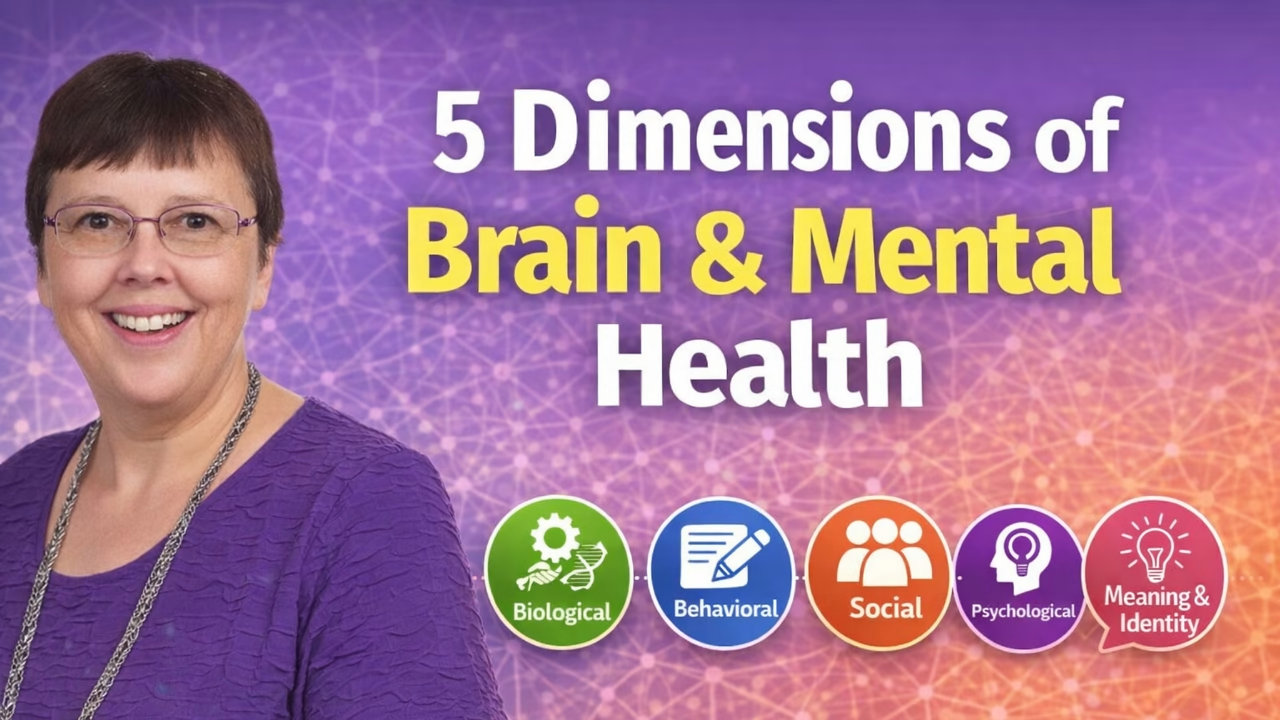
Click to play
Brain health is not just about the brain. It emerges from the interaction between biology, psychology, behavior, social context, and meaning. The 5D framework offers a way to understand brain health without oversimplification — and without reducing human experience to symptoms or diagnoses.
What is Brain Health in 5 Dimensions?
It is a whole‑person framework to help us understand brain health, mental health, and wellbeing
Why brain health needs a broader framework
When people talk about brain health, they often mean memory, focus, or aging.But the brain does far more than process information.
Your brain shapes:
- how you experience emotions,
- how you respond to stress,
- how well you sleep,
- how you connect with others,
- and how you make meaning of your life.
Trying to understand brain health through a single lens — nutrition alone, psychology alone, or lifestyle alone — misses how deeply interconnected these systems are.
That’s why I use a 5‑dimensional (5D) framework.
The 5 Dimensions of Brain Health
The 5D framework is not a treatment model.It is an educational way of thinking that helps organize complex information without reducing it to one cause or one solution.
1️⃣ Biological Dimension
(Brain, body, and physiology)
This dimension includes:
- brain structure and function,
- nervous system regulation,
- inflammation,
- metabolic and hormonal influences,
- nutrient availability.
Research consistently shows that brain function is influenced by sleep quality, metabolic health, immune activity, and nutrient status — not in isolation, but together.
👉 Related reading:
2️⃣ Psychological Dimension
(Thoughts, emotions, patterns)
This dimension looks at:
- emotional processing,
- stress responses,
- learned coping strategies,
- perception and interpretation.
Thought patterns do not exist separately from biology — they are shaped by nervous system state, past experiences, and current context.
Understanding this helps move away from self‑blame and toward curiosity.
👉 Related reading:
Start With One Gentle Next Step

If your sparkle feels dim right now, you do not need to fix your whole life today.
You only need a next step.
My free guide, 7 Steps to Climb the Mountain of Life, helps you pause, reflect, and find a gentle next step when life feels steep, foggy, or overwhelming.
3️⃣ Behavioral Dimension
(Habits and daily choices)
Behavior is where theory meets real life.
This dimension includes:
- sleep habits,
- movement,
- eating patterns,
- stimulation and recovery,
- boundaries with technology and work.
Small, repeated behaviors can either support or strain brain function over time — often without being noticed until burnout or fatigue appears.
👉 Related reading:
- Power Sleep Habits – Why Are You Sick, Fat and Tired?
- The Weirdest Strategy to Teach Your Brain to Love Exercise
4️⃣ Social Dimension
(Relationships and environment)
Humans are social beings. Brain health is influenced by:
- relationships,
- community,
- work culture,
- chronic stressors,
- safety and belonging.
Social isolation and chronic stress are associated with changes in brain function and emotional regulation. This is not a personal failure — it is biology responding to context.
👉 Related reading:
5️⃣ Meaning & Identity Dimension
(Values, purpose, narrative)
This is the dimension most often ignored — and most often felt.
It includes:
- sense of purpose,
- identity,
- values,
- life narrative,
- existential questions.
When meaning is lost, the brain does not function the same way. Motivation, resilience, and emotional regulation are all affected.
👉 Related reading:
Why the 5D framework matters
Many health approaches fail because they:
- search for one root cause,
- separate mind from body,
- ignore context,
- or promise simple fixes for complex experiences.
The 5D framework:
- integrates instead of fragmenting,
- respects biological reality and human meaning,
- supports better questions rather than false certainty.
This is especially important in conversations about mental health and mood, where oversimplification can increase shame rather than understanding.
👉 Related reading:
How this framework supports better decisions
The goal of understanding brain health in 5 dimensions is not control — it is orientation.
This perspective can help you:
- recognize which dimensions may be under strain,
- prepare better questions for professionals,
- avoid one‑size‑fits‑all solutions,
- and approach change with compassion rather than pressure.
Where supplements, courses, and tools fit (important)
Biology matters — but it is only one dimension.
When supplements are discussed on this site, they are always:
- presented in an educational context,
- framed as supportive, not curative,
- placed within the broader 5D picture.
👉 For evidence‑based supplement education, see: Supplements for Mental Health
👉 For guided learning and integration: Courses and programs will live after education — not instead of it.
Who this framework is for — and who it’s not
This framework is for you if:
- you want to understand brain and mental health without oversimplification,
- you are tired of “one cause, one fix” narratives,
- you value science and meaning.
This framework is not:
- a diagnostic tool,
- a treatment plan,
- a substitute for professional care.
Questions to reflect on or discuss with a professional
- Which dimension feels most strained right now?
- What has my nervous system adapted to over time?
- Where am I seeking control instead of understanding?
- What kind of support would be appropriate at this stage?
Educational disclaimer
This content is for educational purposes only. It does not provide medical advice, diagnosis, or treatment. Always consult qualified health professionals regarding individual concerns.
FAQ - Frequently Asked Questions
A brain health framework is a way of organizing how we understand brain function and wellbeing. Instead of focusing on one factor (such as diet, mindset, or sleep), a framework looks at how multiple dimensions interact to influence how the brain supports thinking, emotions, and daily life.
The 5D framework looks at brain health through five interacting dimensions:
- Biology (brain, body, physiology)
- Psychology (thoughts, emotions, stress responses)
- Behavior (habits, sleep, movement, daily choices)
- Social context (relationships, environment, culture)
- Meaning & identity (values, purpose, life narrative)
No single dimension works in isolation.
No. The 5D framework is an educational model, not a medical or psychological treatment. It is designed to support understanding, reflection, and better questions — not to diagnose or replace professional care.
Brain health refers to how well the brain functions biologically and physiologically across the lifespan. Mental health describes how thoughts, emotions, and stress are experienced. They are closely connected, but not identical — and both are influenced by lifestyle, relationships, and meaning.
Yes. Research shows that sleep, stress, social connection, and sense of purpose are all associated with how the brain functions over time. Meaning and identity influence motivation, resilience, and nervous system regulation — which in turn affect brain health.
This framework is especially helpful for people who feel stuck with oversimplified explanations and want a broader, more compassionate way to understand brain health, mood, and wellbeing.
Educational note: These answers are for informational purposes only and do not replace advice from licensed health professionals.
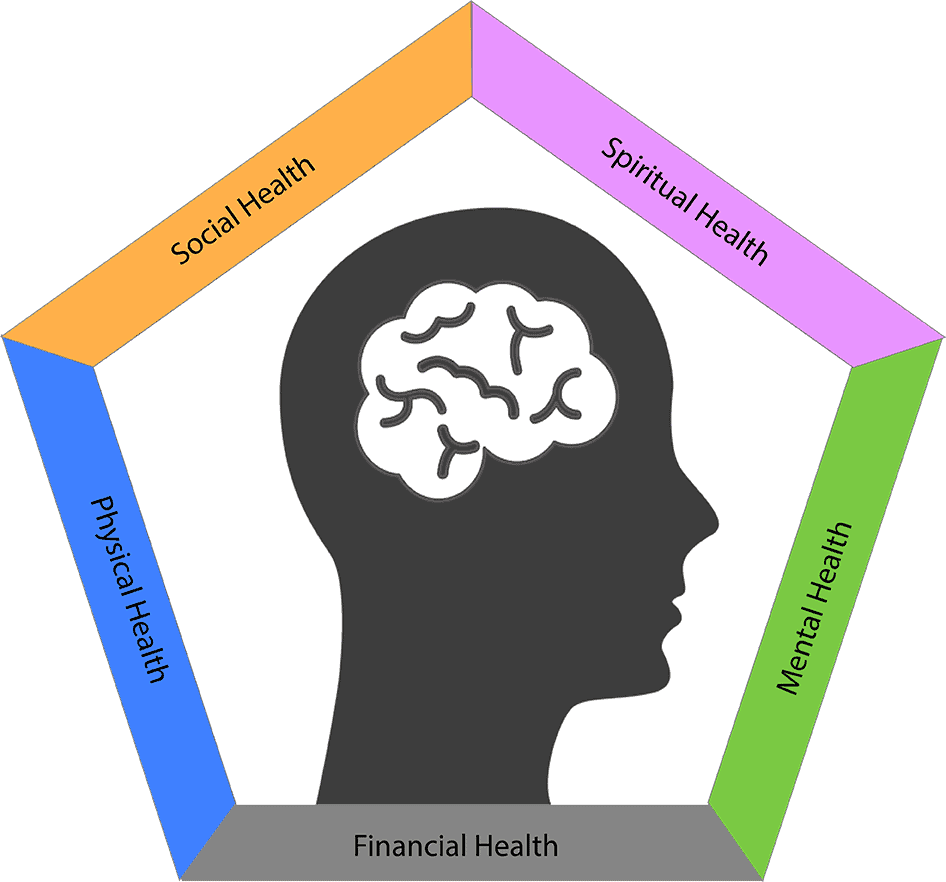
The overall functioning of your brain determines the quality of your decisions and these in turn determine your success in life and work.
Are you aware that every moment, by everything you do, you are changing your brain – and changing your life – for the better or the worse...?
Neuroplasticity does not mean some abstract, complicated or weird process, but it means that your brain adapts to all you do and changes itself constantly.
The good news: You are in control of your brain and your life.
If you eat a donut, your brain changes. If you choose a salad, your brain changes again.
Your choices in all areas determine the trajectory of your life – for the better or the worse.Only if we address and solve issues in all 5 Dimensions of Brain Health – and really, life as a whole, can we be successful – whatever success may mean to us.
We need to strategically assess all 5 dimension, then address all issues in each of those. Not just try this approach, try that – whatever we see on google, what’s “in” in our circle, what our busy eye spots in a magazine or what a friend or colleague tells us “will work”.
What are the 5 dimensions of brain health?
The 5D framework looks at brain health through five interacting dimensions:
- Biology (brain, body, physiology, anatomy)
- Psychology (thoughts, emotions, stress responses)
- Behavior (habits, sleep, movement, finances, daily choices)
- Social context (relationships, environment, culture)
- Meaning & identity (values, purpose, spirituality, goals, life narrative)
No single dimension works in isolation.
Last Updated on September 7, 2026 by Dr. Christine Sauer