
The Five Dimensions of Human Health
An integrative framework for understanding brain, mental, and whole‑person health
Human health is often reduced to isolated symptoms, diagnoses, or single interventions.
But real health — especially brain and mental health — is shaped by multiple, interacting systems.
The Five Dimensions of Human Health is an educational framework that helps make sense of this complexity. Rather than focusing on one cause or one solution, it explores how different dimensions of human experience influence one another over time.
This framework is designed to support:
- Clearer thinking about health information
- More informed conversations with healthcare professionals
- A deeper understanding of why “one‑size‑fits‑all” approaches often fall short
It is not a diagnostic or treatment model, but a way of organizing evidence‑informed knowledge about human health.
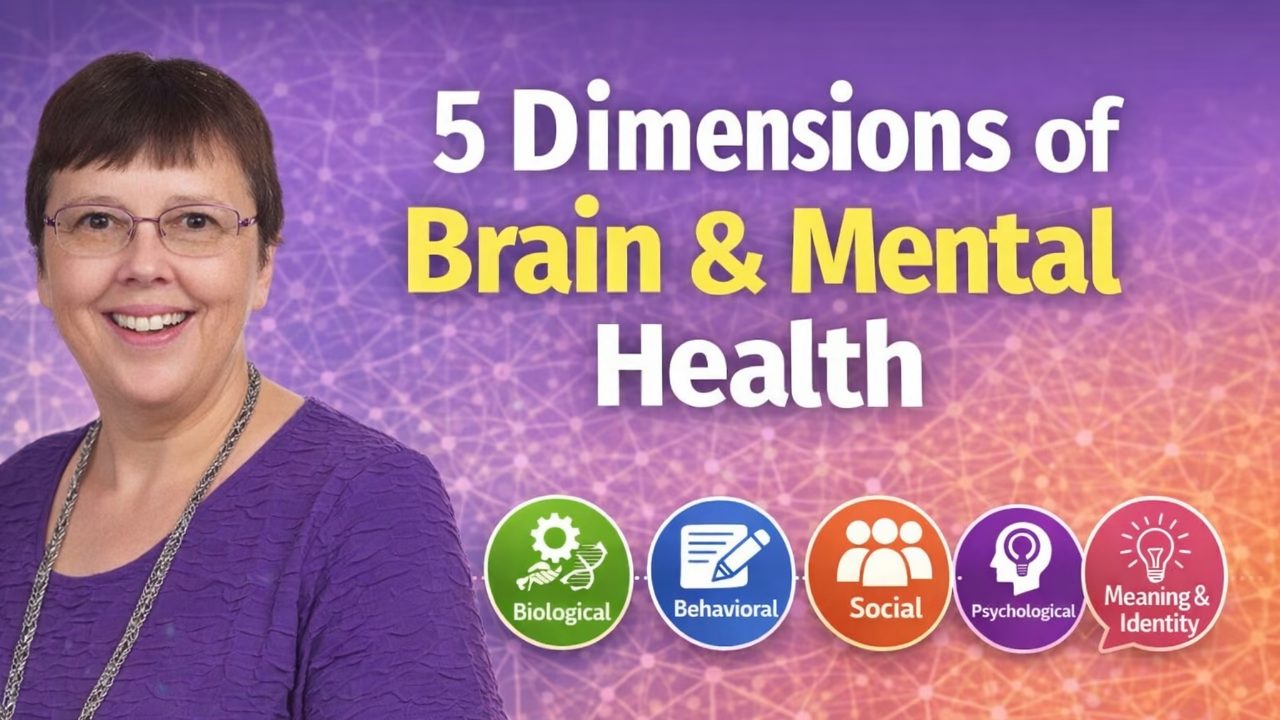
What Are the Five Dimensions of Human Health?
The Five Dimensions of Human Health describe five interrelated domains that together shape how we feel, function, and adapt:
- Biological (Physical & Brain Health)
- Psychological (Mental & Emotional Health)
- Lifestyle & Behavioral
- Social & Environmental
- Meaning, Purpose & Values
Each dimension contributes important context. None exists in isolation.
When one dimension is under strain, others are often affected — sometimes subtly, sometimes profoundly.
1. Biological Dimension
The body and brain as living systems
The biological dimension includes:
- Brain structure and function
- Nervous system regulation
- Genetics and epigenetics
- Inflammation, metabolism, and nutrient status
This dimension is often where conventional medicine places most of its focus — and for good reason. Biology matters.
At the same time, biological processes are continuously influenced by thoughts, behaviors, relationships, and environments. Understanding biology as responsive rather than fixed is a key part of integrative health thinking.
→ Related foundation: Brain Health Foundations
2. Psychological Dimension
Thoughts, emotions, and internal experience
The psychological dimension includes:
- Mood and emotional regulation
- Stress perception and coping patterns
- Cognitive habits and beliefs
- Psychological resilience and vulnerability
Mental health is not simply the absence of a diagnosis. It reflects ongoing interactions between brain function, lived experience, and meaning‑making.
Educational approaches to this dimension emphasize:
- Awareness rather than labels
- Skills rather than blame
- Context rather than reductionism
→ Related foundation: Mental Health Foundations
→ Related focus area: Depression & Mood Support
3. Lifestyle & Behavioral Dimension
Daily inputs that shape long‑term outcomes
Lifestyle factors act as biological signals to the brain and body.
This dimension includes:
- Sleep and circadian rhythms
- Nutrition and hydration patterns
- Physical activity and movement
- Substance use and recovery
- Cognitive and digital habits
Small, repeated behaviors can have outsized effects over time, especially on brain and mood health.
Understanding lifestyle as information — not morality — helps shift conversations away from guilt and toward informed choice.
4. Social & Environmental Dimension
The systems we live within
Humans are social beings, shaped by:
- Relationships and social support
- Family systems and cultural context
- Work environments and chronic stressors
- Physical environments (light, noise, toxins, access to nature)
Social and environmental factors can either buffer stress or amplify it. They also influence how accessible and sustainable health‑supportive behaviors are in real life.
This dimension reminds us that health is not solely an individual responsibility.
5. Meaning, Purpose & Values Dimension
How we make sense of our lives
This dimension includes:
- Sense of purpose or direction
- Personal values and identity
- Belief systems and worldviews
- Experiences of connection, hope, or coherence
Research suggests that meaning and purpose are associated with:
- Psychological resilience
- Health‑related behaviors
- Quality of life, especially during adversity
This dimension is often overlooked in scientific discussions — yet it powerfully shapes motivation, engagement, and long‑term wellbeing.
Why a Multi‑Dimensional Framework Matters
Single‑factor explanations can be appealing, but they rarely reflect biological or human reality.
A five‑dimensional perspective helps:
- Reduce oversimplification
- Avoid false cause‑and‑effect assumptions
- Explain why the same intervention works differently for different people
- Support more nuanced, compassionate health conversations
This framework is especially useful for understanding brain health, mental health, and mood, where complexity is the rule rather than the exception.
How This Framework Is Used on This Site
Across docchristine.com, the Five Dimensions of Human Health serve as a conceptual map:
- Foundational pages explore each dimension in depth
- Educational articles examine how dimensions interact
- The 5D Wellness Science section focuses on systems‑level thinking and emerging research
You’ll see this framework referenced throughout the site as a way to connect topics — not to prescribe solutions.
A Note on Scope & Safety
All content presented through this framework is:
- Educational in nature
- Evidence‑informed where possible
- Not intended to diagnose, treat, or replace professional medical or mental healthcare
If you have health concerns, decisions should always be made in collaboration with qualified healthcare professionals who understand your individual context.
Where to Go Next
If you’re new here, the best place to start is:
→ Start Here: An Introduction to Brain & Mental Health on This Site
You may also explore:
Each builds on the same integrative, multi‑dimensional perspective.
Download the free guide:
7 Steps to Climb the Mountain of Life
Get the guide and take one gentle next step today.
You’ll also receive occasional educational emails from Dr. Christine Sauer about emotional wellness, resilience, brain health, and Recover Your Sparkle. You can unsubscribe anytime.