The Mountain of Life: A Map for Finding Your Way When Life Feels Hard
You may not be failing.
You may be trying to climb while tired, hurt, confused, or carrying more than people can see.
By Dr. Christine Sauer, retired German-trained physician, educator, and author.
KEY IDEA
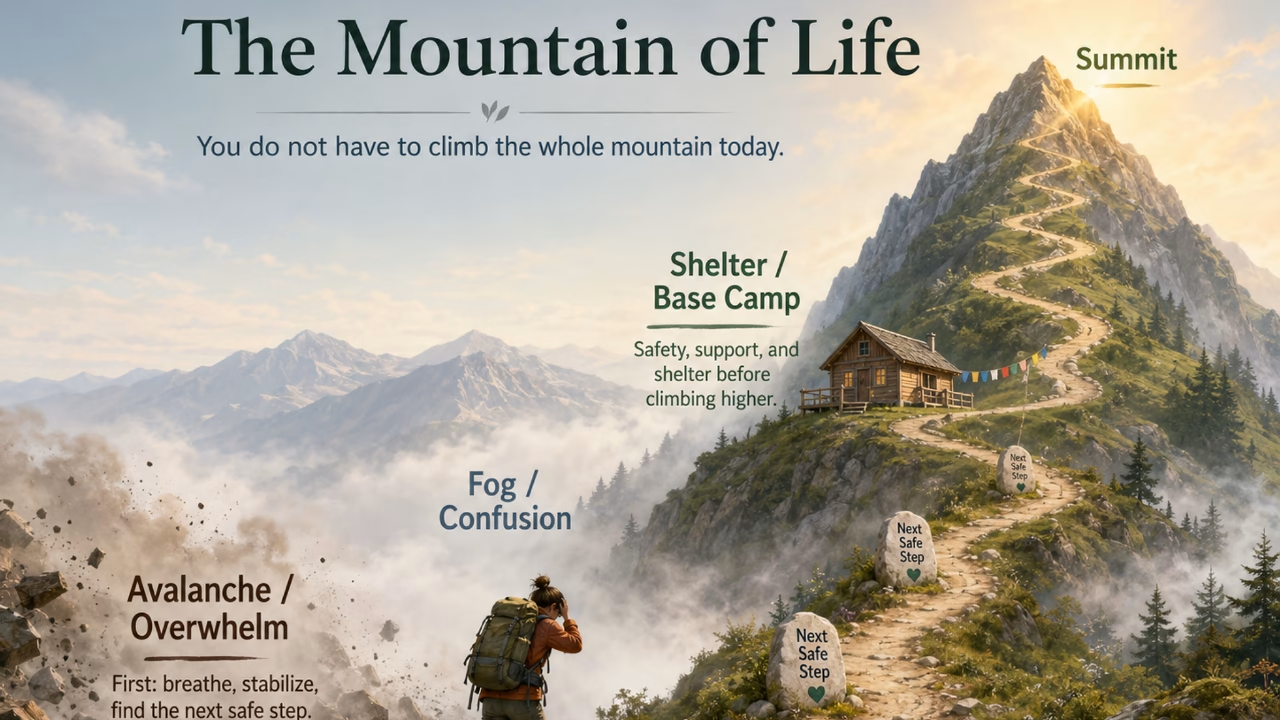
You do not have to climb the whole mountain today. You only need enough light to see the next true step.
What Is the Mountain of Life?
The Mountain of Life is a way of making sense of the life you are living: the ground beneath your feet, the burdens you carry, the people beside you, and the direction that matters to you.
It gives you a language for asking, “Where am I now, and what would help here?”
Some stretches are steep. Others offer a sheltered place to rest. A path that once suited you may no longer fit after illness, loss, a change in responsibilities, or a discovery about what you actually want.
You can change your route without declaring the whole journey a mistake.
This mountain is personal. We do not all begin with the same equipment, resources, health, or support.
Comparing your pace with someone whose backpack is lighter can hide the most important facts about your situation.
In Recover Your Sparkle, the mountain offers orientation, not a scorecard. A higher position does not make someone a better person.
A difficult day does not lower your worth. There is no summit at which you become perfectly healed, permanently happy, or finished with being human.
You may not need a bigger effort right now.
You may need different support, a lighter load, or somewhere safe to stop.
A useful distinction: the Mountain of Life is a metaphor for reflection, not a diagnosis or a treatment plan. It can help you describe your experience and ask better questions. It cannot determine the cause of symptoms or replace individualized professional care.
If you need help and support today, please click here to find resources.
The Mountain and the Weather: Why Conditions Matter
Imagine walking a familiar trail on a clear morning. Now imagine the same trail in driving rain, with poor visibility and cold hands. The distance has not changed, yet the walk asks something very different of you.
Life can feel like that. A responsibility you usually manage may feel enormous during grief, uncertainty, exhaustion, or a difficult period at home. Judging yourself only by yesterday’s pace misses today’s conditions.
The terrain is what you are navigating
The terrain includes your circumstances and the practical realities of your life. Caring for a family member, managing a limited income, adapting to disability, or deciding what comes after a job ends each presents different ground. Some obstacles can be changed. Others require accommodation, shared responsibility, or a different route.
The weather is what the journey feels like today
Weather gives us language for conditions such as uncertainty, emotional heaviness, pressure, or moments of relief. “It feels foggy today” can be easier to say than “I cannot see how any of this will work out.” It describes an experience without turning that experience into your whole identity.
The metaphor has limits. Depression, anxiety, chronic illness, and other health conditions are not simply passing moods. Some difficulties persist, recur, or need sustained care. Calling something a storm must never become a reason to tell someone to wait it out, cheer up, or try harder.
Respond to the conditions instead of arguing with them
You do not have to like the weather to account for it. You can ask what would make the next part of the day more manageable: fewer commitments, a practical conversation, professional advice, company, or rest.
For example, a caregiver who slept poorly may need to ask a sibling to handle one errand before making another ambitious plan. Someone facing a major decision may need reliable information rather than another motivational message. The useful response depends on the actual difficulty.
A brighter hour is worth enjoying, even when the larger problem remains. A harder hour does not erase what you have learned. Neither is a verdict on the future.
Where Are You on the Mountain Today?
You may recognize more than one of these places. They are not stages you must complete in order. Choose the description that helps you understand what you need, and leave the rest for another day.
Avalanche: When You’re Feeling Overwhelmed by Life
An avalanche describes the experience of being overwhelmed by more than you can reasonably manage: a loss, frightening news, accumulating responsibilities, or several problems landing together. From inside it, even deciding what to do first can feel difficult.
This is a time to reduce the demands of the moment. What needs attention now? What can wait? Who can help with one concrete task? A friend who brings food, makes a call with you, or sits beside you may be more useful than a list of twenty improvements.
If your safety or health is at risk, seek appropriate urgent or professional help. A reflection exercise is not the right tool for every situation. The Help and Support page offers a starting point for finding help.
Ask: What would make the next hour safer or less overwhelming?
Fog: When You Cannot See the Way Ahead
Fog can feel like uncertainty about your future, confusion about your options, or the sense that everyone else knows where they are going. You may be able to see the problem but not a route through it.
In fog, a smaller field of view can help. Separate what you know from what you are assuming. Identify one question that needs an answer. You do not need to decide your entire future before asking about a service, checking a fact, or talking with someone trustworthy.
If the fog includes feeling unlike yourself, How to Feel Like Yourself Again explores that experience more deeply.
Someone considering a work change might begin by finding out what a different role actually involves. Gathering information can be a genuine step, even when no final decision follows that day.
Ask: What is the next piece of information or support I need?
The Heavy Backpack: What Are You Carrying?
Your backpack may contain real responsibilities, losses, expectations, old fears, and rules about what a “good” person should manage alone. Some of its weight was never yours to choose.
Lightening it does not mean abandoning people or pretending obligations disappear. It means examining the load honestly. Which responsibilities are yours? Which could be shared? Which expectation could be renegotiated? What help is missing?
A parent may still need to care for a child while letting go of the belief that every meal, celebration, and household task must be perfect. A person living with illness may need practical assistance rather than another instruction to become more resilient.
Ask: What is one burden I could share, simplify, or discuss?
The Map and the Team: Finding Support That Fits
A map helps you understand possible routes. A team helps you navigate them. Neither should require you to surrender your voice.
Different needs call for different kinds of help. A trusted friend can listen. A qualified health professional can assess symptoms and discuss care. A practical adviser may help you understand finances, work, or available services. No single person needs to carry every role.
Good support leaves room for questions, informed choices, and your circumstances. If a suggested route is unaffordable, inaccessible, or unsuitable, that matters. The map needs to reflect the ground you are actually standing on.
Ask: Who is equipped to help with this particular part of the journey?
Shelter and Base Camp: Making Room to Rest
A sheltered place gives you room to pause, receive care, and consider what comes next. In everyday life, that might mean a quieter evening, an adjusted workload, a supportive appointment, or help with responsibilities that leave no room to recover.
Rest does not have to earn its place by producing a more productive person tomorrow. You are allowed to need it now. At the same time, “just rest” is not a complete answer when someone cannot afford time off or has nobody to share the care work. Those practical barriers deserve attention.
Returning to base camp, taking a gentler route, or choosing level ground can be a wise response. The direction that protects your well-being may not look impressive from outside.
Ask: What would a realistic place of shelter look like in my current life?
Trail Markers and Small Experiments: Learning as You Go
Trail markers are the small pieces of information that help you notice what supports you. Perhaps a brief conversation leaves you feeling less alone. Perhaps a particular commitment consistently takes more than you can give.
A small experiment turns a question into something you can observe. Try protecting one manageable break, asking for help with one task, or making room for a meaningful activity. Notice what happens without demanding a transformation.
If an experiment does not help, you have learned something about the fit. Self-compassion when things go wrong can make it easier to look honestly at what happened. You can adjust it. Keep these experiments within safe everyday choices; changes to medical treatment belong in conversation with your qualified clinician.
Ask: What small, safe change could I try, and what would I notice?
The Bridge Path: From Survival Toward Participation
The Bridge Path is the small movement between survival and fuller participation in life. It makes room for contribution, identity, confidence, work, learning, creativity, or service when much of your energy has been going into getting through the day.
This is not a demand to become productive again overnight. Support, margin, health, and structure may need attention before one meaningful piece of life can return. Participation can be modest and still matter.
You might explore a course without enrolling, return to a skill you once enjoyed, make something small, or test a manageable way to contribute. The point is to find a fit, with permission to adjust or stop. Paid work is one possible form of participation, not the measure of a person's value.
Ask: What is one small way I could reconnect with a part of myself that I miss?
A Higher Horizon: Seeing Possibility Again
A higher horizon represents a wider view of what might still be possible. It might arrive as a new interest, a meaningful conversation, or the realization that the future need not look exactly like the past.
This does not require gratitude for what hurt you. You may still grieve what has changed. A quieter life, more honest boundaries, creative work, connection, or a sense of purpose can matter alongside that grief.
You do not have to turn every difficult experience into a lesson. Sometimes the next view simply lets you see another route, or remember something you care about.
Ask: What would I like to make room for, even if I cannot see the whole way there?
Finding Direction in Life: Choose Your Next True Step
You Do Not Need to Climb the Whole Mountain Today. One true step is all you need.
A next true step is an action that fits your reality, your values, and your capacity. It may be visible to nobody else. Making an appointment, asking a question, declining an extra responsibility, or admitting that you need support can all count.
Try this brief reflection in your own words. There is no need for a perfect journal entry.
- Name the conditions. What feels difficult today? What is happening around you?
- Name the load. What are you carrying that another person might not see?
- Name one support. Who or what could help with this specific need?
- Choose one manageable step. What can you do safely, or ask someone to help you do?
- Leave room to reconsider. When will you check whether that step helped?
For example: “I am overwhelmed by the week ahead. I am trying to manage three appointments and all the transport. I will ask whether someone can take one journey.” That is a useful plan. It does not need to become a complete life makeover.
If even one step feels beyond reach, the next conversation may be about getting more support. Your difficulty is information, not proof of failure.
For an optional companion resource, the World Health Organization’s illustrated guide, Doing What Matters in Times of Stress, offers practical exercises for coping with stress.
When You Are Ready: The 7 Steps to Climb the Mountain of Life
The Sparkle Path offers a fuller framework for reflection. Its seven letters are invitations you can return to, rather than a rigid sequence or a promise of recovery on a timetable.
- S — See Clearly: Notice where you are and what you are carrying.
- P — Purpose, Passion & Possibility: Reconnect with what matters and what may still be possible.
- A — Address the Sparkle Extinguishers: Identify what is draining you and what support could help.
- R — Recover and Rebuild: Give attention to the foundations that support everyday life.
- K — Keys to Emotional Resilience: Explore skills, relationships, and boundaries for difficult seasons.
- L — Live Daily With Sparkle: Make room for small moments of meaning and connection.
- E — Embrace Your Sparkling Future: Consider the life you want to move toward, at a pace that fits.
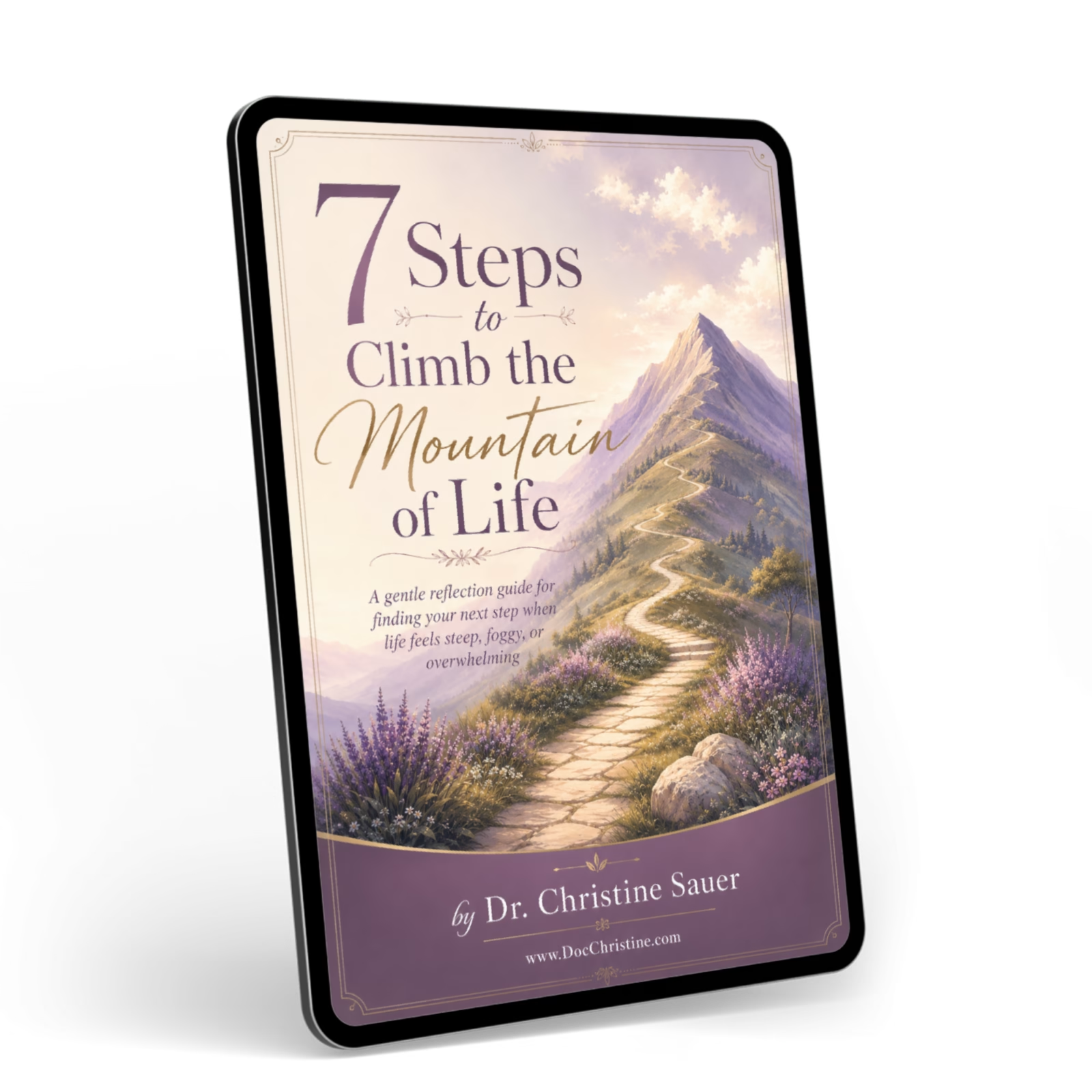
The free reflection guide gives you a gentle place to begin. You can work with one question and return to the others later.
Download the free guide:
7 Steps to Climb the Mountain of Life
Get the guide and take one gentle next step today.
Learn more about the guide and sign up on the next page.
You’ll also receive occasional educational emails from Dr. Christine Sauer about emotional wellness, resilience, brain health, and Recover Your Sparkle. You can unsubscribe anytime.
Explore the Mountain Through the Book and Podcast
Sometimes an explanation helps. Sometimes a story makes it easier to recognize something about your own life. These resources offer different ways to spend time with the Mountain of Life, without needing to do everything at once.
Continue your journey with Recover Your Sparkle
Understanding your emotions is one part of finding your way forward.
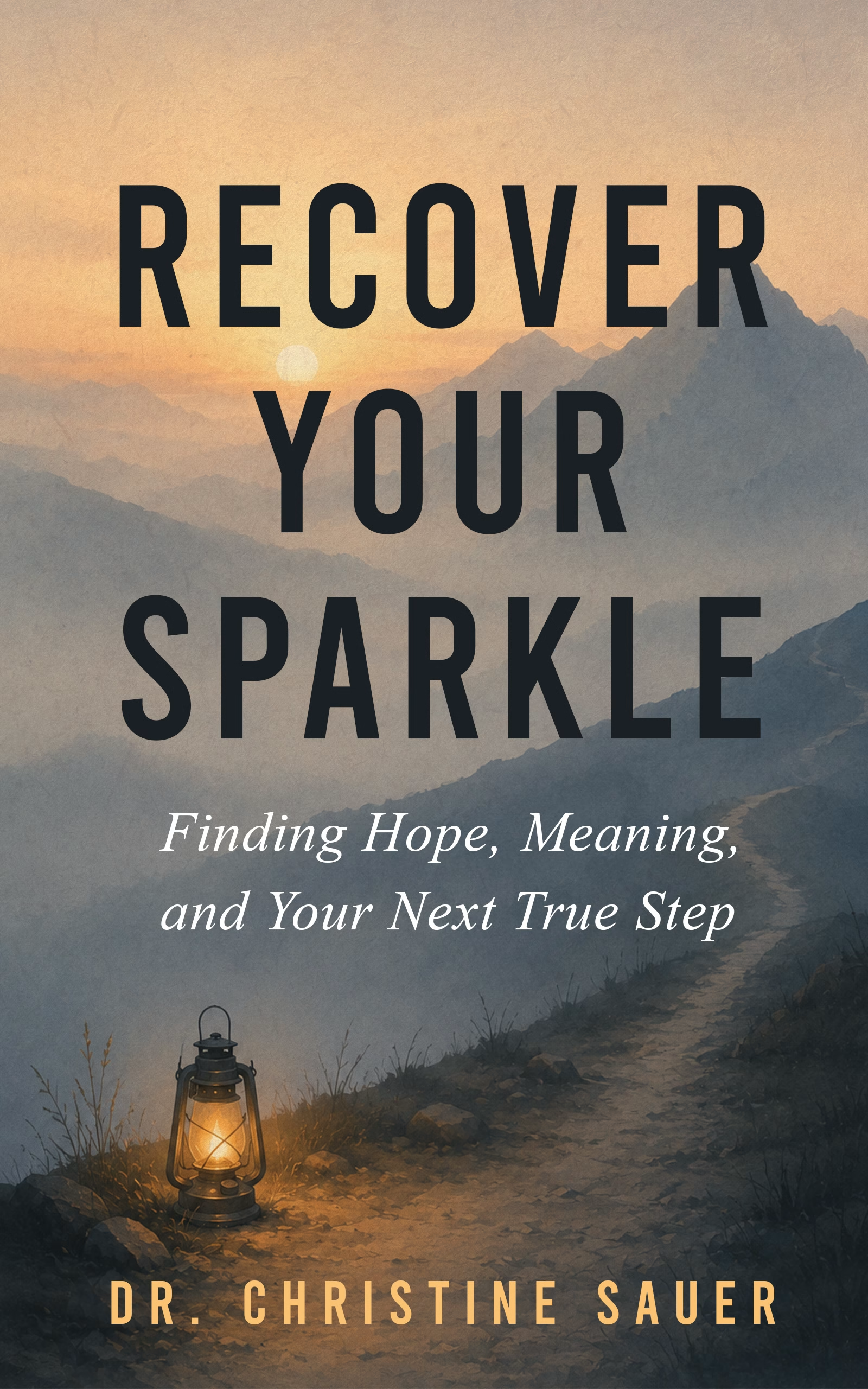
In Recover Your Sparkle, I use the Mountain of Life as a practical metaphor for moving through uncertainty, reconnecting with yourself, and discovering the next step that is true for you.
It is not about pretending that everything is fine. It is about finding hope, meaning, and possibility—even when the path has been difficult.
Learn more about the book →
The Recover Your Sparkle Podcast
A little company for your next true step
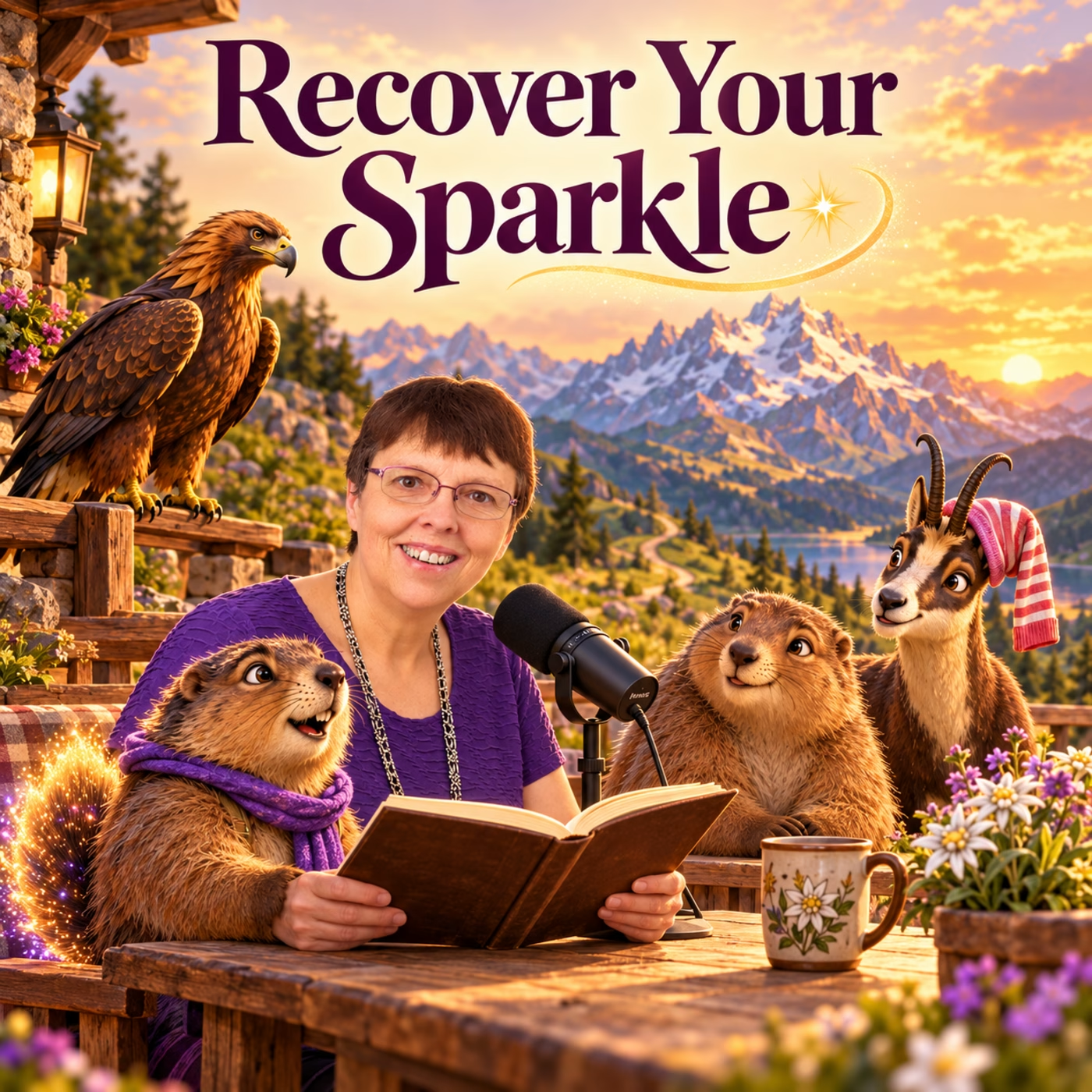
Join me, Dr. Christine Sauer, for stories, thoughtful reflections, and practical encouragement on the Mountain of Life. Sparkly and friends bring a little humour and perspective along the way.
Listen while you walk, settle in with a cup of tea, or simply take a quiet moment for yourself.
Explore Related Support
- Recover Your Sparkle: the wider approach to hope, meaning, and your next true step.
- Start Here: find a useful starting point among the available resources.
- Brain Health: explore the foundations that support the person making the journey.
- Gut-Brain Guide: another educational resource for understanding whole-person well-being.
- Sparkly’s Mountain Tales: stories of friendship, courage, and everyday challenges.
- Self-Compassion After Mistakes: the Marshmallow Experiment and a kinder way to respond when things go wrong.
Questions About the Mountain of Life
Begin with what matters to you now, rather than the goal you think you should have. You may discover that you are following an expectation that no longer fits. A conversation or a little reflection can help you name a more honest direction.
No. A smaller step makes room for your current circumstances. Your hopes can remain important while the pace, route, or support changes. You can also revise a goal when you learn it is no longer yours.
You do not have to wait alone for it to change. Persistent distress, symptoms, or difficulty managing daily life deserve appropriate support and assessment. The metaphor can help you start a conversation; it does not explain every cause or tell you which care you need.
No. This page and the guide are educational and reflective. They do not provide diagnosis, individualized treatment, or crisis care. If you are concerned about your health or safety, seek qualified help. If you are in immediate danger, contact local emergency services.
About Dr. Christine Sauer
Dr. Christine Sauer is a retired German-trained physician, educator, and author whose work brings together whole-person health, lived experience of illness and recovery, and the search for hope and meaning.
She created the Mountain of Life and Sparkle Path frameworks to help people find language for their experience and consider their next true step. Learn more about Dr. Christine Sauer.
You do not have to climb the whole mountain today. You only need enough light to see the next true step.