
The Gut-Brain Connection:
How Digestive Health Influences Mood, Anxiety, Stress, and Brain Function
Understanding the gut-brain connection can help you make sense of symptoms, reduce fear, and focus on practical foundations that support both digestive and mental health.
Quick Answers: What Is the Gut-Brain Connection?
If you're short on time, start here:
This article is educational and reflective in nature and is not medical advice. It cannot diagnose, treat, or replace care from your licensed healthcare professional. If you have severe, persistent, worsening, or concerning symptoms, please seek appropriate medical evaluation.
Have you ever felt butterflies in your stomach before an important conversation?
Lost your appetite during grief?
Or noticed that your digestion seems worse when life feels overwhelming?
Most people have experienced some version of this.
Yet many are still surprised to learn that the gut and brain are constantly communicating with each other.
For many years, health discussions tended to separate the body into compartments.
Digestive symptoms belonged to the gut.
Anxiety belonged to the mind.
Depression belonged to the brain.
Stress belonged to life.
But the body does not work in separate compartments.
Your digestive system, nervous system, immune system, hormones, sleep, stress response, emotions, and brain health are all connected.
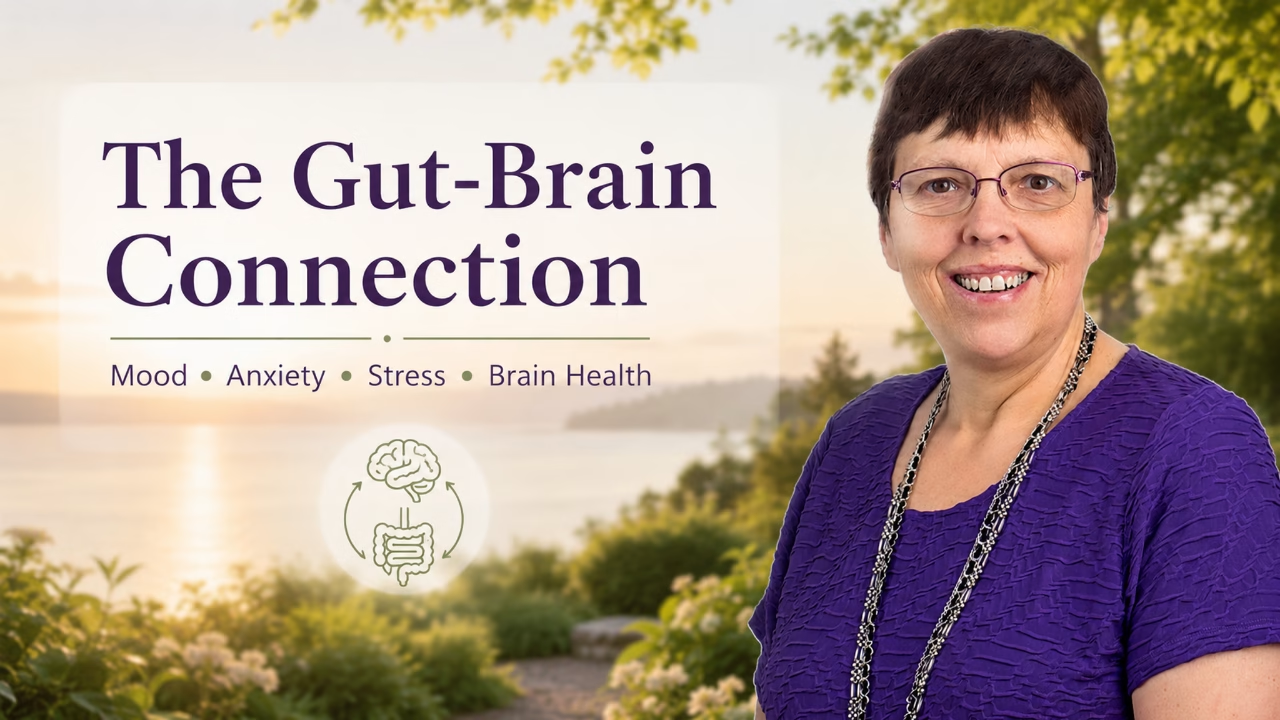
This does not mean every digestive symptom is caused by stress.
And it does not mean every mood problem begins in the gut.
It means the body functions as an integrated system. When one part of the system is struggling, other parts often feel the effects.
Understanding that connection can be surprisingly reassuring.
Because when we understand what is happening, we are often less afraid of it.
And understanding is one of the first steps toward healing.
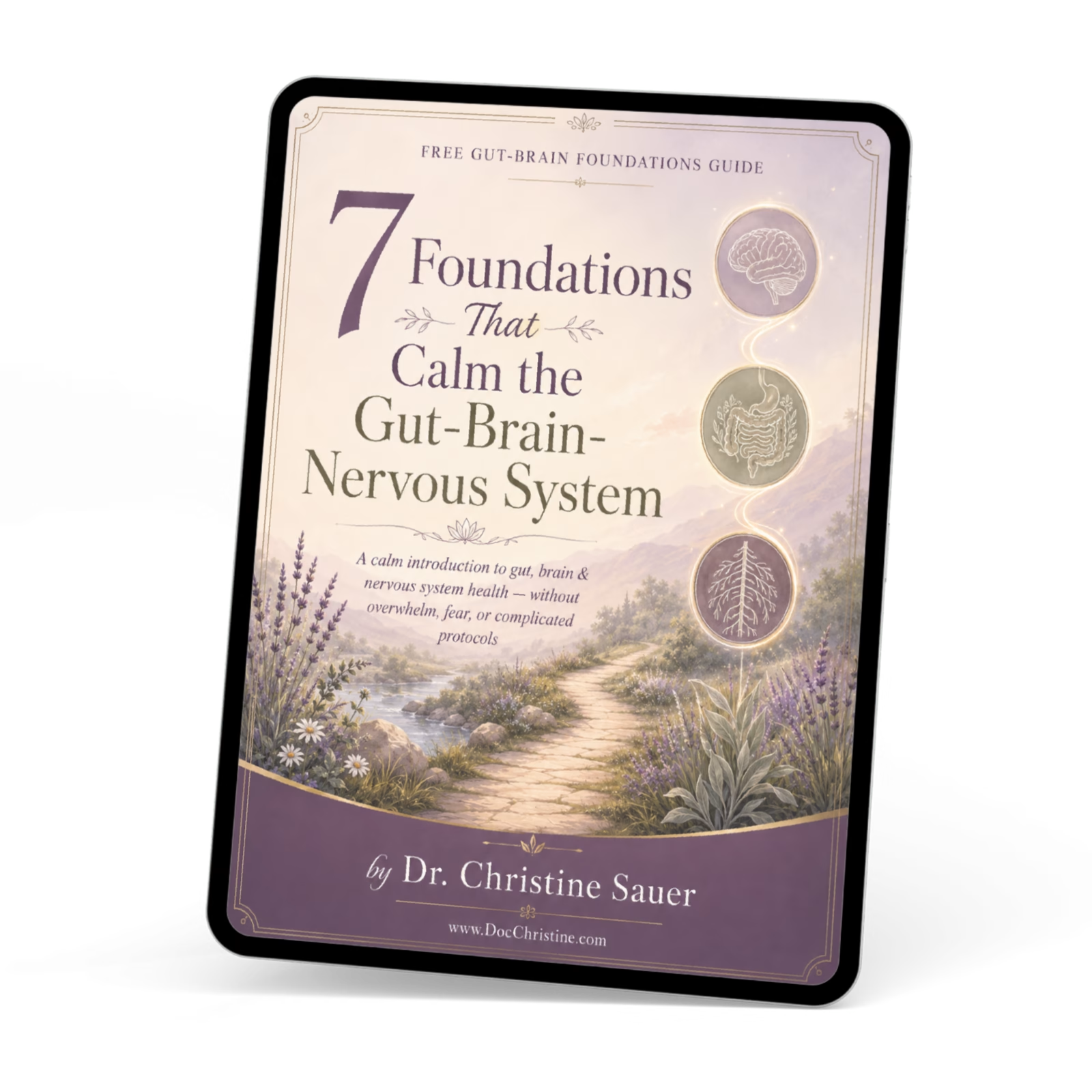
If this feels like the calmer approach you need, start with my free guide: 7 Foundations That Calm the Gut-Brain-Nervous System.
By Dr. Christine Sauer, MD, ND — physician & educator | Educational content only
Understanding Before Intervention
One of the most common mistakes people make when exploring gut health is rushing straight to solutions.
They start eliminating foods.
Buying supplements.
Trying detoxes.
Following social media advice.
Searching for the perfect protocol.
Sometimes they spend months or years trying to fix a problem they do not fully understand.
One of the core principles I teach is simple:
Understanding comes before intervention.
When you understand why stress affects digestion, why poor sleep influences mood, why inflammation can affect the entire body, and why the gut and brain communicate constantly, you can make better decisions without fear or overwhelm.
You do not need a PhD in neuroscience or gastroenterology.
You do not need to memorize hundreds of bacteria names.
You simply need enough understanding to make wise, practical decisions.
Because understanding the foundations often reduces fear.
And reducing fear can sometimes be part of healing itself.
What Is the Gut-Brain Connection?
The gut-brain connection refers to the ongoing two-way communication between your digestive system and your brain.
Your gut sends information to your brain.
Your brain sends information to your gut.
This conversation never really stops.
It happens through several interconnected pathways, including:
- the nervous system
- the vagus nerve
- the immune system
- hormones
- inflammation and immune signaling
- the gut microbiome
- blood sugar regulation
- nutrient availability
This communication helps explain why emotional stress can affect digestion.
It also helps explain why digestive problems can affect mood, energy, concentration, sleep, and emotional resilience.
Many people notice this connection without realizing it.
You may feel nauseated before an important event.
You may develop digestive symptoms during a stressful season of life.
You may experience more anxiety when your digestion feels unsettled.
You may notice brain fog when your food, sleep, and stress patterns become chaotic.
These experiences are not imaginary.
They are examples of the gut and brain communicating.
If this feels like the calmer approach you need, start with my free guide: 7 Foundations That Calm the Gut-Brain-Nervous System.
The Body Is Connected
One reason the gut-brain connection has received so much attention in recent years is that it reminds us of something medicine occasionally forgets:
The brain lives inside the body.
Mental health is not separate from physical health.
The nervous system is not separate from the immune system.
The digestive system is not separate from the brain.
Everything influences everything else.
That does not mean there is always one simple cause.
Human beings are more complicated than that.
Depression can involve biology, stress, trauma, sleep disruption, grief, relationships, inflammation, nutrition, genetics, meaning, and many other factors.
Digestive symptoms can involve infections, food reactions, inflammation, medications, stress, nervous system activation, structural issues, or other medical conditions.
The goal is not to oversimplify.
The goal is to see the bigger picture.
When we stop thinking in isolated boxes, we often find more opportunities for healing.
Your Gut Is Not Broken
One reason I wanted to write this article is that many people approach gut health with fear.
They begin reading about inflammation, food sensitivities, microbiomes, leaky gut, supplements, protocols, and conflicting advice.
Before long, they start to feel overwhelmed.
Some become afraid of food.
Some become afraid of symptoms.
Some begin to believe that their body is broken.
I want you to hear something important:
Your gut is not broken.
Your brain is not broken.
Most often, your body is doing its best under difficult circumstances.
The goal is not to wage war against your body.
The goal is to understand what your body may need.
More stability.
Better nourishment.
Improved sleep.
Reduced overload.
Less fear.
More support.
The gut-brain connection is not another reason to worry.
It is another reason to approach yourself with compassion.
If you want to get clear guidance on gut brain and nervous system support, consider requesting our free guide: 7 Foundations That Calm the Gut-Brain-Nervous System
The Vagus Nerve:
One Important Communication Highway
One of the most important communication pathways between the gut and brain is the vagus nerve.
The vagus nerve travels from the brainstem down through the chest and abdomen, connecting with multiple organs along the way.
It plays an important role in digestion, heart rate regulation, inflammation, breathing, and nervous system balance.
Many people are surprised to learn that a large amount of vagus nerve traffic actually travels from the body toward the brain.
In other words, your gut is constantly sending information upward.
The brain receives information about:
- digestion
- inflammation
- fullness
- discomfort
- nutrient availability
- gut activity
- signals of safety or stress
When digestion is functioning relatively smoothly, the signals reaching the brain may be calmer and more predictable.
When the digestive system is irritated, inflamed, stressed, or disrupted, the signals may become more distressing.
This is one reason digestive problems can sometimes influence mood, anxiety levels, and overall well-being.
The important thing to remember is this:
The body is communicating.
The goal is not panic.
The goal is learning to listen.
The Gut Microbiome: Important, But Not Magical
One of the reasons the gut-brain connection has received so much attention is because of the gut microbiome.
The gut microbiome is the community of microorganisms that live in your digestive tract.
These microorganisms help with many important functions, including:
digestion
immune regulation
nutrient metabolism
gut barrier health
communication with the nervous system
This is fascinating research.
It is also an area where it is easy to become overwhelmed.
Some people begin reading about the microbiome and conclude that every health problem must be caused by gut bacteria.
Others become convinced they need expensive testing, dozens of supplements, or highly restrictive diets.
I do not think that is helpful.
The microbiome is important.
But it is not magic.
And it is not the entire story.
The body is more complicated than that.
The encouraging news is that many of the things that support the microbiome are surprisingly simple.
Regular meals.
Adequate sleep.
Movement.
Stress reduction.
Whole foods.
Enough fiber when tolerated.
Less chaos.
Less overload.
The goal is not creating a "perfect microbiome."
The goal is helping your body become more resilient.
Healthy systems are rarely perfect.
They are adaptable.
Stress and Digestion: Why Life Shows Up in the Gut
Stress affects much more than emotions.
Stress changes physiology.
When the brain perceives threat, uncertainty, pressure, conflict, pain, or overwhelm, the body shifts into protection mode.
Stress hormones rise.
Heart rate changes.
Muscles tighten.
Breathing becomes shallower.
And digestion often receives fewer resources.
This makes sense if you are running from danger.
Your body is trying to survive.
The challenge is that modern stress often lasts much longer than the situations our nervous systems evolved to handle.
Caregiving.
Financial pressure.
Relationship difficulties.
Chronic illness.
Sleep deprivation.
Pain.
Burnout.
Grief.
Constant digital stimulation.
The body does not always distinguish between a charging bear and months of relentless overwhelm.
Many people notice digestive symptoms become worse during stressful periods.
Others notice increased anxiety, food sensitivity, bloating, constipation, diarrhea, reflux, nausea, or abdominal discomfort.
This does not mean stress is the only cause.
It means stress can influence the entire system.
And because the gut and brain are connected, helping the nervous system often helps digestion as well.
Inflammation: When Protection Stays Turned On Too Long
Inflammation is not the enemy.
Without inflammation, we could not heal.
We could not fight infections.
We could not recover from injuries.
Inflammation is part of the body's repair system.
The problem occurs when inflammation remains activated for too long.
Chronic inflammation may contribute to fatigue, digestive symptoms, poor sleep, brain fog, reduced resilience, and a lower ability to cope with everyday stress.
The gut and immune system are closely connected.
In fact, a large portion of the immune system is associated with the digestive tract.
This means that what happens in the gut can influence inflammatory signaling throughout the body.
Again, we want to avoid oversimplification.
Inflammation is not the cause of every health problem.
But it is one of the reasons why digestive health, brain health, immune health, and mental health often overlap.
The body is connected.
Anxiety and the Gut
Many people who struggle with anxiety also notice digestive symptoms.
This can create a frustrating cycle.
Anxiety affects digestion.
Digestive symptoms increase anxiety.
Then anxiety further aggravates digestion.
The result can be a loop that feels impossible to escape.
Some people begin avoiding restaurants.
Travel.
Social situations.
Certain foods.
Even normal activities.
Life gradually becomes smaller.
If this sounds familiar, I want you to know something.
You are not weak.
You are not imagining it.
And you are not failing.
Your nervous system is responding to signals it perceives as important.
The goal is not to fight your body.
The goal is to help your body feel safer.
When people understand the gut-brain connection, they often feel relief.
Not because all symptoms disappear immediately.
But because the symptoms begin to make sense.
And understanding reduces fear.
Depression, Fatigue, and Brain Fog
The gut-brain connection also helps explain why digestive health sometimes overlaps with low mood, fatigue, and brain fog.
This does not mean depression is caused by poor digestion.
Depression is much more complex than that.
Depression may involve:
genetics
trauma
grief
chronic stress
inflammation
sleep disruption
social isolation
nutrient deficiencies
medical conditions
life circumstances
And often several of these at once.
Gut health may be one piece of that larger picture.
The same is true for fatigue and brain fog.
When sleep is poor, digestion is struggling, nutrition is inadequate, stress is high, and inflammation is elevated, the brain may not function at its best.
That does not mean you are broken.
It may simply mean your brain is trying to operate within an overloaded system.
This is one reason I encourage people to think about health foundations before chasing complicated solutions.
Often the body needs support before it needs optimization.
Food Matters. Fear Does Not Heal.
Food is important.
Food provides the raw materials your body uses to build, repair, regulate, and function.
Your brain needs nourishment.
Your immune system needs nourishment.
Your digestive system needs nourishment.
Your nervous system needs nourishment.
Unfortunately, many people become trapped in cycles of restriction.
They remove one food.
Then another.
Then another.
Soon they become afraid of eating almost anything.
I see this often in the gut-health world.
Healing should not make your life smaller.
Temporary food experiments can be useful.
Identifying triggers can be useful.
Learning your body's patterns can be useful.
But fear is rarely helpful.
The goal is not perfection.
The goal is nourishment.
The goal is helping the body feel supported.
And for many people, that starts with simplicity rather than complexity.
Why Order Matters for Healing
One of the biggest mistakes people make is trying to change everything at once.
New supplements.
New diet.
New restrictions.
New detox.
New exercise plan.
New routine.
When a system is already overwhelmed, more intensity is not always the answer.
Sometimes stability comes first.
Before rebuilding, the body often benefits from:
adequate sleep
hydration
regular meals
reduced stress
fewer variables
gentle pacing
realistic expectations
This is one reason I teach gut and brain health in phases.
Not because everyone needs the same protocol.
But because order matters.
If you change ten things at once, it becomes difficult to know what helped.
A calmer approach usually teaches us more.
And it is often easier on the nervous system as well.
Feeling Overwhelmed by Gut Health Advice?
Start with a calmer, simpler foundation.
free guide:
7 Foundations That Calm the Gut-Brain-Nervous System
Calm clarity instead of overwhelm.
Sleep and the Gut-Brain Connection
If I could choose only one lifestyle factor to improve for many people, sleep would be very high on the list.
Sleep affects almost everything.
When sleep suffers, the consequences often ripple through the entire system.
Stress hormones become less regulated.
Blood sugar becomes more difficult to manage.
Inflammation may increase.
Mood becomes more fragile.
Pain often feels worse.
Food cravings become stronger.
And digestion may become more sensitive.
Many people notice this after just one poor night of sleep.
They feel more anxious.
Less patient.
More reactive.
More emotional.
Less resilient.
Now imagine what happens when poor sleep continues for weeks, months, or even years.
The body eventually starts operating with fewer reserves.
The brain becomes tired.
The nervous system becomes more reactive.
The digestive system often follows.
The encouraging news is that sleep does not need to become perfect before it becomes helpful.
Many people assume they need eight flawless hours every night.
Life rarely cooperates with that plan.
Instead, think improvement rather than perfection.
Going to bed a little earlier.
Reducing late-night scrolling.
Creating a calming evening routine.
Getting morning sunlight.
Reducing caffeine later in the day.
These may seem like small things.
But small things repeated consistently often create surprisingly large results.
One of the themes you will see throughout this article is that healing is rarely built from one dramatic intervention.
More often it is built from many small improvements working together.
Movement: One of the Most Underestimated Medicines
Human beings were designed to move.
Not necessarily to run marathons.
Not necessarily to spend hours in the gym.
Simply to move.
Movement supports digestion.
Movement supports mood.
Movement supports sleep.
Movement supports brain health.
Movement helps regulate stress.
Movement helps many people feel more alive.
One reason movement is so powerful is that it affects many systems at once.
It supports circulation.
It supports blood sugar regulation.
It influences inflammation.
It helps the nervous system discharge stress.
And for many people, it improves digestion itself.
The mistake many people make is assuming that if a little is good, more must be better.
That is not always true.
Someone who is exhausted, burned out, sleep deprived, undernourished, and highly stressed may not need an extreme exercise program.
They may need a walk.
A stretch.
A little sunlight.
A little fresh air.
A little movement.
A little life.
Sometimes healing begins not with intensity but with reintroducing the body to normal, healthy rhythms.
And yes, dancing in the kitchen still counts.
The Nervous System: The Missing Piece for Many People
Many people spend years trying to heal their gut while paying very little attention to their nervous system.
They focus on food.
Supplements.
Testing.
Protocols.
Lab work.
And those things may be useful.
But they sometimes miss an important question:
Does my body feel safe?
That question may sound unusual.
But the nervous system pays attention to it all day long.
A body that constantly feels threatened often behaves differently than a body that feels relatively safe.
Digestion changes.
Sleep changes.
Inflammation changes.
Stress hormones change.
Mood changes.
Pain changes.
The nervous system influences all of them.
This does not mean symptoms are "all in your head."
Quite the opposite.
It means your body responds to both biological and emotional realities.
For some people, nervous system support may include:
slow breathing
prayer
meditation
Havening
time in nature
meaningful connection
music
gentle movement
reducing unnecessary overload
None of these are magic.
But many people discover that when the nervous system becomes calmer, digestion often becomes calmer too.
The body begins to feel less like a battlefield.
And more like a home.
Practical Ways to Support the Gut-Brain Connection
After reading all of this, you might be wondering:
"So what should I actually do?"
Let's keep it simple.
1. Focus on nourishment before perfection
Your body needs fuel.
Your brain needs fuel.
Healing requires resources.
Aim for regular meals, adequate protein, healthy fats, and nutrient-dense foods whenever possible.
2. Improve sleep one step at a time
Do not wait for perfect conditions.
Small improvements matter.
Better sleep supports nearly every system involved in the gut-brain connection.
3. Reduce unnecessary complexity
More supplements are not always better.
More restrictions are not always better.
More rules are not always better.
Sometimes simplification creates more progress than adding another protocol.
4. Move regularly
Movement helps the brain.
Movement helps digestion.
Movement helps stress regulation.
Consistency matters more than intensity.
5. Support your nervous system
A calmer nervous system often creates a calmer digestive system.
Find practices that help your body shift out of constant survival mode.
6. Pay attention without becoming obsessed
Awareness is useful.
Hypervigilance is exhausting.
Notice patterns.
Learn from them.
But do not spend your entire life monitoring every symptom (and constantly worrying about every one).
You deserve to live as well as heal.
What the Gut-Brain Connection Does Not Mean
As interest in the gut-brain connection has grown, so have misunderstandings.
Let's clear up a few of them.
The gut-brain connection does not mean:
every mental health problem starts in the gut
every digestive symptom is caused by stress
probiotics fix everything
supplements are always necessary
food is the only answer
medications are always bad
healing should happen quickly
you caused your illness
you failed if progress is slow
Human beings are more complicated than internet headlines.
Health is usually influenced by many factors interacting together.
The gut-brain connection is important.
It is not the entire story.
You Are an Ecosystem, Not a Machine
One of my favorite ways to think about health is this:
You are not a machine.
You are an ecosystem.
Machines are repaired by replacing broken parts.
Human beings are different.
Your sleep affects your mood.
Your mood affects your digestion.
Your digestion affects your energy.
Your energy affects your relationships.
Your relationships affect your stress.
Your stress affects your sleep.
Everything influences everything else.
That can feel frustrating.
But it can also be hopeful.
Because support can enter through many doors.
A little more sleep.
A little less stress.
A little better nourishment.
A little more movement.
A little more understanding.
A little more hope.
Sometimes those small changes begin to shift the entire system.
A Calmer Way Forward
The gut-brain connection is real.
But it does not need to become another source of fear.
You do not need to micromanage every bacteria strain.
You do not need to follow every trend.
You do not need to become perfect.
You do not need another reason to feel broken.
What you may need is understanding.
You may need stability.
You may need better conditions for your body to do what it was designed to do.
Healing is rarely about controlling everything.
More often it is about creating an environment where recovery becomes more possible.
That is why I teach foundations first.
Because foundations are not exciting.
They are not trendy.
They rarely make headlines.
But they are often where lasting progress begins.
And perhaps most importantly:
Your gut is not separate from your brain.
Your brain is not separate from your body.
And your story is not over yet.
Where Should You Start?
If this article helped you understand the gut-brain connection a little better, you may be wondering:
"What should I actually do next?"
The answer depends on where you are right now.
Some people need more information.
Some people need a simple starting point.
And some people are ready for a more structured learning experience.
That is why I created several free and guided resources like the Foundations of Gut & Brain Health course to help you take the next step without overwhelm.
The Gut-Brain Connection - Small Steps Matter
The gut-brain connection reminds us that the body is not a collection of separate parts.
Digestion affects mood.
Stress affects digestion.
Sleep affects both.
Movement affects both.
Relationships affect both.
Human beings are more connected than we often realize.
The goal is not to build a perfect gut.
The goal is to build a more resilient human being.
And that usually begins with small, consistent steps rather than dramatic interventions.
Frequently Asked Questions About the Gut-Brain Connection
The gut-brain connection is the two-way communication between your digestive system and your brain. Your gut and brain communicate through the nervous system, immune system, hormones, inflammatory signals, the vagus nerve, and the gut microbiome. This is why stress can affect digestion, and digestive symptoms can sometimes influence mood, anxiety, energy, and concentration.
Yes, gut health and anxiety can influence each other. Many people notice that anxiety affects digestion, and digestive discomfort can increase anxiety. This does not mean every anxiety problem starts in the gut. Anxiety is complex and may involve stress, trauma, sleep, hormones, genetics, life circumstances, inflammation, and many other factors. But the gut-brain connection can be one important part of the larger picture.
Stress can absolutely affect digestion. When your nervous system is in fight-or-flight mode, digestion may slow down, speed up, or become more sensitive. Some people notice bloating, nausea, reflux, diarrhea, constipation, appetite changes, or abdominal discomfort during stressful seasons. That does not mean symptoms should be ignored, but it does mean the nervous system can play an important role in digestive health.
They can. Digestive problems may affect sleep, nutrient intake, inflammation, immune signaling, and stress levels. All of these can influence mood, energy, focus, and mental clarity. Brain fog is not always caused by gut issues, but digestion can be one piece of the puzzle, especially when symptoms occur together with poor sleep, stress, inflammation, food restriction, or fatigue.
For some people, supporting gut health may improve mood, anxiety, energy, or resilience. But gut health is not a magic cure for mental health struggles. Mental health is influenced by many factors, including sleep, stress, trauma, relationships, hormones, medication, inflammation, nutrition, genetics, social support, and meaning. Gut health can matter, but it is not the whole story
No. The gut microbiome may influence brain and mental health, but depression is much more complex than one factor. Depression may involve biology, stress, grief, trauma, sleep disruption, inflammation, medication effects, nutrient status, social isolation, life circumstances, and more. The microbiome may be part of the conversation, but it should not be turned into another oversimplified explanation. Human beings are more complicated than internet headlines.
Many people benefit from a varied, nourishing eating pattern that includes enough protein, healthy fats, fiber-rich foods when tolerated, vegetables, fruits, legumes, whole grains, nuts, seeds, herbs, spices, and adequate hydration. But there is no single perfect gut-brain diet for everyone. Some people need to be careful with certain fibers, fermented foods, allergens, or trigger foods. The goal is nourishment and stability, not fear or perfection.
Not always. Probiotics may help some people, but they are not necessary for everyone and they are not a cure-all. Before adding more supplements, it often makes sense to build the basics first: regular meals, sleep, stress reduction, movement, hydration, and fewer extreme changes all at once. Foundations matter
Start with the foundations: - Eat regularly enough to support your body and brain. - Prioritize sleep as repair time. - Move gently and consistently. - Reduce unnecessary stress and overload where possible. - Support your nervous system with calming practices. - Notice patterns without obsessing over every symptom. - Avoid turning food into fear. Small, steady steps often help more than dramatic changes
Please seek medical evaluation if you have severe, persistent, worsening, or concerning symptoms, including blood in the stool, black or tarry stools, unexplained weight loss, persistent vomiting, severe abdominal pain, fever, anemia, difficulty swallowing, symptoms that wake you from sleep, or a major change in bowel habits. This article is educational and cannot diagnose your situation. If something feels wrong, please get appropriate medical care.
Free Guide: 7 Foundations That Calm the Gut-Brain-Nervous System
Gut health advice can get confusing fast.
One person says eliminate everything. Another says take more supplements. Someone else says it is all stress.
This free guide gives you a calmer place to begin — with simple foundations that support gut, brain, nervous system, and whole-person wellness.
free guide:
7 Foundations That Calm the Gut-Brain-Nervous System
Calm clarity instead of overwhelm.
Join The High-Performance Brain Newsletter
Every week I share practical insights on brain health, mental health, resilience, lifestyle medicine, and what I call The Work of Being Human.
My goal is simple:
To help people understand themselves better, suffer a little less, and recover a little more of their sparkle.
Ready for a More Structured Approach?
If you'd like a step-by-step introduction to gut and brain health, you may enjoy my Foundations of Gut & Brain Health course.
The course is designed for people who want clear explanations, practical guidance, and a calmer path forward.
Inside you'll learn about:
the gut-brain connection
inflammation
food reactions
stress and the nervous system
the microbiome
sustainable recovery habits
No fear.
No overwhelm.
No perfectionism.
Just practical foundations that help support both gut and brain health.
Further Reading
If you want to explore the gut-brain connection more deeply, these resources may be helpful:
On DocChristine.com
- Foundations of Brain Health
A broader guide to supporting mood, memory, energy, resilience, and long-term brain health. - Understanding Anxiety: Stress, the Nervous System, and Why It Happens
A starting point for understanding anxiety through the lens of the nervous system, stress, and whole-person health. - Understanding Depression: Causes, Patterns, and Recovery
Educational resources to help you understand depression without shame, overwhelm, or quick-fix thinking. - Foundations of Gut Health Course
A calm, structured course to help you understand gut health, inflammation, food reactions, stress, and sustainable recovery habits. - Free Guide: 7 Foundations That Calm the Gut-Brain-Nervous System
A simple starting point if you feel overwhelmed and want calm clarity instead of more confusion.
External Resources
- Harvard Health Publishing: The Gut-Brain Connection
A helpful overview of how emotions and digestion can influence each other. (Harvard Health) - Johns Hopkins Medicine: The Brain-Gut Connection
An accessible explanation of the enteric nervous system and the connection between digestion, mood, and thinking. (Johns Hopkins Medicine) - Cleveland Clinic: The Gut-Brain Connection
A clear medical overview of the gut-brain axis, including the vagus nerve, enteric nervous system, and microbiome. (Cleveland Clinic) - National Institute of Environmental Health Sciences: Microbiome
A science-focused overview of microbiome research and its relationship to human health. (NIEHS) - NIH / PubMed: Gut Microbiome and Health: Mechanistic Insights
A more technical research review for readers who want a deeper scientific look at the gut microbiome and health. (pubmed.ncbi.nlm.nih.gov)
Related Posts
Root Causes of Depression: Brain, Body, Stress & Hidden Triggers
The Foundations of Brain Health: A Doctor's Guide to Mood, Memory & Energy
Understanding Anxiety: Beyond Stress and Overwhelm
The Depression Diet - Change Your Mood by What you Eat
6 Key Health Benefits of Coffee for Gut Health and Brain Health
5 Good Foods to Build Your Immune System
How to Use Vitamins for Immune System Support
Root Causes of Anxiety and Depression: A 5D Whole-Person Approach
Brain Health Assessment: Elevate Your Life
How Diet and Exercise Support Depression and Anxiety Recovery
Last Updated on June 15, 2026 by Dr. Christine Sauer