Understanding Anxiety: Why Your Nervous System Feels Stuck in Survival Mode
18 min read | Educational article

If you feel trapped in constant worry, tension, panic, overthinking, or emotional exhaustion, you are not alone. This article will help you understand what anxiety actually is, why the nervous system can become stuck in survival mode, and the evidence-informed approaches that may help you feel calmer, safer, and more resilient over time.
Quick Overview:
- Anxiety is not “just in your head” — it is a real nervous-system and whole-body stress response.
- Chronic stress, trauma, burnout, poor sleep, overstimulation, and learned fear patterns can keep the brain stuck in survival mode.
- Anxiety often causes physical symptoms such as chest tightness, digestive upset, racing thoughts, insomnia (sleeplessness), dizziness, and muscle tension.
- Different approaches may help different people, including CBT, TEAM-CBT, reframing, EMDR, Havening Techniques, tapping/EFT, lifestyle changes, and nervous-system regulation practices.
- Lifestyle Adjustments like sleep, movement, nutrition, social safety, stress recovery, and reducing overload matter more than many people realize.
- Some people also find supplements or herbs helpful, such as magnesium, L-theanine, chamomile, valerian, or lemon balm - as part of a broader approach.
- Healing from anxiety often involves retraining the nervous system toward greater safety, flexibility, calm, and resilience — not becoming “perfectly fearless.”
Anxiety can feel confusing, frightening, and deeply isolating — especially when your life looks “fine” from the outside.
Many intelligent, capable people silently live with racing thoughts, tension, overwhelm, panic, digestive issues, insomnia, or a constant sense that something bad is about to happen.
They often blame themselves for “not coping better.”
But what most people miss is this:
Anxiety is rarely a weakness of character or a failure of willpower.
More often, it is a nervous system that has learned to stay alert for danger — sometimes long after the original danger has passed...
...And understanding that can change everything, because what we understand, we can begin to approach with less fear and more compassion.
By Dr. Christine Sauer, MD, ND — physician & educator | Educational content only
This article is educational and reflective in nature and does not provide medical advice, diagnosis, or treatment. If anxiety symptoms are severe, persistent, or affecting daily functioning, please seek support from a qualified healthcare professional. Medication changes should never be made without appropriate medical guidance.
In this video, Dr. Christine Sauer explains what anxiety actually is, why it feels so physical, how chronic stress and trauma affect the nervous system, and the evidence-informed approaches that may help support emotional regulation and resilience.
Introduction
Anxiety is one of the most misunderstood human experiences.
People often describe it as “overthinking,” “stress,” “being too emotional,” or “just worrying too much.” But anyone who has lived with real anxiety knows it is far more than that. Anxiety is not simply a thought problem. It is a whole-body experience. It can tighten the chest, upset the stomach, disturb sleep, cloud concentration, create dread out of nowhere, and make ordinary life feel strangely unsafe.
And perhaps most confusing of all: many people with anxiety are highly capable, intelligent, responsible, and caring. Some are successful professionals, entrepreneurs, healthcare workers, parents, or students who continue functioning outwardly while inwardly feeling exhausted, overwhelmed, and constantly “on alert.”
So what is actually happening?
To understand anxiety, we need to move beyond simplistic explanations and begin looking at the nervous system itself — the deeply intelligent biological system designed to help human beings survive danger.
The problem is that sometimes the nervous system learns danger too well.
What Anxiety Actually Is
At its core, anxiety is a survival response.
Your nervous system is constantly scanning the environment and your internal experience for signs of potential threat. This process happens mostly outside conscious awareness. Long before your logical mind has time to evaluate a situation, your body may already be reacting.
This survival system is ancient and extraordinarily efficient. It helped our ancestors survive predators, famine, conflict, harsh climates, and uncertainty. Without anxiety and fear responses, humanity likely would not have survived.
But the modern world creates a peculiar challenge:
our nervous systems evolved for short bursts of physical danger, while modern humans often live inside prolonged psychological stress.
Emails, financial pressure, social comparison, news cycles, unresolved trauma, sleep deprivation, overstimulation, loneliness, perfectionism, and constant digital input can keep the nervous system in a chronic state of vigilance.
In other words:
Anxiety is often not weakness.
It is a nervous system trying very hard to protect a human being.
Unfortunately, protection can become overprotection.
Why Anxiety Feels So Physical
One of the most frightening aspects of anxiety is how physical it can feel.
People may experience:
- racing heart
- chest tightness
- dizziness
- nausea
- digestive upset
- sweating
- muscle tension
- shakiness
- tingling
- headaches
- insomnia
- feelings of unreality
- exhaustion
- difficulty concentrating
This is because anxiety is not “just in the mind.” It involves the entire body.
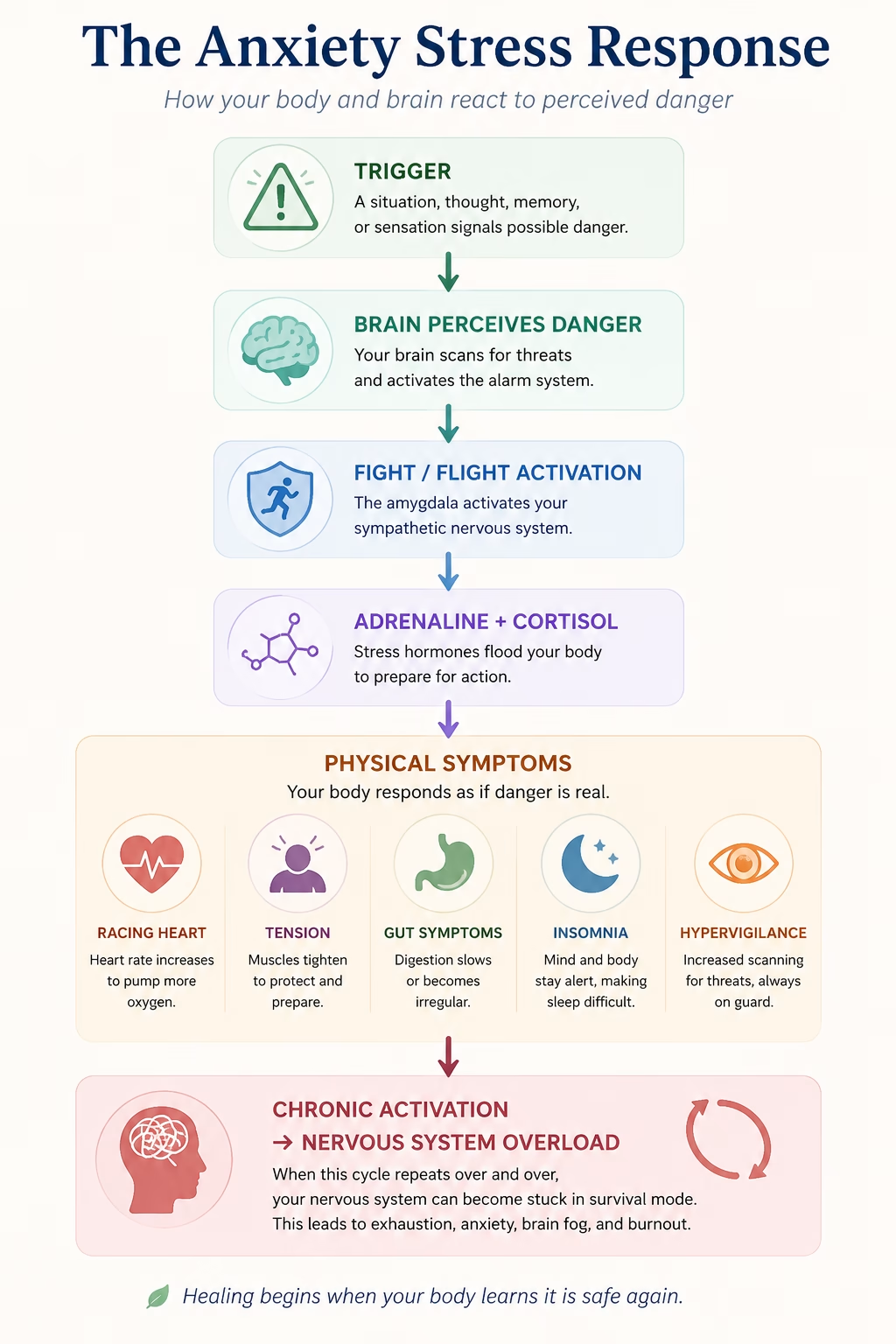
When the brain perceives danger, the sympathetic nervous system activates the fight-or-flight response. Stress hormones like adrenaline and cortisol prepare the body for action:
- heart rate increases
- breathing changes
- muscles tense
- digestion slows
- blood flow shifts
- attention narrows toward possible threats
This response is incredibly useful in emergencies.
But when activated too frequently or for too long, it becomes exhausting. The body was designed to move between activation and recovery — not remain in survival mode indefinitely.
This is also why anxiety and gut symptoms are so commonly connected. The gut and brain constantly communicate through what researchers often call the gut-brain axis. Many people notice stress affecting digestion almost immediately. Butterflies before an exam, nausea during conflict, or stomach discomfort during uncertainty are common examples of this deep brain-body relationship.
Why Anxiety Can Become Chronic
Temporary anxiety is normal. Chronic anxiety is different.
Over time, the nervous system can become sensitized. It learns patterns.
If a person repeatedly experiences stress, trauma, unpredictability, emotional pain, criticism, conflict, overwhelm, or helplessness, the brain may begin anticipating danger automatically — even in relatively safe situations.
The nervous system learns through repetition, especially emotionally charged repetition.
This learning can happen after:
- childhood adversity
- bullying
- emotional neglect
- burnout
- illness
- grief
- panic attacks
- traumatic experiences
- prolonged uncertainty
- chronic stress
- perfectionistic pressure
- relationship instability
Eventually, the nervous system may begin reacting not only to real danger, but to reminders, associations, memories, sensations, or even thoughts.
The body starts preparing for threats before the conscious mind fully understands why.
This is one reason anxiety can feel irrational and deeply real at the same time.
How the Brain and Nervous System Learn Fear
The human brain is designed to predict.
Its primary job is not happiness. Its primary job is survival.
To accomplish this, the brain constantly asks:
- Is this safe?
- Have I seen something like this before?
- What should I prepare for?
When emotionally intense experiences occur, the brain forms associations. Sometimes these associations are useful. Sometimes they become overly generalized.
For example:
- a person embarrassed publicly may later fear social situations
- a frightening health event may create health anxiety
- a panic attack in a grocery store may make stores feel unsafe
- chronic criticism may create hypervigilance around mistakes
This does not mean someone is weak, broken, or “crazy.” It means the nervous system learned something powerful.
And importantly:
What is learned can often be softened, reframed, processed, or retrained over time.
Different Approaches That May Help Anxiety
There is no single approach that helps everyone with anxiety.
Human beings are complex. Biology, trauma history, personality, lifestyle, relationships, sleep, nutrition, inflammation, genetics, environment, beliefs, and nervous system conditioning all interact in ways we still do not fully understand.
Different people respond to different tools.
For many individuals, healing involves a combination of approaches rather than one magical solution.
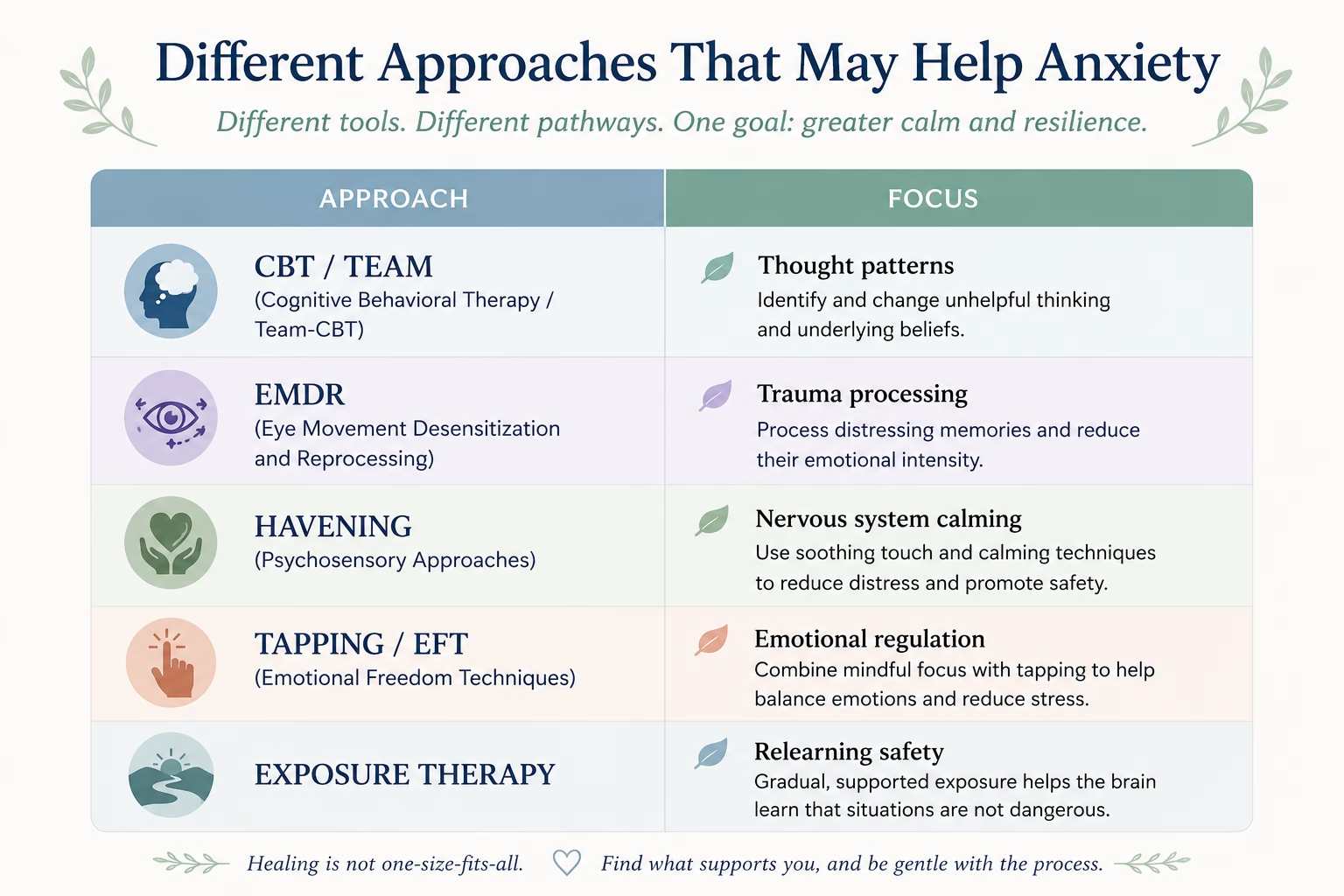
Understanding Anxiety and the Nervous System
Understanding anxiety requires looking far beyond the old idea that anxiety is simply “worrying too much” or “thinking negatively.”
Modern neuroscience, psychology, and stress research increasingly show that anxiety is deeply connected to the nervous system, the stress response, emotional memory, hormones, sleep, and even digestion.
In many people, anxiety is not merely a mental experience — it is a full-body survival response that has become chronically activated over time.
The body’s fight-or-flight system was originally designed to protect us from danger.
When the brain detects a threat, stress hormones such as adrenaline and cortisol prepare the body for action.
Heart rate increases, breathing changes, muscles tighten, and digestion slows down so the body can focus on survival.
This response is extremely useful during emergencies, but chronic stress, trauma, burnout, overstimulation, poor sleep, and emotional overload can keep this system activated far longer than it was meant to be.
Researchers and medical organizations now recognize that understanding anxiety also means understanding how closely connected the brain and body truly are.
The gut and nervous system constantly communicate with each other, which helps explain why anxiety may contribute to nausea, bloating, stomach pain, appetite changes, or digestive upset.
Sleep deprivation, chronic inflammation, social isolation, and excessive stress can further intensify nervous-system dysregulation and emotional overwhelm.
Several respected organizations provide helpful evidence-based resources on these topics.
The National Institute of Mental Health – Anxiety Disorders explains the psychological and physical aspects of anxiety disorders, while the American Psychological Association – Anxiety discusses how stress, emotions, and thinking patterns influence anxiety over time.
Harvard Health – Understanding the Stress Response offers an excellent overview of how chronic stress affects the brain and body, and the Cleveland Clinic – Fight or Flight Response explains how the survival response functions biologically.
For readers interested in trauma-focused therapies, the American Psychological Association – EMDR Therapy also provides information about EMDR and current evidence surrounding trauma processing approaches.
The encouraging news is that the nervous system can often learn safety again over time.
Many people discover that healing from anxiety is not about becoming fearless, but about becoming more regulated, resilient, self-aware, and less trapped in chronic survival mode.
Small repeated experiences of safety, rest, connection, movement, emotional support, and nervous-system regulation can gradually help the brain and body shift out of constant alertness and into recovery.
Cognitive Approaches: CBT, TEAM Therapy, Reframing — and Dr. Amen’s “ANTs”
One of the most widely studied approaches for anxiety is Cognitive Behavioral Therapy (CBT).
CBT focuses on identifying thought patterns that may intensify emotional distress, such as:
- catastrophizing
- black-and-white thinking
- mind-reading
- overgeneralization
- assuming the worst
- perfectionistic thinking
The goal is not to “think positively” all the time. It is to become more aware of how interpretations influence emotional responses.
For example, two people may experience the same event but interpret it very differently. One sees danger. Another sees challenge. The nervous system reacts accordingly.
Dr. David Burns’ TEAM-CBT approach adds additional depth by exploring emotional resistance to change and helping people identify hidden beliefs or emotional “advantages” that may unconsciously maintain anxiety patterns. Many people discover that part of them believes anxiety keeps them safe, prepared, responsible, or in control.
And then there is one of my favorite concepts because it combines science with a little humor: Dr. Daniel Amen’s “ANTs” — Automatic Negative Thoughts.
These “ANTs” are the repetitive, often distorted thoughts that quietly crawl through the mind:
- “I’ll fail.”
- “Something bad will happen.”
- “I’m not good enough.”
- “People will judge me.”
- “I can’t handle this.”
Once you begin noticing these ANTs, you may suddenly realize your mind has been running an entire insect colony without your permission.
Humor aside, learning to identify and challenge these patterns can be profoundly helpful. Awareness creates choice. And choice creates possibility.
Reframing does not mean denying reality. It means learning to interpret reality more accurately, flexibly, and compassionately.
Exposure and Desensitization Approaches
Avoidance often brings temporary relief.
Unfortunately, it can also unintentionally teach the nervous system that ordinary situations are dangerous.
Gradual exposure approaches aim to gently help the nervous system relearn safety over time. This may involve slowly facing feared situations in manageable steps while remaining regulated and supported.
The goal is not overwhelming people. It is helping the brain discover:
“I can survive this.”
Over time, repeated safe experiences can reduce fear intensity and increase confidence.
EMDR and Trauma Processing Approaches
EMDR (Eye Movement Desensitization and Reprocessing) was originally developed to help process traumatic memories.
It uses forms of bilateral stimulation — such as guided eye movements or alternating sensory input — while revisiting distressing memories in a structured therapeutic setting.
Research suggests EMDR and also Havening Techniques may help reduce emotional intensity associated with certain traumatic experiences and anxiety responses.
While scientists continue studying exactly how these approaches work, many individuals report meaningful improvements in emotional regulation and distress reduction.
Havening Techniques - a Psychosensory Approach
Havening Techniques are a psychosensory approach designed to help reduce emotional distress and calm the nervous system through soothing touch combined with attention and specific mental processes.
Some people describe it as helping them feel calmer, safer, more grounded, or less emotionally reactive.
The theory behind Havening involves concepts related to emotional learning, memory reconsolidation, and nervous system regulation, though research in this field is still developing.
What I appreciate most clinically is not hype or dramatic promises, but the recognition that emotional experiences are deeply embodied. Human beings are not just thinking creatures. We are sensory, relational, emotional, physical beings.
I also teach some of these calming nervous-system techniques in my InstantCalm Formula Course for readers who prefer guided practical instruction.
Sometimes safety must be felt — not merely understood intellectually.
Gentle Guided Practice: Loving Kindness + Self-Havening
For readers who would like to experience a calming nervous-system regulation practice directly, this guided Loving Kindness Meditation combined with gentle Self-Havening techniques may help support relaxation, grounding, emotional safety, and self-compassion.
You can simply listen, follow along gently, and notice what you experience without pressure or expectations.
Sometimes understanding anxiety intellectually is only part of healing.
The nervous system also benefits from experiences of calm, safety, gentleness, and emotional connection.
Tapping / EFT (Emotional Freedom Techniques)
Tapping, often called EFT (Emotional Freedom Techniques), combines elements of mindful attention with tapping on specific acupressure points on the body.
Some individuals find it calming and emotionally regulating.
Research in this area is still evolving, but preliminary studies suggest tapping practices may help reduce stress and anxiety for some people.
Like many mind-body approaches, the experience can vary significantly from person to person.
Lifestyle Foundations That Influence Anxiety
Sometimes people search desperately for one perfect solution while overlooking the daily foundations that profoundly affect the nervous system.
Anxiety is often intensified by:
- chronic sleep deprivation
- excessive caffeine
- alcohol overuse
- blood sugar instability
- isolation
- inflammation
- overwork
- lack of movement
- excessive screen exposure
- poor stress recovery
- chronic overstimulation
The nervous system requires rhythm, rest, nourishment, movement, and safety signals.
Simple practices may help support regulation:
- walking outdoors
- strength training
- prayer or meditation
- meaningful relationships
- structured routines
- reducing overstimulation
- time in nature
- adequate sleep
- mindful breathing
- laughter
- creative activity
Sometimes healing begins not with dramatic breakthroughs, but with small repeated moments of safety.
Supplements and Herbs That Some People Find Helpful
Some individuals also explore nutritional and herbal supports as part of a broader anxiety-management approach.
These are not magic cures, and responses vary greatly between people, especially if medical conditions or medications are involved.
Still, some supplements and herbs have been studied for their potential calming effects.
Magnesium
Magnesium plays important roles in nervous system regulation, muscle relaxation, stress response, and sleep quality.
Certain forms, such as magnesium glycinate, are often discussed in relation to stress and sleep support.
L-Theanine
L-theanine, an amino acid naturally found in green tea, may promote relaxation without causing significant sedation in some individuals.
Many people appreciate that it may support calm focus rather than simply making them sleepy.
GABA
GABA is one of the brain’s primary calming neurotransmitters.
Research on oral GABA supplementation remains mixed, but some individuals report subjective calming benefits.
Valerian Root
Valerian has traditionally been used to support relaxation and sleep.
Some people find it calming, while others may feel groggy or notice little effect.
Lemon Balm
Lemon balm is a gentle herb traditionally associated with calming and stress support.
It is commonly included in teas and relaxation blends.
Chamomile
Chamomile has long been associated with comfort, calming rituals, digestion, and relaxation.
Sometimes the ritual itself — slowing down, making tea, sitting quietly — becomes part of the nervous system regulation process.
And perhaps that matters more than modern culture sometimes allows us to admit.
What Healing From Anxiety Often Actually Looks Like
Healing from anxiety rarely means becoming fearless.
It often means becoming more resilient, more regulated, more self-aware, and less controlled by fear.
It may involve:
- understanding triggers
- calming the nervous system
- improving sleep
- changing thought patterns
- processing unresolved experiences
- strengthening relationships
- learning boundaries
- reducing overload
- reconnecting with meaning and purpose
Progress is often gradual and nonlinear.
Some days feel easier. Others do not.
But many people eventually discover something deeply hopeful:
Anxiety may remain part of human life, but it no longer has to run the entire story.
If you would like a structured, practical introduction to calming an overloaded nervous system, my InstantCalm Formula Course teaches simple evidence-informed techniques — including Havening-inspired calming practices — designed to help you feel more grounded, focused, and emotionally regulated in daily life.
The course includes short guided exercises that can be practiced in just minutes a day and may be especially helpful during periods of stress, overwhelm, or emotional overload.
Explore the InstantCalm Formula Course:
When Professional Help Is Important
While anxiety is common, severe or persistent symptoms deserve proper support and evaluation.
Professional help is especially important if anxiety involves:
- panic attacks
- inability to function normally
- severe insomnia
- suicidal thoughts
- substance dependence
- trauma symptoms
- self-harm
- major depression
- severe physical symptoms
- social withdrawal
- inability to work or care for oneself
Sometimes underlying medical issues can also contribute to anxiety symptoms, including thyroid problems, hormonal changes, nutritional deficiencies, medication effects, neurological conditions, and other health concerns.
Seeking help is not weakness. Human beings were never designed to carry everything alone.
You can find a qualified therapist here.
A More Compassionate Way to Understand Anxiety
Perhaps anxiety is not always the enemy people imagine it to be.
Sometimes it is the nervous system’s imperfect attempt to protect a human being who has been carrying too much for too long.
Understanding anxiety does not magically erase it.
But understanding can reduce shame.
And when shame decreases, curiosity becomes possible. Compassion becomes possible. Healing becomes possible.
The goal is not perfection.
The goal is learning how to live with greater calm, flexibility, resilience, wisdom, and trust in your own capacity to move through life — even when uncertainty exists.
Because uncertainty will always exist.
But suffering in constant survival mode does not always have to.
Want a clearer, less overwhelming way to think about brain and mental health?
Join the DRC email list for educational insights, frameworks, and evidence‑informed perspectives — no hype, no quick fixes.
Subscribers receive access to all essays in The Five Dimensions of Human Health series, including reflections that don’t appear on the public blog, as well as early drafts as the books take shape.
This is not a newsletter in the usual sense. It’s a place to think carefully, over time, about what health, suffering, and healing actually ask of us.
Join the Essays and receive them directly by email, as they’re written.
One thoughtful email most Tuesdays. Unsubscribe anytime.
Last Updated on September 19, 2026 by Dr. Christine Sauer