
Too Tired to Focus, Too Wired to Cope?
How poor sleep affects Mental Health, anxiety, mood, brain fog, and performance
There are mornings when a lack of focus is not a failure of discipline. It is a message from a tired brain.
Before You Blame Your Brain: Poor or interrupted sleep can cloud focus, lower positive mood, heighten anxiety and stress reactivity, and make ordinary work harder. Repeated sleep loss can quietly reduce performance—even when you think you have adapted. Before blaming yourself, ask what disturbed your sleep and choose one gentle next step.
Who this is for: Adults noticing foggier focus, lower mood, or more reactivity after poor or interrupted sleep.
What it cannot do: Diagnose insomnia, ADHD, depression, anxiety, sleep apnea, or another condition; persistent, worsening, sudden, or safety-affecting symptoms deserve professional assessment.
I was reminded of this today. My back was bothering me, and I slept in interrupted pieces that felt much too short.
When I woke up, my mind felt foggy.

Yet I still needed to do some work, and so I did—like many of us do these days. I work online, writing books, blogs, and other content.
If you don’t sleep well once in a while, a good spell-checker and some coffee can usually help us get through the day, right? But that is a short-term workaround, not a substitute for sleep.
I also remember what happened when I didn't sleep well for a longer period, and the poor sleep became chronic.
Rumination, overthinking, eating and drinking the “wrong” things at night and other bad habits piled up, and the resulting sleep deficit contributed to low mood, difficulty focusing, and that general feeling of “brain fog” that makes even ordinary work feel heavier.
That experience taught me not to treat good, restorative sleep as optional, because sleep really is one of the foundations of good brain health. Sleep appears to support brain-fluid movement and waste-clearance processes, and it also supports mood, focus, resilience, and performance.
If you have been blaming yourself for feeling scattered or slow, let me tell you that this does not need to mean that you have lost your motivation.
Like the article that inspired this discussion puts it, “treat a bad focus day as information.”
And this is a very helpful starting point—as long as we ask careful questions about what the information may mean.
This article provides general health education. It is not a substitute for individualized medical advice, diagnosis, or treatment.
A Sparkly moment

Sparkly: “Alma, the whole mountain feels foggy today. Even my thoughts seem to be moving through clouds.”
Alma: “Did you get enough sleep last night?”
Sparkly: “I was in bed.”
Alma: “That wasn’t quite my question.”
Before you blame your brain, it can be worth asking whether it had enough time—and enough calm—to recover.
Focus is Not Just a Matter of Willpower
Attention depends on more than determination. Your level of wakefulness, emotional state, physical comfort, motivation, stress load, health, and sleep all influence how easily your brain can select a task and stay with it.
The original article draws on a large 2025 Cell study suggesting that stimulant-related performance gains may involve wakefulness and reward more than a simple increase in attention-network activity. That study is thought-provoking, but it does not show that ADHD is “really” sleep deprivation, nor does it justify changing prescribed treatment without a clinician. Its more useful lesson for this discussion is broader: when focus changes, we should consider the state of the brain being asked to pay attention and work.
That whole-person perspective also fits my guide to the foundations of brain health, because the brain does not operate in isolation, and sleep is one of the many conditions that help it function well.
One short night can change your emotional weather
You may recognize the feeling: small problems seem larger, patience becomes thinner, and a difficult email feels more threatening than it did yesterday.
Sleep loss does not invent every emotion, but it can change the intensity and balance of what we feel.

A 2024 meta-analysis covering 154 studies and 5,717 participants found that several forms of sleep loss consistently reduced positive emotion and increased anxiety symptoms. Effects on depressive symptoms were smaller and less consistent across experimental studies, which is an important nuance. The American Psychological Association summary and the published meta-analysis both support a simple conclusion: inadequate sleep can make emotional regulation harder, even when it does not affect every feeling in the same way.
Laboratory research also offers a possible mechanism. In one influential imaging study, sleep deprivation was associated with stronger amygdala reactivity and weaker functional connection with prefrontal regions that normally help regulate emotional responses.
This does not mean one bad night causes an anxiety disorder.
It helps explain why a tired brain may feel more reactive and less able to put a stressor into perspective. Read the study.
If low mood has become persistent, sleep is only one part of a larger picture. Our exploration of the root causes of depression explains why mood symptoms deserve a compassionate, whole-person assessment rather than a single-cause answer.
Too tired to focus, too wired to settle
Poor sleep and stress can form a difficult loop:
You sleep badly, feel more emotionally sensitive the next day, and respond more strongly to ordinary demands. Then worry, tension, or pain makes it harder to settle and go to sleep the following night.
A controlled study found that acute sleep loss increased next-day anxiety, while greater deep sleep was associated with lower anxiety. The researchers described this as an “overanxious and underslept” cycle.
Other research suggests that sleep deprivation can alter cortisol and stress responses, although the cortisol literature is mixed, and effects depend on timing, design, and individual differences. One small controlled study is available here.
This is the “too wired” side of the problem: the body is tired, but the nervous system remains alert. And we have all experienced this feeling at times in our life.
When that happens, telling yourself to “just relax” is usually not helpful and can even sound like mockery.
You may ask yourself: “How can I relax when, inside me, my brain is going 1,000 miles per second in circles?”
I get it.
Try this question, which may feel better: “What is keeping my system on guard—is it pain, worry, irregular work or sleep hours, a noisy or bright bedroom, late cups of coffee or energy drinks, a health condition like chronic pain, a bed that doesn’t fit my body, or something else?”
The hidden performance cost of chronic short sleep
After one poor night, most of us know that we are still tired. But chronic lack of sleep is trickier, because our personal, subjective sense of adaptation can improve before our performance fully recovers. We may think and feel we are fine, yet our brain knows better.
In a classic controlled study, adults restricted to six hours of time in bed per night developed cumulative cognitive deficits across two weeks. Their performance worsened even though they did not fully appreciate the degree of impairment. Read the study.
A later meta-analysis found that sleep restriction had a significant negative effect on overall cognitive performance, including executive functioning and sustained attention. Read the meta-analysis.
For everyday work, this can look like slower thinking, missed details, weaker working memory, poorer judgment, or more effort spent on tasks that normally feel straightforward. And this can feel like brain fog, confusion, irritability and the inner feeling that “Why do I make so many stupid mistakes? I could do better, but something is wrong with me.”
This is why pushing harder at any cost does not create a performance sweet spot; it may even make it worse.
Performance depends on having enough activation to engage with a task, but enough recovery to think clearly and respond with the cognitive flexibility needed to successfully complete the task.
Rest is not the opposite of performance.
It is part of our biology, the part that makes sustainable performance possible.
For practical foundations beyond sleep, explore 10 daily habits for brain health and optimal mental health, because sleep works alongside movement, nourishment, light exposure, connection, stress regulation, and other daily patterns.
What about ADHD?
ADHD is real, and sleep problems are common among people with ADHD. Anxiety, depression, chronic stress, pain, medication effects, sleep disorders, and insufficient sleep can also worsen or resemble some attention difficulties. These possibilities can coexist.
The helpful message is not “it is probably just sleep.”
It is: “do not diagnose yourself from one symptom or one difficult week.”
Persistent problems with attention—or problems that interfere with daily life—deserve a careful assessment that considers history, daily functioning, physical and mental health, sleep, and other relevant factors. If you take prescription medication, please never stop or change it just because you read an article about the topic—even a good one like this. Always consult your healthcare provider.
I’ve talked with many people who stopped prescription medication suddenly and experienced serious sleep problems that required more treatment and, in the end, made things worse. Please don’t go through this alone.
The sleep–mood–focus loop
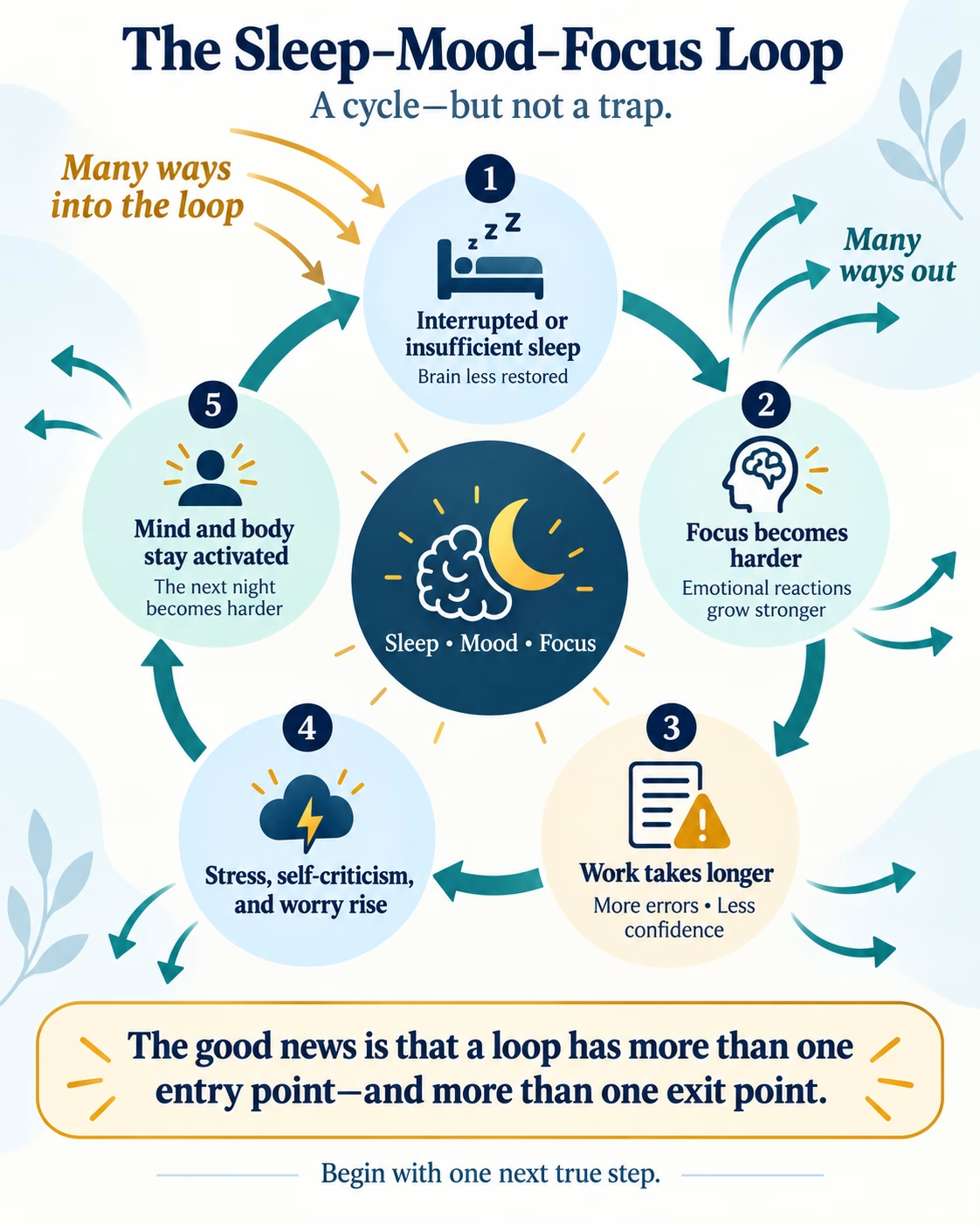
The loop often looks like this:
- Interrupted or insufficient sleep leaves the brain less restored.
- Focus becomes harder and emotional reactions become stronger.
- Work takes longer, errors increase, and confidence falls.
- Stress, self-criticism, and worry rise.
- The activated mind and body make the next night more difficult.
The good news is that a loop has more than one entry point—and more than one exit point. You do not have to fix everything at once. You can begin with one next true step.
Sleep also interacts with physical health, digestion, stress regulation, and daily routines.
And if you want the wider whole-person context, my guide to the gut–brain connection explains why mood and brain function are not isolated from the rest of the body, but integrated.
Seven gentle ways to interrupt the loop
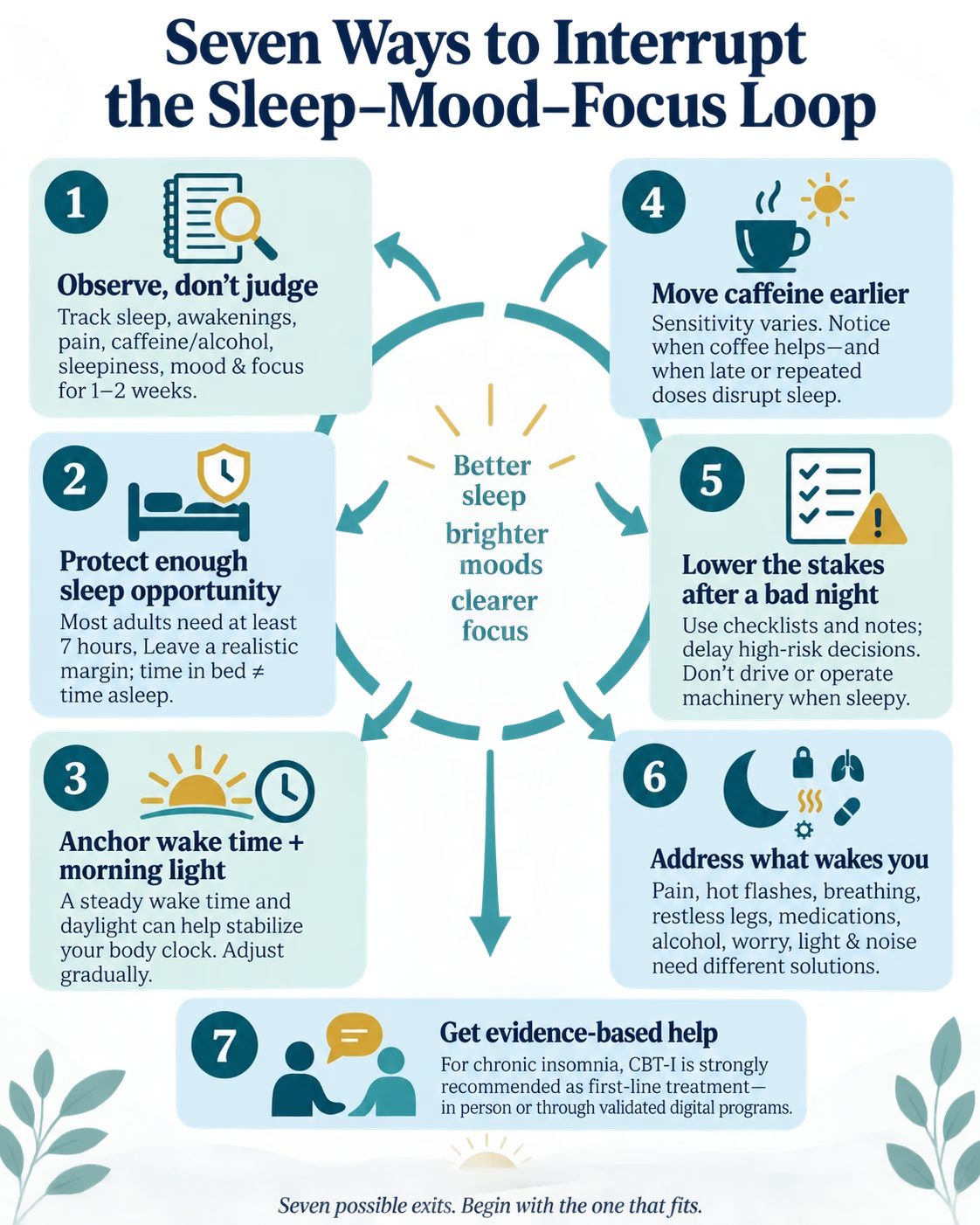
The American Academy of Sleep Medicine guideline gives CBT-I a strong recommendation and specifically advises against using sleep hygiene as a stand-alone treatment for chronic insomnia. A meta-analysis of sleep-improvement trials also found benefits for depression, anxiety, and broader mental health. Read that review.
When to speak with a healthcare professional
Please seek a professional assessment when sleep problems are persistent, worsening, or interfering with daytime life—especially if you notice:
- Loud snoring, choking, gasping, or witnessed pauses in breathing
- An irresistible urge to move the legs or uncomfortable sensations at night
- Severe daytime sleepiness, near-misses, or drowsy driving
- Insomnia several nights a week that continues for months
- Ongoing low mood, anxiety, loss of interest, or difficulty functioning
- A sudden, unexplained change in sleep, energy, behavior, or thinking
If you are in immediate danger, feel unable to keep yourself safe, or are thinking about suicide, call local emergency services now. In the U.S., call or text 988. In Canada, call or text 9-8-8. Elsewhere, contact the crisis service for your country.
Your next true step
A foggy day is not proof that you are lazy, losing your abilities, or failing at life. Sometimes it is information: your brain may need sleep, safety, relief from pain, better timing, medical care, or a gentler workload.
Today, choose one question: What made restorative sleep harder last night—and what is one realistic thing I can change or ask for?
Start With One Gentle Next Step
If your sparkle feels dim right now, you do not need to fix your whole life today.
You only need a next step.
My free guide, 7 Steps to Climb the Mountain of Life, helps you pause, reflect, and find a gentle next step when life feels steep, foggy, or overwhelming.
And if you are rebuilding after depression, anxiety, burnout, loss, or a season when your sparkle felt far away, explore Recover Your Sparkle. Good sleep is not the whole recovery journey—but it can support the brain, mood, and energy you need for the climb.
New to DocChristine? Start here for a gentle introduction to our approach.
Frequently asked questions
Yes. A single short or fragmented night can temporarily affect alertness, sustained attention, working memory, reaction time, and emotional regulation. Brain fog is a description rather than a diagnosis, so recurring or unexplained symptoms deserve a broader assessment.
It can. Experimental research shows that sleep loss can increase next-day anxiety and emotional reactivity. Anxiety can also disturb sleep, creating a bidirectional loop. Persistent anxiety should not be attributed to sleep alone.
Chronic insomnia is associated with a higher future risk of depression, and improving sleep can improve some mental-health outcomes. Depression has many possible contributors, however, and deserves appropriate professional care.
A joint consensus statement from the American Academy of Sleep Medicine and Sleep Research Society recommends that adults sleep seven or more hours per night regularly to promote optimal health. Individual needs vary, and sleep quality and timing matter too. Read the consensus statement.
Brief awakenings can be normal. Sleep usually moves through four to six cycles each night, and you may wake briefly between cycles. The important questions are whether you can return to sleep reasonably easily, whether the awakenings are prolonged or distressing, and whether you feel rested and function well during the day. Frequent or lengthy awakenings that persist or affect daytime functioning are worth discussing with a healthcare professional. NHLBI: Sleep phases and stages
Try not to turn being awake into an emergency. Avoid watching the clock, and keep the room quiet and dim. If you remain awake for about 20 minutes—or you notice yourself becoming frustrated—get out of bed, if it is safe for you to do so. Choose a calm, unstimulating activity and return to bed when you feel sleepy. This approach is called stimulus control and is part of cognitive behavioral therapy for insomnia, or CBT-I. If the problem persists, ask a healthcare professional about CBT-I. VA stimulus-control guidance, 2025 VA/DoD insomnia guideline
It is common, especially as people get older, but several bathroom trips every night should not automatically be dismissed as normal. Sometimes the need to urinate wakes you; at other times, something else disrupts your sleep and you then notice your bladder. Possible contributors include evening fluids, caffeine or alcohol, medication timing, bladder or prostate problems, diabetes, sleep apnea, and fluid moving out of swollen legs when you lie down. If this is new, happens repeatedly, or disrupts your sleep, discuss it with a healthcare professional. A three-day record of drinks, bathroom trips, and sleep times can be very helpful. Seek care promptly for pain, blood in the urine, or difficulty emptying your bladder. Canadian Urological Association nocturia report, NIDDK bladder guidance
No. Caffeine may temporarily improve alertness, but it does not replace the biological functions of sleep. It can also delay sleep or reduce sleep duration when used too late. Treat it as a tool with trade-offs, not a repayment of sleep debt.
Research and further reading
The external links below include the original discussion piece, primary studies, systematic reviews, meta-analyses, and clinical guidelines used to shape this draft.
- Norwitz N. Why You Can’t Focus. The Epoch Times.
- Kay BP et al. Stimulant medications affect arousal and reward, not attention networks. Cell (2025).
- Palmer CA et al. Sleep loss and emotion: systematic review and meta-analysis. Psychological Bulletin (2024).
- Tomaso CC et al. The relationship between sleep deprivation and mood: meta-analysis (2021).
- Yoo S-S et al. The human emotional brain without sleep. Current Biology (2007).
- Ben Simon E et al. Overanxious and underslept. Nature Human Behaviour (2020).
- Palmer CA, Alfano CA. Sleep and emotion regulation: an organizing, integrative review (2017).
- Krause AJ et al. The sleep-deprived human brain. Nature Reviews Neuroscience (2017).
- Lowe CJ et al. The neurocognitive consequences of sleep restriction: meta-analytic review (2017).
- Van Dongen HPA et al. Cumulative cost of additional wakefulness (2003).
- Pilcher JJ, Huffcutt AI. Effects of sleep deprivation on performance: meta-analysis (1996).
- Minkel J et al. Sleep deprivation potentiates HPA-axis stress reactivity (2014).
- Hertenstein E et al. Insomnia as a predictor of mental disorders: systematic review and meta-analysis (2019).
- Baglioni C et al. Insomnia as a predictor of depression: meta-analytic evaluation (2011).
- Scott AJ et al. Improving sleep quality and mental health: meta-analysis of randomized trials (2021).
- Irwin MR et al. CBT-I prevention of major depressive disorder in older adults (2022).
- Edinger JD et al. AASM clinical guideline for behavioral and psychological treatments for chronic insomnia (2021).
- Watson NF et al. Recommended amount of sleep for a healthy adult: consensus recommendation (2015).
- Gardiner C et al. The effect of caffeine on subsequent sleep: systematic review and meta-analysis (2023).
- Blackwelder A et al. Effect of inadequate sleep on frequent mental distress, CDC Preventing Chronic Disease (2021).
- NHLBI. How sleep deprivation and deficiency affect health.
Educational note: This article provides general health education. It is not a substitute for individualized medical advice, diagnosis, or treatment.
Last Updated on September 7, 2026 by Dr. Christine Sauer