
Is Coffee Good for You? Brain Health, Mood, Focus, Anxiety and Sleep
Coffee can support energy, focus, and mood for some people, but caffeine can also affect anxiety, stress sensitivity, digestion, and sleep — so the real question is not whether coffee is “good,” but whether it works well for your body.
By Dr. Christine Sauer | Physician • Educator - Last Updated: June 2026
Coffee is one of those things people tend to have strong feelings about.
Some people feel like their morning coffee gently turns the lights back on in their brain.
Other people drink half a cup and feel like a squirrel with a deadline.
Quick Answer: Is Coffee Good For You?
For many adults, moderate coffee can be part of a healthy lifestyle and may support alertness, focus, mood, and metabolic health. But coffee is not helpful for everyone in the same way.
Caffeine can worsen anxiety, jitteriness, reflux, palpitations, and sleep problems in sensitive people. Dose, timing, stress level, sleep quality, and individual tolerance all matter.
The best question is not only: “Is coffee good for you?” and the best answer is not necessarily just "Why coffee is good for you".
It is: “How does coffee affect me?”
So - is coffee good for you? And Why?
The honest answer is: it depends.
Coffee may support alertness, focus, mood, metabolism, and long-term health for many people. But caffeine can also worsen anxiety, jitteriness, sleep problems, reflux, heart palpitations, and stress sensitivity in some people.
This article is not about proving that coffee is good for everyone.

It is about helping you understand how coffee and caffeine may affect your brain health, mood, energy, stress response, and sleep — so you can make a calmer, more informed decision.
For many adults, moderate coffee intake can be part of a healthy lifestyle.
Coffee contains caffeine and plant compounds that may support alertness, focus, metabolic health, and possibly long-term brain and heart health.
But coffee is not automatically good for every person, every body, or every season of life.
The most important questions are:
- How much coffee do you drink?
- What kind of coffee do you drink?
- What time of day do you drink it?
- How does coffee affect you?
- Does it improve your focus or make you anxious?
- Does it support your energy or disrupt your sleep?
- Are you using coffee as a helpful tool — or as a way to override exhaustion?
That last question matters.
Because sometimes coffee is a gentle morning ritual.
And sometimes coffee is a tiny delicious emergency plan in a mug.
Why Coffee Can Feel So Helpful
Coffee helps many people feel more awake because caffeine affects the brain’s sleep-wake system.
One of caffeine’s main effects is that it blocks adenosine receptors. Adenosine is one of the chemical signals involved in sleep pressure. As the day goes on, adenosine builds up and helps your body feel ready for rest.
Caffeine does not erase tiredness.
It temporarily changes how strongly you feel it.
That is why coffee can help you feel sharper, more motivated, and more mentally available — especially when you are tired.
But this is also why caffeine can backfire.
If you use caffeine to push through chronic exhaustion day after day, the deeper issue may not be “lack of coffee.”
It may be lack of recovery.
Coffee Is More Than Caffeine
Coffee is not just caffeine water.
Coffee also contains plant compounds, including polyphenols, that may influence inflammation, metabolism, blood vessels, liver health, the gut-brain connection and other body systems.
This is one reason research on coffee often looks different from research on isolated caffeine.
Coffee, decaf coffee, espresso, energy drinks, caffeine pills, and sweet coffee drinks are not all the same thing.
A simple black coffee or coffee with a small amount of milk is very different from a giant dessert drink with several pumps of syrup, whipped cream, and enough sugar to make your pancreas ask for a meeting.
Coffee can have many health benefits.
Coffee-flavored sugar can be a different story.
Coffee and Brain Health
Many people notice that coffee helps them think more clearly.
That does not mean coffee makes everyone smarter. It means caffeine can improve wakefulness and may help some people feel more alert, focused, and ready to act.
Coffee and Focus
Caffeine may help with:
- alertness
- reaction time
- mental energy
- motivation
- perceived effort
- staying awake during boring or demanding tasks
This can be useful.
A cup of coffee before focused work may help you begin.
But there is a line.
More caffeine does not always mean better focus.
For some people, too much caffeine turns focus into agitation. The mind becomes busy, but not necessarily productive.
You may feel wired, rushed, restless, or scattered.
That is not high performance.
That is your nervous system tapping its foot.
Coffee and Mood
Coffee may support mood for some people, partly because caffeine can increase alertness and may influence brain chemicals involved in motivation and energy.
For some people, morning coffee feels emotionally comforting because it is not only a drink. It is a ritual.
Warm mug. Familiar smell. A pause before the day begins.
There is nothing wrong with that.
Rituals matter.
But coffee is not a treatment for depression, burnout, grief, trauma, or chronic exhaustion.
If coffee is the only thing getting you through your day, that is useful information. Not a reason to shame yourself. A reason to pay attention.
Coffee and Long-Term Brain Health
Some observational studies have linked moderate coffee consumption with lower risk of certain chronic conditions, including some neurological and metabolic outcomes.
That sounds encouraging, but we need to be careful.
Observational research can show associations and provide foundations. It cannot always prove that coffee itself caused the benefit.
People who drink moderate coffee may also differ in other ways, including lifestyle, diet, social routines, work patterns, and overall health.
So the calmer takeaway is this:
Moderate coffee intake appears to be safe for many adults and may be associated with health benefits.
But coffee is not a magic shield.
It is one piece of a much bigger brain health picture that includes sleep, nutrition, movement, stress recovery, purpose, relationships, and medical care when needed.
Coffee, Anxiety and Stress Sensitivity
This is where things get interesting.
Coffee can help one person feel calm, focused, and productive.
The same amount can make another person feel anxious, shaky, irritable, panicky, or unable to sleep.
Why?
Because caffeine sensitivity varies.
Your response can be affected by:
- genetics
- liver metabolism
- baseline anxiety
- sleep debt
- stress level
- hormones
- medications
- pregnancy
- age
- gut sensitivity
- how much caffeine you usually consume
If your body is already running in “high alert” mode, coffee may feel less like support and more like gasoline on a stress fire.
Signs Coffee May Be Too Much for You
Coffee may not be working well for you if it regularly causes:
- jitteriness
- racing thoughts
- increased anxiety
- heart pounding
- shaky hands
- irritability
- reflux or stomach discomfort
- afternoon crashes
- trouble falling asleep
- waking during the night
- needing more and more coffee to feel normal
This does not necessarily mean you must quit coffee forever.
It may mean you need a different dose, timing, type, or season of use.
Coffee and Sleep
Coffee and sleep have a complicated relationship.
Coffee can help you feel more awake.
That is the point.
But if caffeine is still active in your system later in the day, it can make it harder to wind down at night.
Some people can drink coffee after dinner and sleep like a golden retriever.
Others drink coffee at noon and stare at the ceiling at midnight, reviewing every decision since 2007.
Both people exist.
The Afternoon Coffee Problem
A common pattern looks like this:
You sleep poorly.
You wake up tired.
You drink more coffee.
You push through the day.
You crash in the afternoon.
You drink more coffee.
You sleep poorly again.
That is not a coffee problem alone.
That is a sleep-recovery loop.
A practical starting point is to experiment with a caffeine cutoff time.
For many people, this means avoiding caffeine after late morning or early afternoon.
If you are very sensitive, even earlier may be better.
Coffee, Inflammation, Metabolism and Heart Health
Coffee contains antioxidants and plant compounds that may be one reason moderate coffee consumption has been associated with several health benefits in population studies.
Research has linked moderate coffee intake with lower risk of some conditions, including type 2 diabetes and certain cardiovascular and liver outcomes.
But again, this does not mean more is always better.
It also does not mean coffee cancels out poor sleep, chronic stress, ultra-processed food, inactivity, or unmanaged medical conditions.
Coffee can be part of a health-supporting pattern.
It is not the whole pattern.
How Much Coffee Is Too Much?
For many healthy adults, up to about 400 mg of caffeine per day is commonly cited as a general upper amount.
But that does not mean 400 mg is ideal for you.
Some people do best with one small cup.
Some do well with two.
Some need half-caff.
Some feel better with decaf.
Some feel better without coffee at all.
A typical 8-ounce cup of brewed coffee often contains around 80–100 mg of caffeine, but the amount can vary widely depending on the bean, serving size, brewing method, and brand.
Large coffees from cafés can contain far more caffeine than people realize.
This is why “one coffee” is not a precise measurement.
One person’s “one coffee” is another person’s entire nervous system event.
Who Should Be More Careful With Coffee?
You may need to be more cautious with coffee or caffeine if you:
- are pregnant, trying to conceive, or breastfeeding
- have panic attacks or significant anxiety sensitivity
- have insomnia or poor sleep
- have heart rhythm concerns or palpitations
- have uncontrolled high blood pressure
- have reflux, gastritis, or significant digestive sensitivity
- take medications that interact with caffeine
- are using caffeine pills, energy drinks, or pre-workout products
- feel dependent on caffeine just to function
This does not mean coffee is automatically forbidden.
It means your situation deserves more thought and possibly professional guidance.
Pregnancy is one example where caffeine limits are lower than for the general adult population. People who are pregnant or trying to become pregnant should follow the guidance of their own healthcare professional.
How to Make Coffee Work Better for Your Body
If you enjoy coffee and tolerate it well, you may not need to overcomplicate this.
But a few small changes can make coffee more supportive.
1. Drink it earlier
Try keeping coffee in the morning and avoiding caffeine later in the day, especially if sleep is fragile.
2. Start lower
If coffee makes you anxious, try half a cup, half-caff, or a smaller serving.
3. Eat enough
Coffee on an empty stomach works beautifully for some people and terribly for others.
If coffee makes you shaky, consider having it with or after food.
4. Watch the sugar
Coffee itself is not the same as a large sweetened coffee drink.
If your coffee is mostly syrup, whipped cream, and dessert toppings, the health conversation changes.
5. Track your response
Ask:
- Did I focus better?
- Did I feel calmer or more anxious?
- Did my sleep change?
- Did I feel a crash later?
- Did my digestion react?
Your body gives data.
You do not need to obsess. Just observe.
6. Avoid using coffee to override burnout
Coffee can help you start the day.
It should not be the only thing holding your life together.
If you are exhausted all the time, coffee may help you cope temporarily, but your body may be asking for deeper recovery.
How to Test Your Coffee Tolerance
You do not need to make coffee complicated.
But if you are wondering whether coffee is helping you or quietly stressing your system, try a simple observation experiment for one week.
This is not a medical test. It is a practical way to pay attention.
Step 1: Notice your usual pattern
For two or three days, simply observe:
- how much coffee you drink
- what time you drink it
- whether you drink it with food or on an empty stomach
- how your energy feels afterward
- how your anxiety, mood, digestion, and sleep feel later
Do not judge it. Just collect information.
Step 2: Adjust one thing at a time
Then change only one variable.
For example:
- drink coffee earlier in the day
- reduce the amount slightly
- try half-caff
- switch one cup to decaf
- drink coffee after food instead of before food
- skip the afternoon coffee and notice what happens
Do not change everything at once. If you change ten things, you will not know what helped.
Step 3: Watch for your body’s signals
Coffee may be working well for you if you feel:
- clearer
- steadier
- more focused
- more motivated
- able to sleep normally
- comfortable in your body
Coffee may be too much for you if you feel:
- shaky
- anxious
- rushed
- irritable
- wired but tired
- more reflux or stomach discomfort
- heart pounding
- unable to fall asleep or stay asleep
Step 4: Ask the better question
The goal is not to prove that coffee is good or bad.
The better question is:
Does coffee help me feel more clear and steady — or does it push my nervous system harder than I realize?
That answer may change depending on your stress level, sleep, hormones, medications, health conditions, and season of life.
Your body is allowed to have an opinion.
Coffee: Helpful Tool or Hidden Stressor?
Here is the simple way to think about it.
Coffee may be helpful if:
- it improves alertness without anxiety
- it does not disrupt sleep
- it does not worsen digestion
- it fits into a balanced day
- you can skip it without feeling terrible
- you enjoy it as a ritual, not only as a rescue plan
Coffee may be a problem if:
- it increases anxiety
- it worsens sleep
- it triggers palpitations
- it causes reflux or stomach pain
- you need more and more to function
- it masks chronic exhaustion
Coffee is not morally good or bad.
It is information.
Frequently Asked Questions
Is coffee good for your brain?
Coffee may support alertness, mental energy, and focus in some people. Moderate coffee intake has also been associated with some long-term health benefits in observational research. But brain health depends on much more than coffee, including sleep, nourishment, movement, stress recovery, and medical care when needed.
Can coffee make anxiety worse?
Yes. Coffee can worsen anxiety, jitteriness, racing thoughts, and panic-like symptoms in some people, especially at higher doses or during stressful seasons. If coffee makes you feel wired instead of focused, your dose or timing may need to change.
Is decaf coffee still beneficial?
Decaf coffee still contains many coffee plant compounds, though much less caffeine. It may be a good option for people who enjoy the taste and ritual of coffee but are sensitive to caffeine.
What is the best time to drink coffee?
For many people, morning is best. If sleep is a concern, try avoiding caffeine later in the day. Individual sensitivity varies, so your best cutoff time may be earlier than someone else’s.
Is coffee bad for sleep?
Coffee can disrupt sleep if caffeine is consumed too late or if you metabolize caffeine slowly. Even if you fall asleep, caffeine may still affect sleep quality in some people.
Is coffee good for mood?
Coffee may temporarily improve mood, alertness, and motivation for some people. But it can also worsen anxiety or irritability in sensitive individuals. Mood response is personal.
Should everyone drink coffee?
No. Some people feel better with coffee. Some feel better without it. The goal is not to force coffee into a healthy lifestyle. The goal is to understand your own response.
Final Thoughts: Coffee Is a Tool, Not a Personality Test
Coffee can be a lovely ritual.
It can support energy, focus, and mood for many people.
It may also fit into a healthy brain and metabolic health pattern.
But coffee is not good for everyone in the same way.
Your dose matters.
Your timing matters.
Your sleep matters.
Your anxiety sensitivity matters.
Your season of life matters.
The real question is not only:
“Is coffee good for you?”
The better question is:
“How does coffee affect me?”
That is where better health decisions begin.
Want a Calmer Way to Understand Your Body?
Start with a calmer, simpler foundation.
free guide:
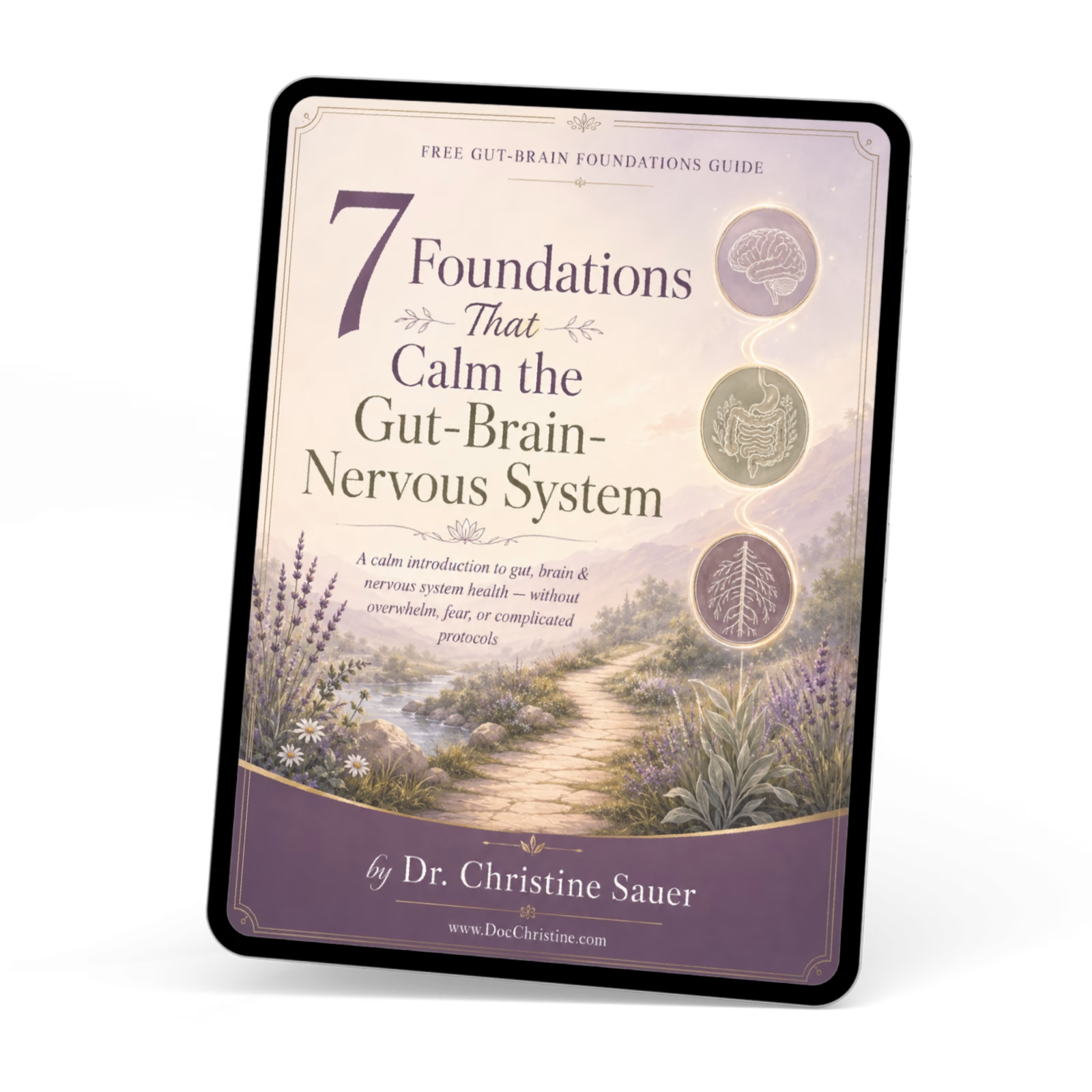
7 Foundations That Calm the Gut-Brain-Nervous System
Calm clarity instead of overwhelm.
External References / Further Reading
For readers who want to explore the research further:
Harvard T.H. Chan School of Public Health — Coffee
Overview of coffee, caffeine, plant compounds, and moderate intake.FDA — Spilling the Beans: How Much Caffeine Is Too Much?
Practical guidance on caffeine amounts, including the commonly cited 400 mg/day upper amount for many adults.BMJ — Coffee Consumption and Health: Umbrella Review
Large review summarizing associations between coffee consumption and multiple health outcomes.PMC — Adenosine, Caffeine, and Sleep-Wake Regulation
More technical review explaining caffeine’s relationship to adenosine and sleep-wake mechanisms.PMC — Caffeine as a Central Nervous System Stimulant
Review discussing caffeine, cognition, mood, stimulation, and anxiety-related effects.ACOG — Moderate Caffeine Consumption During Pregnancy
Guidance stating that moderate caffeine consumption under 200 mg/day during pregnancy does not appear to be a major contributor to miscarriage or preterm birth.
This article is educational and reflective in nature and does not provide medical advice, diagnosis, or treatment. Coffee and caffeine affect people differently. If you are pregnant, breastfeeding, have anxiety, insomnia, heart rhythm concerns, high blood pressure, reflux, or take medications that may interact with caffeine, please seek guidance from a qualified healthcare professional. If coffee worsens anxiety, sleep, digestion, or how you feel in your body, consider that useful information — not failure.
Last Updated on June 15, 2026 by Dr. Christine Sauer