When the Dog Knows First: A Night That Changed Everything
why low blood sugar is dangerous in older adults
Summary
Why low blood sugar is dangerous in older adults is not an abstract medical concept—it is a real and often overlooked risk that can lead to falls, confusion, hospitalization, and life‑threatening emergencies.
In this personal medical narrative, Dr. Christine Sauer recounts a night when hypoglycemia, viral illness, and aging physiology collided—detected first not by technology, but by a dog who sensed something was wrong.
This story explores how low blood sugar in older adults with type 2 diabetes can escalate quickly, why hypoglycemia is often more dangerous than mildly elevated glucose in aging bodies, and how timely decisions can mean the difference between recovery and catastrophe.
It is a reminder that medicine is not only about numbers—but about attention, timing, and persistence.
How it all Started...
Sometimes medicine begins long before a chart, a diagnosis, or an emergency department.
Sometimes it begins with a dog barking at 1 a.m.
Someone we live with—let’s call him Robert—had been “not quite himself” for a few days. Nothing dramatic. Just unwell. Tired. Off.
We had all caught the same respiratory illness that was circulating.
Robert, like my husband, has lived with type 2 diabetes for many years. It runs in the family. We know the routines. We know the warning signs—or at least we think we do.
That night reminded me how quickly ordinary can turn into dangerous.
The Night Things Shifted
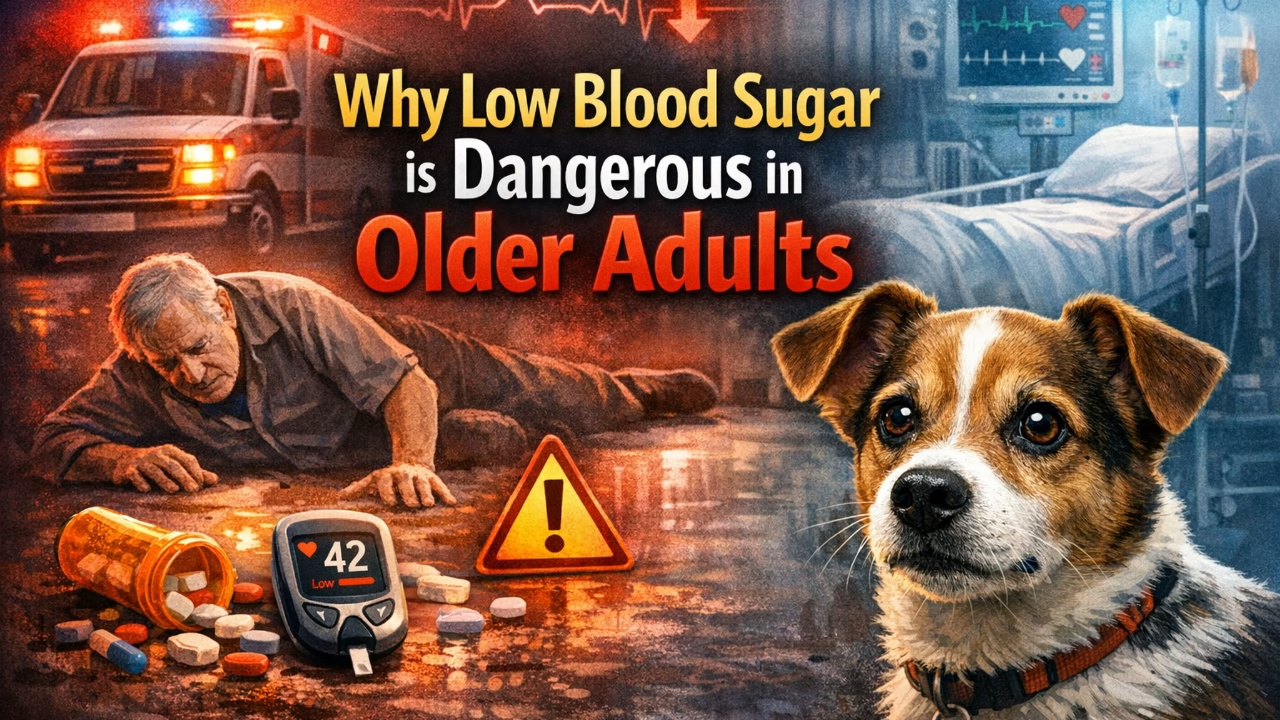
At around one in the morning, our dog began barking in a way that was unmistakably different—urgent, relentless, alarmed. My husband and I got up to see what was going on.
The dog ran straight down the hall to Robert’s bedroom.
Inside, we found him on the floor.
He had tried to get up to go to the bathroom, fallen out of bed, and couldn’t get back up. He was sweating heavily, disoriented, and clearly not himself.
I checked him carefully. No obvious fractures, but fresh scrapes—and a few older bruises that hadn’t fully resolved. We helped him to the bathroom and then back to bed.
I suggested calling emergency services.
He refused.
Stubbornness is not uncommon in moments like this.
Fear often disguises itself that way.
When Persistence Is Care
Over decades in medicine, I’ve learned that there are moments when persistence is not pushiness—it is care.
I insisted that we go to the emergency department immediately. Robert asked if we could “just wait another day.” I refused.
I have saved lives by refusing to wait.
There is a sentence I’ve used many times, in different countries, adapted to the situation:
“Here are your choices. I’m not leaving you alone. And I’m not waiting until you’re unconscious and can’t say no—because I don’t want you to die, and that’s where this is heading. So would you rather go with us to the ER now, or should I call an ambulance?”
If an ambulance is clearly needed and someone still resists, the wording shifts slightly:
“I’m calling emergency services now. As soon as I’m off the phone, I’ll help you pack your phone, charger, and medications.”
People are often stubborn when they are frightened. Calm clarity usually works.
It worked that night.
Choosing Where to Go Matters
Robert felt too sick to drink the sugary juice I offered, which already told me something was wrong.
The nearest emergency department to us was closed. Several others were options. We checked wait times through the provincial system.
Most showed hours.
One hospital, farther away but still reachable, showed a short wait.
We went there.
That decision mattered.
Care Done Right
What followed was one of the best emergency department experiences I have seen in our Canadian province.
When I went inside to ask for help, staff responded immediately. Robert was brought in by wheelchair, triaged without delay, and placed in a bed—not left waiting in a hallway.
He received oxygen, labs, imaging, an ECG, IV access, and was seen by a physician quickly. Within a few hours, he had a bed in the ICU—not a stretcher, not a corridor.
Later, he required assisted breathing with enriched oxygen, and eventually mechanical ventilation for about a week.
I was genuinely impressed.
I have accompanied many relatives, patients, and neighbors to emergency departments over the years, across several countries. I’ve seen excellent care, average care, and deeply inadequate care.
This was care done right.
The Diagnosis—and the Layers Beneath It
Robert was diagnosed with:
- Acute respiratory distress syndrome (ARDS)
- Viral pneumonia, later confirmed as Influenza A
- Hypoglycemic shock
- Diabetic ketoacidosis
That combination is life‑threatening. His chances of survival were estimated at less than fifty percent.
He had followed public health recommendations carefully, including annual flu shots. But this year’s influenza strain was different—as viruses often are. Influenza vaccines are, by necessity, educated guesses. Their effectiveness varies widely year to year.
That is not necessarily a failure. It is biology.
What matters, in my view, is honesty—so people can make informed decisions rather than relying on false certainty.
Blood Sugar, Falls, and Aging Bodies
The low blood sugar did not surprise me.
In older adults with type 2 diabetes, hypoglycemia is often more dangerous than moderately elevated blood sugar. I have seen falls, injuries, and cascading decline begin there far too often.
Robert’s first significant fall had occurred earlier, after he was started on a newer diabetes medication. He felt unwell on it—nauseated, weak—and stopped it after we talked.
What I did not know at the time was that he remained on other glucose‑lowering medications. Combined with illness and not eating, the risk of hypoglycemia was high.
Falls in older adults are rarely “just falls.” Too often, they are the beginning of a steep and dangerous slope.
Survival, Recovery, and System Realities
Against the odds, Robert survived.
After ten days in the ICU at the first hospital, he was transferred—without notice—to another hospital in the province, likely for administrative reasons tied to regional systems. We learned of the transfer only when a physician called us in the middle of the night to ask questions.
He spent another week in ICU there, followed by time on a medical floor, where he contracted norovirus, a nasty stomach flu - delaying his return home yet again.
That, too, is part of modern hospital reality.
Throughout his stay, we were present daily, sometimes twice a day. Some clinicians were exceptional. Others were average. A few were clearly exhausted or disengaged. That mix is familiar in every healthcare system I have worked in.
What Stays With Me
What stays with me is not only how close we came to losing him—but how much depended on small, human decisions:
- A dog who wouldn’t stop barking
- Refusing to “wait another day”
- Choosing the right hospital at the right moment
- Adjusting medications thoughtfully rather than reflexively
Medicine is not only about protocols and guidelines. It is about attention, timing, persistence, and presence.
And sometimes, it begins with listening to the dog.
Are you caring for an older adult with Diabetes? Start here
My recommended resources for patients and caregivers
Further reading:
CDC: Low Blood Sugar (Hypoglycemia): https://www.cdc.gov/diabetes/about/low-blood-sugar-hypoglycemia.html
ADA: Diabetes Care for Older Adults https://diabetesjournals.org/care/article/48/Supplement_1/S266/157556/13-Older-Adults-Standards-of-Care-in-Diabetes-2025
CDC: Diabetic Ketoacidosis (DKA) https://www.cdc.gov/diabetes/about/diabetic-ketoacidosis.html
National Institute on Aging: Flu and Older Adults https://www.nia.nih.gov/health/flu/flu-and-older-adults
Frequently Asked Questions
Why is low blood sugar dangerous in older adults?
Low blood sugar (hypoglycemia) can cause confusion, weakness, dizziness, and loss of consciousness. In older adults, it significantly increases the risk of falls, injuries, and delayed recognition of medical emergencies, especially during illness.
Is hypoglycemia more dangerous than high blood sugar in seniors?
In many cases, yes. Moderately elevated blood sugar may cause long‑term complications, but hypoglycemia can cause immediate harm—falls, head injuries, cardiac stress, and rapid decline—particularly in older adults with multiple medications.
What are early warning signs of low blood sugar in older adults?
Symptoms may include sweating, shakiness, confusion, fatigue, irritability, unsteady walking, or sudden changes in behavior. In older adults, these signs are often subtle or mistaken for “just being tired.”
Why does illness increase the risk of hypoglycemia?
Acute illness often reduces appetite while glucose‑lowering medications continue to work. This mismatch can cause blood sugar to drop dangerously low, especially in people taking multiple diabetes medications.
How are falls related to low blood sugar in seniors?
Hypoglycemia impairs balance, judgment, and muscle strength. Falls related to low blood sugar are rarely “just falls”—they often signal a systemic problem requiring urgent medical evaluation.
What should caregivers watch for at night?
Night‑time hypoglycemia may present as restlessness, sweating, confusion, or unexplained falls. Any unusual behavior should be taken seriously—especially in someone with diabetes.
When should emergency care be sought?
If a person is confused, unable to safely eat or drink, has fallen, or is not acting like themselves, emergency evaluation is appropriate. Waiting can be dangerous.
Educational disclaimer: This content is for informational purposes only and does not replace individualized medical care. Always discuss concerns with a licensed healthcare professional.
Want a clearer, less overwhelming way to think about brain and mental health?
Join the DRC email list for educational insights, frameworks, and evidence‑informed perspectives — no hype, no quick fixes.
Subscribers receive access to all essays in The Five Dimensions of Human Health series, including reflections that don’t appear on the public blog, as well as early drafts as the books take shape.
This is not a newsletter in the usual sense. It’s a place to think carefully, over time, about what health, suffering, and healing actually ask of us.
Join the Essays and receive them directly by email, as they’re written.
One thoughtful email most Tuesdays. Unsubscribe anytime.
Last Updated on May 8, 2026 by Dr. Christine Sauer