
Antidepressants vs. Lifestyle Changes for Depression: What The Science Says
Antidepressants vs lifestyle changes for depression is not a simple “medication or lifestyle” question. Research suggests that structured exercise, sleep improvement, nutrition, and other lifestyle supports can be powerful, especially for mild depression, while medication may still be appropriate or necessary for some people, especially when symptoms are moderate to severe, persistent, or unsafe.
The best answer is often not either/or. It is a thoughtful, individualized plan that considers symptom severity, safety, side effects, personal history, support systems, and what the person can realistically sustain.
This article is educational and does not recommend stopping, starting, or changing psychiatric medication without guidance from a qualified healthcare professional.
Almost everyone who receives a depression diagnosis faces the same question sooner or later: when weighing antidepressants vs. lifestyle changes for depression, which path makes more sense, medication, or exercise, better sleep, and a cleaner diet?
This article is educational and reflective in nature and does not provide medical advice, diagnosis, or treatment. Psychiatric medications should never be stopped abruptly or changed without guidance from a qualified healthcare professional familiar with your individual medical history.
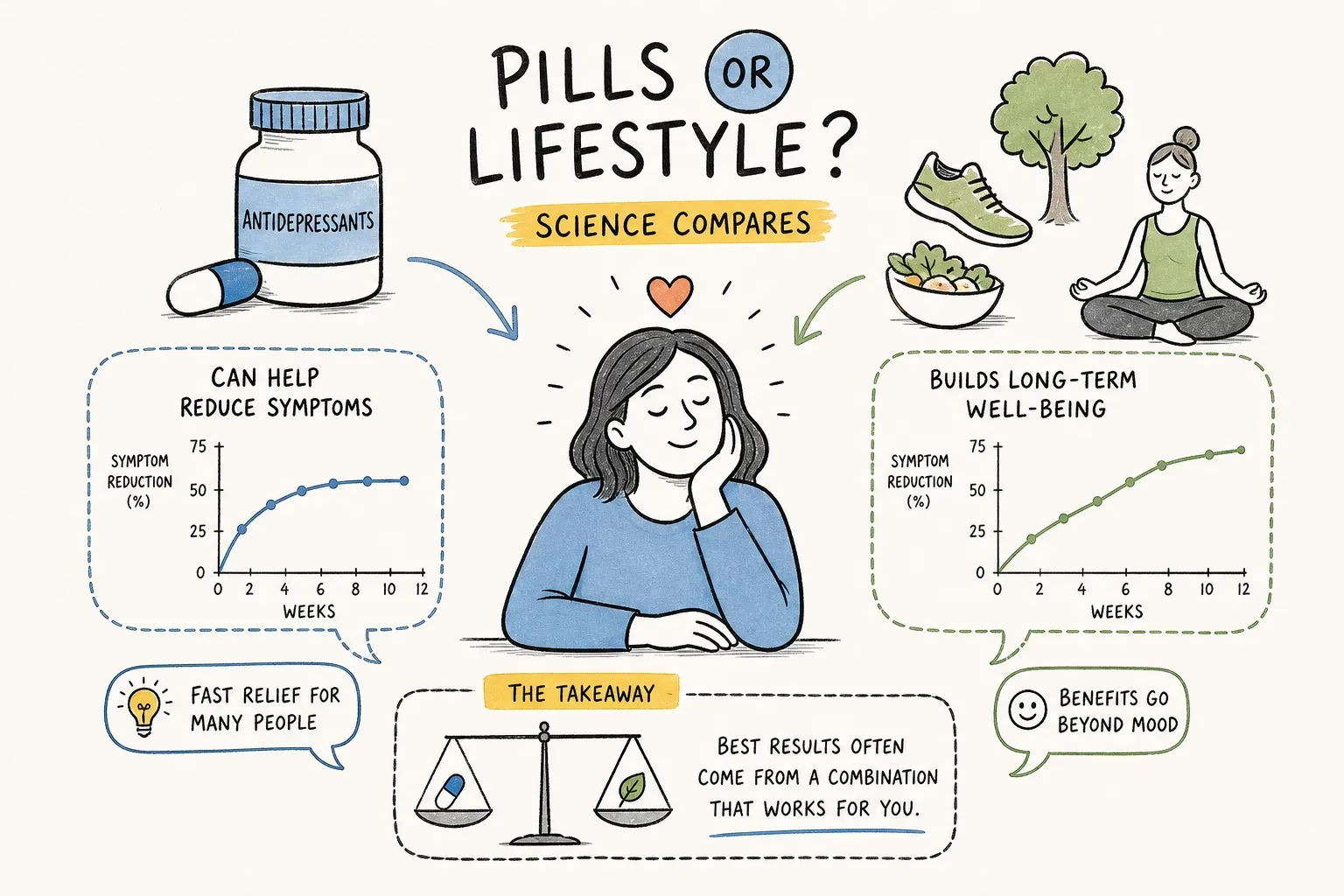
Both camps have passionate advocates, and the internet tends to make that question harder to answer, not easier.
Anti-medication voices cite lifestyle success stories; pro-medication voices point to neurobiological necessity. Neither framing is wrong, but both are incomplete.
At DocChristine, Dr. Christine Sauer works at the intersection of conventional psychiatry and lifestyle medicine.
She has watched patients recover through medication, through structured lifestyle programs, and through intelligent combinations of both.
What follows is a physician-led review of what the clinical research actually shows, without ideology on either side.
The goal is to help you understand the evidence, identify which approach fits your situation, and find a practical starting point.
Antidepressants vs. lifestyle changes for depression: what the head-to-head trials found
Direct randomized comparisons between antidepressants and structured lifestyle interventions are rarer than most people expect.
The gold standard for this question requires randomly assigning people to medication or to a specific lifestyle program and measuring outcomes under the same conditions. Only a handful of trials have done that rigorously.
Start With One Gentle Next Step

If your sparkle feels dim right now, you do not need to fix your whole life today.
You only need a next step.
My free guide, 7 Steps to Climb the Mountain of Life, helps you pause, reflect, and find a gentle next step when life feels steep, foggy, or overwhelming.
The Blumenthal trials: the most cited evidence
The most frequently referenced head-to-head data come from two trials led by researcher James Blumenthal. In his 1999 study, older adults with major depression were randomized to supervised group exercise, sertraline, or a combination of both. The two groups ended up in essentially the same place.
His 2007 follow-up assigned adults with major depressive disorder to supervised exercise, home-based exercise, sertraline, or placebo.
Remission rates at four months were 45% for supervised exercise, 40% for home exercise, 47% for sertraline, and 31% for placebo.
The overall between-group difference did not reach statistical significance (p = 0.057).
In plain language, that means exercise performed comparably to medication in these trials, but not identically.
The difference was small and not statistically reliable, which is different from saying the two treatments are interchangeable for everyone.
What pooled meta-analyses add to the picture
Meta-analyses aggregate results across multiple trials to produce more stable estimates.
Three major reviews are worth knowing. Krogh et al. (2017) found a pooled effect size of g = −0.08 between exercise and antidepressants, indicating no significant difference. A large network meta-analysis by Noetel et al. (2023) in adults with non-severe depression reported an SMD of −0.12 with no superiority for either treatment.
Rethorst et al. (2009) similarly found an SMD of −0.04, centered near zero.
Together with findings from Krogh, Noetel, and Rethorst, a near-zero effect size in this context means neither treatment consistently outperformed the other across the available trials.
One finding from Krogh et al. (2017) deserves particular attention: when exercise was added to antidepressants rather than compared against them, the combined approach showed a moderate added benefit with a pooled effect size of g = −0.50, trending toward significance.
That signal matters for how we think about treatment design.
Why these findings don't mean "exercise is as good as medication for everyone"
The limitations here are real and clinically important.
These head-to-head trials focused on mild-to-moderate and non-severe depression. They used specific, supervised exercise prescriptions, three sessions per week, 30 minutes at 70 to 85 percent of heart rate reserve, for 16 weeks, that most people don't replicate on their own.
Dropout rates were substantial in exercise arms.
The data support nuance and individualization, not a blanket substitution of one treatment for another.
How depression severity changes the equation
Severity is among the most important variables in deciding which approach is most appropriate, alongside factors like treatment history, suicidality, and patient preference.
The aggregate evidence can obscure this because it pools patients across a wide symptom range.
Breaking it down by severity level clarifies the picture considerably, and it's where guidelines and trial data start to converge.
Mild depression: where lifestyle interventions shine
The case for lifestyle as primary therapy is strongest in mild depression.
Exercise shows its most consistent antidepressant effects here, and the APA's clinical practice guideline acknowledges that a patient with mild depression who wants to try structured exercise alone for several weeks as a first intervention has a reasonable evidence base for doing so, provided close monitoring occurs.
This is not a fringe position. Dietary intervention is a promising adjunct, the SMILES trial (Jacka et al., 2017) showed remission rates of 32.3% in a structured dietary program versus 8.0% in social support controls, though diet and sleep hygiene are not yet reflected as guideline-endorsed standalone first-line treatments in the way that exercise is.
Physical activity is the best-established lifestyle-first option for mild depression; nutrition and sleep improvements strengthen the overall response when added alongside it.
Moderate depression: lifestyle as a powerful adjunct
The framing shifts meaningfully for moderate depression.
Lifestyle interventions remain beneficial and should be part of the picture, but the evidence supports adding a second evidence-based pillar rather than relying on lifestyle alone.
That second pillar might be psychotherapy, medication, or both. The combination signal from Krogh et al. (2017), g = −0.50 for exercise added to antidepressants, is the most encouraging data point here, suggesting that integration rather than substitution is the smarter clinical move.
Severe depression: when medication is not optional
For severe depression, the evidence for lifestyle interventions as standalone care is weak and variable.
Clinical guidelines from the APA, along with lifestyle medicine consensus statements, position lifestyle modifications as adjunct therapy for moderate-to-severe major depressive disorder, not as replacement therapy.
This is not a dismissal of lifestyle medicine; it is an honest reading of what the evidence currently supports at higher symptom severity.
Safety, side effects, and what happens when you stop
Comparing these two approaches isn't only about efficacy.
The costs of each treatment, in terms of tolerability, adherence, and long-term outcomes, are equally relevant to a real-world decision.
The adverse event profile for antidepressants
SSRIs and SNRIs carry a well-documented side effect profile: nausea, sexual dysfunction, sleep disruption, weight changes, and discontinuation symptoms are among the most common.
In younger patients, there is a small but serious risk of increased suicidal and homicidal ideation that warrants monitoring.
Pooled analyses of head-to-head exercise trials have reported adverse event rates of roughly 22% in antidepressant groups versus 9% in exercise groups, a meaningful gap that is relevant to patient preference and tolerability decisions.
Adherence is also a real issue.
Discontinuation data from prescription database studies suggest that 44% to 68% of patients stop antidepressants within the first three months, most commonly because they feel better, experience side effects, or don't perceive the medication as working.
Any honest comparison has to account for the fact that a treatment people don't take doesn't help them.
Lifestyle interventions: safer, but not without friction
Lifestyle-based interventions carry a low incidence of serious adverse events, but they are not cost-free.
Exercise dropout rates in head-to-head trials are higher than medication dropout rates.
Behavior change is genuinely difficult to initiate and sustain, particularly for someone in the grip of low energy, poor motivation, and disrupted sleep that depression itself produces.
"Low side effects" does not mean "easy to implement."
That distinction matters when helping someone choose a realistic starting point.
Relapse and recurrence: an understudied comparison
Direct head-to-head relapse data comparing antidepressants to structured lifestyle interventions are limited.
What we know is that stopping antidepressants is associated with relapse rates of roughly 40% to 56% within one year, compared to 18% to 39% for those who continue medication.
For structured lifestyle interventions, comparable long-term relapse-rate data are not yet available in the same form.
This is a genuine gap in the evidence that deserves honest acknowledgment rather than confident claims from either camp.
What clinical guidelines currently recommend
The APA depression guideline recommends psychotherapy and second-generation antidepressants as initial treatments for adult depression, while also explicitly promoting exercise, sleep hygiene, good nutrition, and reduced alcohol use as healthy behaviors worth supporting.
Lifestyle measures are framed as supportive and adjunctive, not as replacements for medication or therapy in standard moderate-to-severe care.
NICE takes a more directive stance toward physical activity specifically, recommending structured, supervised group exercise programs as a recognized intervention for depression rather than simply general wellness advice.
The clinical logic that emerges from guidelines and evidence combined points toward a phased approach: start with lifestyle medicine for mild depression, add a second pillar as severity increases, and consider combining all three approaches for persistent or severe cases.
This cumulative model avoids the false binary of medication or lifestyle and reflects how most experienced clinicians actually practice.
Choosing between antidepressants vs. lifestyle changes for depression: where to start
Mild symptoms with intact daily functioning represent the most appropriate entry point for a lifestyle-first approach.
When symptoms impair work, relationships, or sleep significantly, or when they've persisted beyond a few weeks despite consistent lifestyle effort, adding conventional treatment becomes the more evidence-supported path.
Severity is a key clinical compass, but it isn't the only variable. Consider it alongside your history, current circumstances, and what you can realistically sustain.
Medication access, past treatment experiences, personal values, support systems, and a realistic assessment of your capacity to sustain structured behavior change all shape which approach is actually sustainable for you.
Someone who has had difficult experiences with antidepressants isn't wrong to prioritize alternatives. Someone who genuinely cannot sustain a structured exercise program three times per week needs a different plan. Evidence informs the decision; it doesn't make it for you.
For most people with moderate-to-severe depression, neither approach alone is the complete answer.
The meta-analytic signal for combining structured lifestyle intervention with antidepressant treatment, Krogh et al. (2017), g = −0.50, represents the most promising finding in this literature. Integration, sequenced thoughtfully, tends to outperform ideological commitment to either camp.
A structured path that bridges both worlds
The antidepressants vs. lifestyle changes debate, as it plays out online, almost always forces a false choice. In clinical practice, the question is rarely "medication or lifestyle" and almost always "how do we use both wisely and in the right sequence?"
That framing reduces unnecessary suffering. It also reflects what the evidence actually supports.
Dr. Sauer's Recover Your Sparkle framework at DocChristine is built around exactly this kind of integration.
It maps root causes across multiple domains, sleep, gut health, nutrition, and nervous system regulation, alongside conventional psychiatric care, and presents that material in plain, non-alarmist language grounded in physician-led clinical experience.
The SMILES trial data on dietary intervention (Jacka et al., 2017), for example, showed remission rates of 32.3% in a structured dietary program versus 8.0% in controls.
That kind of evidence belongs in any serious discussion of depression treatment alongside the medication data, not instead of it.
Conclusion
The research shows that antidepressants and structured lifestyle interventions for depression are closer in average effect size than most people expect.
The head-to-head trials produced near-zero pooled differences, meaning neither treatment clearly outperformed the other across the available evidence.
When weighing antidepressants vs. lifestyle changes for depression, severity is the key variable that separates when each approach is most appropriate, and combining them intelligently is often the most evidence-supported path of all.
This decision is personal and genuinely complex.
No article replaces a conversation with a knowledgeable clinician who can assess your specific symptoms, history, preferences, and circumstances.
What this review can do is give you a clearer map of the terrain before that conversation. The goal isn't to choose a side in a debate. It's to recover.
For anyone ready to move from information to a structured plan, DocChristine offers courses, evidence-informed articles, and the Recover Your Sparkle framework to support that next step.
Start Where You Are: Discover the 7 Steps to Depression Recovery
Download the free guide:
7 Steps to Climb the Mountain of Life
Get the guide and take one gentle next step today.
You’ll also receive occasional educational emails from Dr. Christine Sauer about emotional wellness, resilience, brain health, and Recover Your Sparkle. You can unsubscribe anytime.
Frequently Asked Questions
The answer depends on the person, the severity of the depression, and the kind of lifestyle intervention being used.
Some research suggests that structured exercise can perform surprisingly close to antidepressant medication in certain groups, especially in mild-to-moderate or non-severe depression. But that does not mean exercise and medication are interchangeable for everyone.
The real question is not simply, “Which one works better?” The better question is, “What kind of support fits this person, this severity, and this season of life?”
For mild depression, structured lifestyle changes such as exercise, sleep improvement, nutrition, reduced alcohol use, and stress reduction may be a reasonable first step for some people, especially with appropriate monitoring.
For moderate depression, lifestyle changes can still be very important, but many people need an additional pillar of support, such as psychotherapy, medication, or both.
For severe depression, lifestyle changes should usually be viewed as supportive rather than a replacement for professional care. Safety, symptom severity, and functioning matter.
No.
Do not stop, reduce, or change psychiatric medication suddenly because of something you read online. Medication changes should be discussed with a qualified healthcare professional who knows your medical history and can help you make a careful plan.
If you have concerns about side effects, emotional blunting, withdrawal, or whether medication is still right for you, those concerns deserve to be taken seriously. Bring them to a clinician and ask for informed, individualized guidance.
Yes, exercise can help many people with depression, especially when it is structured and realistic.
The strongest lifestyle evidence is for physical activity, particularly in mild depression. Exercise may support mood, sleep, stress regulation, energy, confidence, and brain health. But depression can make exercise difficult to start and sustain, so the plan has to fit the person’s current capacity.
“Exercise helps” does not mean “just go exercise.” A depressed person may need support, structure, encouragement, and a very gentle starting point.
The most important lifestyle foundations often include:
- regular physical activity
- better sleep routines
- nutrition that supports brain and body health
- reduced alcohol use
- stress reduction
- sunlight and time outdoors
- social connection
- meaningful routines
- therapy, counseling, or emotional support when needed
These are not magic fixes. They are parts of a larger recovery map.
That does not mean you failed.
Depression can make behavior change very hard. Low energy, poor sleep, hopelessness, pain, isolation, and stress can all make even simple habits feel impossible.
It may mean the plan was too demanding, the support was too weak, the depression was more severe than it seemed, or other factors were missed. A better next step may be therapy, medical evaluation, medication review, lab work, sleep support, social support, or a more realistic structured plan.
Yes. For some people, antidepressants may reduce suffering, improve functioning, or help create enough stability to participate in therapy and life again.
This article is not anti-medication. It is against a narrow, rushed, one-size-fits-all approach. Medication may be one useful tool, but it should not crowd out informed consent, careful monitoring, lifestyle support, therapy, relationships, meaning, and the rest of the person’s life.
Severity helps determine how much support is needed.
Mild depression may respond well to structured lifestyle changes, therapy, and practical support. Moderate depression often needs a stronger combined approach. Severe depression, especially when there are suicidal thoughts, inability to function, psychosis, dangerous agitation, or major impairment, requires prompt professional care.
The more dangerous or disabling the depression is, the less appropriate it is to rely on lifestyle changes alone.
That also does not mean you failed.
Some people do not respond well to a particular medication. Some experience side effects. Some need a different approach altogether. Some need therapy, lifestyle support, trauma-informed care, medical evaluation, or practical life changes that medication alone cannot provide.
Your experience matters. It should be part of the conversation.
Often, yes.
For many people, the most helpful path is not medication or lifestyle, but a thoughtful combination of supports. That might include therapy, sleep improvement, exercise, nutrition, stress reduction, relationship support, spiritual care, medication when appropriate, and careful follow-up.
The goal is not to choose a side in an internet debate.
The goal is to recover.
You may want to ask:
- How severe does my depression seem?
- What else could be contributing to my symptoms?
- Are there medical, nutritional, hormonal, sleep, pain, or medication-related factors to consider?
- What are the possible benefits and risks of medication?
- What side effects should I watch for?
- How will we know if this treatment is helping?
- What lifestyle supports should be part of my plan?
- Would therapy or counseling help?
- What should I do if I want to stop or change medication later?
- How often should we follow up?
Good care should make room for questions.
Start by getting clear about your current terrain.
Ask yourself:
How severe are my symptoms, how much are they affecting my life, and what kind of support do I realistically need right now?
Then bring that question to a qualified healthcare professional or trusted support person. You do not have to solve the whole mountain today. You need one safe next step.
Last Updated on August 12, 2026 by Dr. Christine Sauer