The Aladdin Factor: A Book About Learning to Ask for What You Need
By Dr. Christine Sauer | Reading Note - Last Updated: June 2026
There are books that give you information. And there are books that quietly change the way you move through life.
The Aladdin Factor by Jack Canfield and Mark Victor Hansen is one of those books for me.
Its central message is simple: many people do not receive what they need, want, or hope for because they do not ask.
Not because they are lazy. Not because they are unworthy. Not because they do not deserve support.
But because asking can feel frightening.
It can make us feel needy, selfish, exposed, weak, demanding, or afraid of rejection.
For many people, especially those who have spent years caring for everyone else, asking can feel harder than giving.
But learning to ask is not selfishness.
It is healthy agency.
It is dignity.
And sometimes, it is part of recovery.
Quick Take
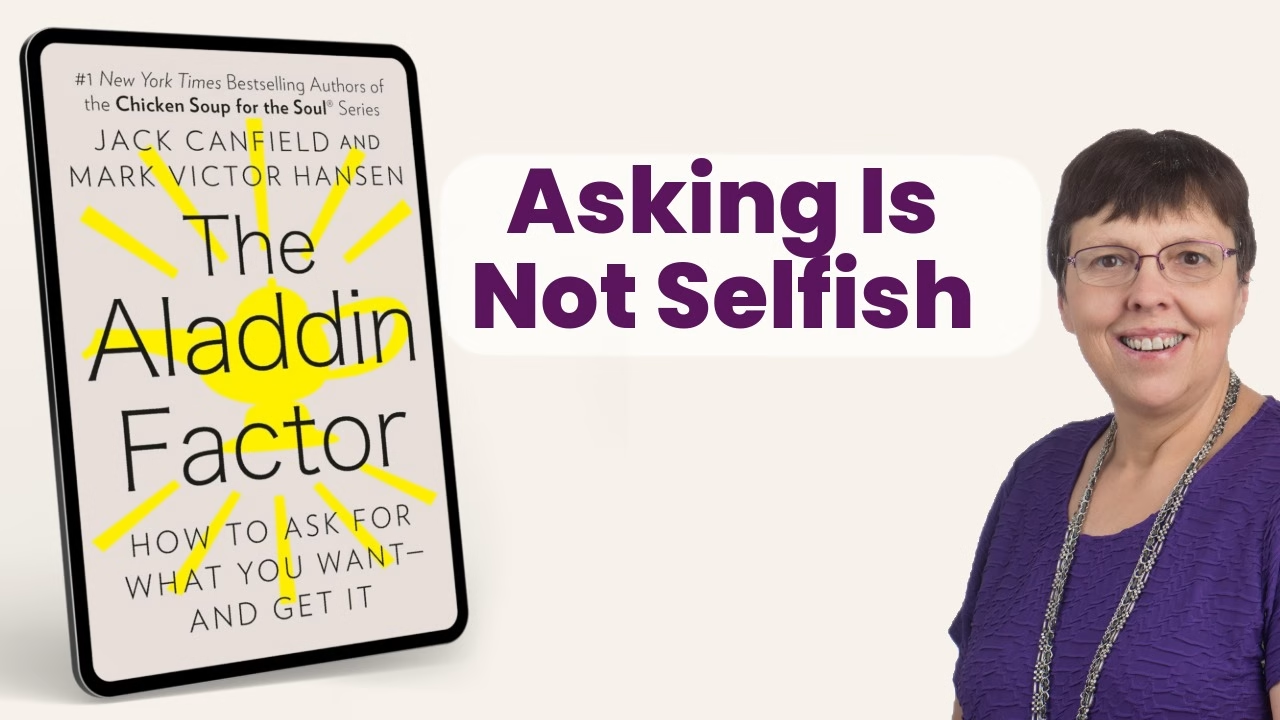
The Aladdin Factor is a classic personal-development book about the courage to ask clearly for what you want and need. The authors explore why people often stay silent, settle for less, avoid asking for help, or assume the answer will be no before they have even opened their mouths.
The book encourages readers to become more direct, more willing to ask, and more open to receiving support, opportunity, connection, and practical help. It is not a book about demanding everything you want from life.
It is a book about learning that you are allowed to ask. That alone can change a great deal.
Why I Am Sharing This Book
I have met many people who can work hard, care deeply, give generously, and carry enormous responsibility.
But when it comes to asking for what they need, they freeze.
They may be afraid to ask for help. Afraid to ask their doctor a difficult question. Afraid to ask a partner for more support. Afraid to ask for a boundary. Afraid to ask for rest. Afraid to ask for a raise, a new role, a second opinion, an accommodation, or a different path.
Sometimes people do not even know what they need anymore.
They have become so used to surviving, pleasing, adapting, and carrying on that they no longer stop to ask:
This book is a useful reminder that asking is a skill.
And like many skills, it can feel awkward at first.
The Central Idea: Ask More Clearly
The heart of The Aladdin Factor is not magical thinking.
It is the idea that many doors stay closed because we never knock.
People often assume that others should notice what they need. They hope someone will offer.
They wait to be invited. They tell themselves that asking would be rude, selfish, embarrassing, or pointless.
But other people cannot always see what is happening inside us.
They may not know we are overwhelmed. They may not know we need help.
They may not know we are open to an opportunity. They may not know that one small act of support could make a real difference.
Asking does not guarantee a yes.
But not asking often guarantees that nothing changes.
What This Looks Like in Real Life
Healthy asking can be simple.
It may sound like:
- Could you come with me to this appointment?
- I need more time before I can make that decision.
- Can you explain the risks and benefits in a way I can understand?
- I am struggling more than I have admitted.
- Could we find another way to do this?
- I need help with the children this week.
- I would like to apply for that opportunity.
- Can we talk about what is not working?
- I need rest.
- I need support.
- I do not understand.
- No, that does not work for me.
None of these sentences are dramatic.
But for someone who has spent years making themselves small, they can be life-changing.
The Dr. Christine Perspective: Asking Is Part of Recovering Your Sparkle
When people have been depressed, anxious, burned out, ill, grieving, traumatized, or overwhelmed for a long time, they often lose a sense of agency.
They may begin to feel that life is simply happening to them.
They may stop asking because they no longer believe their needs matter.
Or because they have asked before and been disappointed.
Or because they have been taught that being “good” means being quiet, easy, grateful, and undemanding.
But recovery often includes learning to take up a little more healthy space.
Not by becoming aggressive. Not by demanding that other people rescue you.
But by becoming more honest. More specific. More willing to say:
That is not selfishness.
That is self-respect.
A Small Practice: The Ask You Have Been Avoiding
Take a piece of paper and finish this sentence:
REFLECTION PROMPT
One thing I need, want, or hope for that I have been afraid to ask for is...
Do not judge the answer.
It may be practical. It may be emotional. It may be small. It may be something you cannot ask for yet.
That is okay.
The first step is often not making the request.
The first step is admitting the request exists.
Then ask yourself:
- Who might be the right person to ask?
- What exactly would I like to say?
- What is the smallest, clearest version of the request?
- What would make asking feel safer?
- If the answer is no, what else could I try?
You do not need to ask perfectly.
You only need to become a little more willing to let your real needs exist in the world.
Who This Book May Help
This book may be especially helpful for people who:
- struggle to ask for help
- feel guilty about having needs
- over-give in relationships
- avoid difficult conversations
- fear rejection or embarrassment
- want more confidence in work or business
- feel stuck because they wait for others to notice
- are rebuilding life after depression, burnout, illness, grief, or major change
- want to become more direct without becoming harsh
- are learning to reconnect with their own wants, needs, and voice
It may also be a helpful book for caregivers, helpers, clinicians, coaches, parents, and high-achieving people who are very good at giving but uncomfortable receiving.
What This Book Cannot Do
This book cannot guarantee that people will say yes.
It cannot make an unsafe relationship safe.
It cannot solve poverty, discrimination, illness, grief, trauma, or systemic barriers simply by encouraging someone to ask more confidently.
It also cannot replace therapy, medical care, legal advice, crisis support, or practical safety planning when those are needed.
Sometimes the hardest part is not asking.
Sometimes the hardest part is finding a person who is safe enough to ask.
That matters.
The lesson is not: “Ask for anything and life will give it to you.”
The lesson is closer to this:
KEY IDEA
Do not decide that the answer is no before you have given yourself permission to ask.
My Main Takeaway
The part of this book I carry with me is this:
And sometimes, asking is the first small sign that you have begun to believe your life still matters.
That is a powerful step toward recovering your sparkle.
Frequently Asked Questions
The Aladdin Factor is a personal-development book by Jack Canfield and Mark Victor Hansen about learning to ask clearly for what you want and need. Its central idea is that many people miss support, opportunities, clarity, and connection because they are afraid to ask.
It may be especially helpful if you struggle to ask for help, feel guilty about having needs, avoid difficult conversations, or tend to give far more than you receive. It is practical, encouraging, and focused on healthy self-advocacy.
No. Healthy asking is not the same as demanding, manipulating, or expecting other people to rescue you. It is the ability to name your needs, hopes, boundaries, and requests honestly and respectfully.
My main takeaway is that asking can be an act of self-respect. You are allowed to ask for help, more clarity, support, rest, a second opinion, a boundary, or a different future. Sometimes asking is the first sign that you are beginning to believe your life still matters.
Where to Find the Book
The Aladdin Factor: How to Ask for What You Want—and Get It is written by Jack Canfield and Mark Victor Hansen.
You can also borrow this book from your local library, or ask an independent bookstore or your preferred bookseller to order it for you. Publisher book page
Affiliate note: If you buy through one of these Amazon links, I may earn a small commission at no extra cost to you.This helps support my educational work.
Continue Your Sparkle Path
If this book note speaks to you, these next steps may help:
- Explore Recover Your Sparkle if you feel disconnected from yourself, hope, or meaning.
- Read The Questions That Shape a Life if you are trying to understand what matters now.
- Start with 7 Steps to Climb the Mountain of Life if you need one calm, practical next step.
- Visit Start Here if you are unsure where to begin.
You do not have to solve everything today.
But you may be ready to ask one more honest question than you asked yesterday.
And that may be enough to open a door.
Affiliate note: This page contains affiliate links. If you choose to buy through one of these links, I may earn a small commission at no extra cost to you. I only share books and resources I believe may be genuinely helpful.
Last Updated on September 18, 2026 by Dr. Christine Sauer