
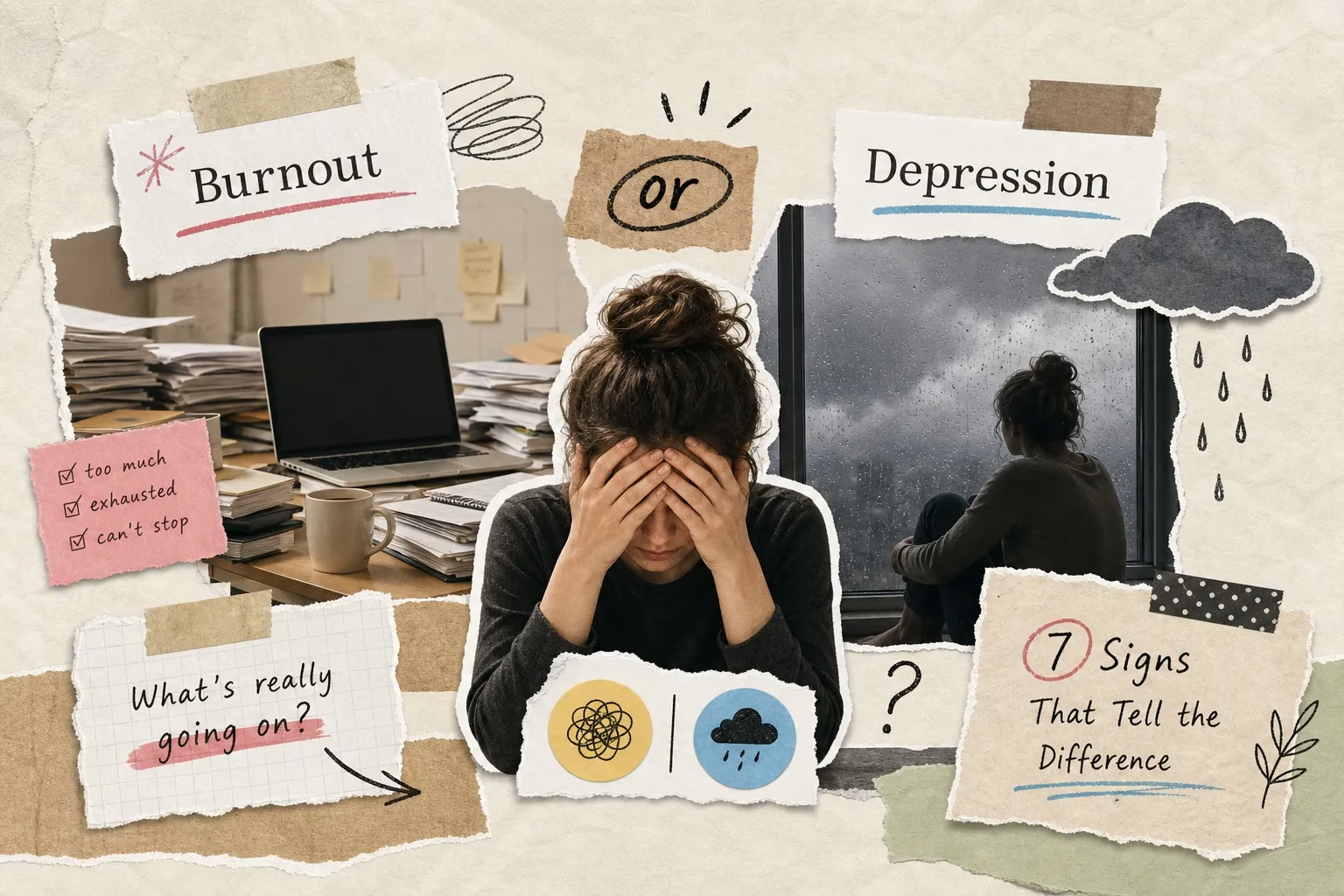
Burnout or Depression?
7 Signs That Tell the Difference
Burnout and depression can look very similar from the inside. Both can cause exhaustion, poor concentration, low motivation, disrupted sleep, and emotional numbness.
The biggest difference is often where the symptoms live. Burnout is usually tied to a specific role, workload, or caregiving situation, and genuine rest or time away may bring at least some relief. Depression tends to follow you across life, including weekends, vacations, relationships, hobbies, and quiet moments.
If you have lost pleasure in things that used to matter, feel worthless or excessively guilty, or have thoughts of not wanting to be here, take that seriously and seek help. Those signs point beyond ordinary burnout.
The goal is not to label yourself perfectly. The goal is to understand your terrain clearly enough to get the right kind of support.
You've been exhausted for months.
Mornings feel like something to dread rather than start.
You can't remember the last time you genuinely enjoyed something, and when someone close to you says "you're just burned out," it doesn't land as reassurance.
It feels like a minimization.
Because whatever this is, it doesn't feel like "just" anything.
Here's what makes that frustration valid: burnout and depression overlap in ways that genuinely confuse even experienced clinicians.
If you're trying to figure out whether you're dealing with burnout vs. depression, or both at once, you're asking one of the harder clinical questions in mental health.
Both produce exhaustion, emotional flatness, difficulty concentrating, and a loss of the person you thought you were.
The symptoms don't come with clear labels. Dr. Christine Sauer, a physician with 40+ years of clinical and personal experience in mental health, has seen this confusion repeatedly in practice and has lived through it herself.
The mix-up isn't a sign of weakness or inattention. It's a genuinely hard clinical question.
The stakes of getting it wrong are real.
Treating burnout like depression can mean starting a medication that doesn't address the actual problem.
Treating depression like burnout can mean taking a vacation while a medical condition continues to worsen.
These two conditions share roots, but they have different trajectories and different recovery paths.
The 7 signs below won't replace a clinical evaluation, but they will help you orient yourself before you walk into that conversation.
Why burnout and depression feel like the same thing
The symptoms they genuinely share
Exhaustion, difficulty concentrating, lost motivation, disrupted sleep, and emotional numbness show up in both conditions. This isn't coincidence.
Both burnout and major depressive disorder involve dysregulation of stress-response systems in the brain and nervous system.
The shared core is what researchers call emotional exhaustion, a state where your capacity to feel, engage, and recover has been depleted.
Because validated screening tools like the PHQ-9 (which screens for depression) and the Maslach Burnout Inventory (which measures burnout) assess overlapping but non-identical constructs, clinicians typically need both to get a clearer picture.
Where the clinical lines actually differ
Occupational burnout is context-linked. It emerges from chronic stressors, typically work or a sustained caregiving role, and it shows up as emotional exhaustion, cynicism, and a shrinking sense of professional efficacy.
Major depressive disorder (MDD), as defined by DSM-5 criteria, is a broader syndrome: depressed mood or loss of interest in nearly all activities, plus at least five specific symptoms across multiple life domains, lasting a minimum of two weeks.
One of the most useful clinical clues is what happens when the stressor is removed.
If you take a genuine vacation or step away from the job and begin to feel more like yourself, even partially, that leans toward burnout.
If the low mood persists regardless of what's happening around you, that points toward depression.
Context-dependence matters more than people realize when trying to separate burnout from depression.
7 signs to distinguish burnout vs. depression
Signs 1 - 3: These tend to point toward burnout
1. Your symptoms are mostly work-shaped. The exhaustion, cynicism, and detachment are concentrated around your job or a specific caregiving role. Home life still has moments of genuine enjoyment, even if they're rare and muted. When you're away from the source of stress, something in you eases, even slightly.
2. Cynicism has replaced your professional identity. You notice a creeping contempt for work you once cared about. You're going through the motions, feeling detached from colleagues or patients, and your sense of competence has quietly collapsed. These features, depersonalization and reduced professional efficacy, are the hallmark dimensions of burnout as measured by the Maslach Burnout Inventory. They're not random; they're a signature pattern.
3. Rest brings some relief. A genuine break, real time away from the stressor, makes you feel slightly more like yourself. The recovery isn't complete. You don't bounce back overnight. But there's a noticeable shift when pressure is reduced. That partial responsiveness to rest is a meaningful clinical signal that points toward burnout rather than depression.
Signs 4 - 7: These tend to point toward depression
This article is educational and reflective in nature and does not provide medical advice, diagnosis, or treatment. Psychiatric medications should never be stopped abruptly or changed without guidance from a qualified healthcare professional familiar with your individual medical history. If you need support, please call one of the crisis hotlines today.
4. The low mood follows you everywhere. It's not just at the office. Weekends don't help. Vacations don't help. The heaviness shows up at the dinner table, on walks, in conversations with people you love. When symptoms are pervasive rather than context-bound, that's a key indicator of clinical depression rather than occupational exhaustion.
5. Anhedonia has set in. You've lost interest or pleasure in things that have nothing to do with work: hobbies you loved, relationships that used to energize you, food, creativity, physical intimacy. Anhedonia, the technical term for this loss of pleasure, is one of the two core criteria required for a diagnosis of major depressive disorder. Burnout rarely produces it in this pervasive form.
6. Guilt and worthlessness have entered the picture. You're not just exhausted or frustrated. You feel like you're fundamentally failing, like you're a burden, like something is wrong with you as a person. Burnout doesn't typically generate this internalized shame. Worthlessness and excessive guilt are specific features of the DSM-5 depressive symptom cluster and should be taken seriously when they appear.
7. Thoughts about death or not wanting to be here. Even passive ones, even fleeting ones, even thoughts framed as "I just want to disappear for a while", these are depression territory. They are not burnout symptoms. If this applies to you, that distinction matters right now, not later in this article.
When burnout slides into clinical depression
What the research actually shows about risk
Burnout and clinical depression are distinct constructs, but burnout substantially raises the risk of developing depression, particularly when it's severe or prolonged.
In one longitudinal study of dentists (Ahola et al., 2014), approximately 23% of people with burnout symptoms at baseline developed depression at a follow-up timepoint, and the burnout-to-depression pathway appeared stronger than the reverse.
In studies of physicians, the odds of mild-to-severe depression rose steeply with burnout severity, from roughly three times the odds with mild burnout to dramatically higher with severe emotional exhaustion.
One cross-lagged analysis tracked burnout predicting depressive symptoms seven years after baseline.
That's not a short window. It means the relationship between burnout and depression can persist and compound over a long period if left unaddressed, reinforcing that early recognition is worth the effort.
What accelerates the crossover
Prolonged duration without any intervention is the clearest accelerant.
When burnout symptoms go unaddressed for months or years, the nervous system doesn't simply wait. Lack of social support, prior mental health history, and chronic sleep deprivation all compound the risk.
You don't need a formal diagnosis to take your symptoms seriously. Feeling this way for this long is enough reason to seek an evaluation.
Recovery looks different depending on what you're dealing with
What evidence-based burnout recovery requires
Burnout responds best to structural and organizational change first: reducing workload, increasing autonomy, and addressing the conditions that created the exhaustion in the first place.
Changing the input matters more than managing the output.
At the individual level, CBT-based programs, mindfulness-based stress reduction (MBSR), and ACT-based approaches have the strongest evidence for reducing burnout symptoms and improving emotional exhaustion.
Burnout recovery is not about resilience training or pushing through. It's about changing what's generating the depletion.
What clinical depression requires
Depression is a medical condition that warrants clinical evaluation.
Psychotherapy, particularly cognitive behavioral therapy and other structured, evidence-based approaches, is a first-line treatment across most clinical guidelines.
Antidepressant medications are a well-established option for moderate-to-severe depression; for mild-to-moderate presentations, psychotherapy alone has comparable outcomes in many trials.
Lifestyle factors including sleep quality, nutrition, movement, and gut health play a documented role in mood regulation and can form a meaningful part of a whole-person recovery plan.
A structured path for when you're at this crossroads
For people who aren't sure which territory they're navigating, the "Recover Your Sparkle" framework developed by Dr. Christine Sauer at DocChristine.com is designed specifically for this overlap zone.
It doesn't start by labeling the condition. It starts by understanding the person's nervous system, lifestyle patterns, sleep, nutrition, and history, then building a recovery path tailored to the whole picture.
The approach is physician-led, root-cause focused, and built for people who are tired of generic advice that doesn't account for how complex this territory actually is.
Warning signs that mean you need help right now
Clinical red flags to take seriously
Suicidal thoughts, even passive ones phrased as "I wish I weren't here" or "I just want it to stop", require immediate attention. These are not burnout symptoms.
Other warning signs that escalate urgency include making a plan, researching methods, giving away possessions, sudden calm after a period of severe distress, agitation or reckless behavior, escalating substance use, and social withdrawal combined with hopelessness.
When any of these are present, the situation has moved beyond self-guided management, regardless of whether a formal diagnosis exists.
Where to turn in the U.S. and Canada right now
These resources are available 24 hours a day, every day:
- 988 (call or text): the 988 Suicide and Crisis Lifeline (USA and Canada)
- Spanish-language line: 1-888-628-9454
- Crisis Text Line: text HELLO to 741741 (USA and Canada)
- 911 for immediate danger (USA and Canada)
- Kids Help Phone (Canada): text CONNECT to 686868.
If you're not in crisis but these signs feel close, bring this article's checklist to a conversation with your primary care physician, therapist, or psychiatrist.
Having something concrete to show a provider often makes it easier to say what you've been struggling to articulate alone.
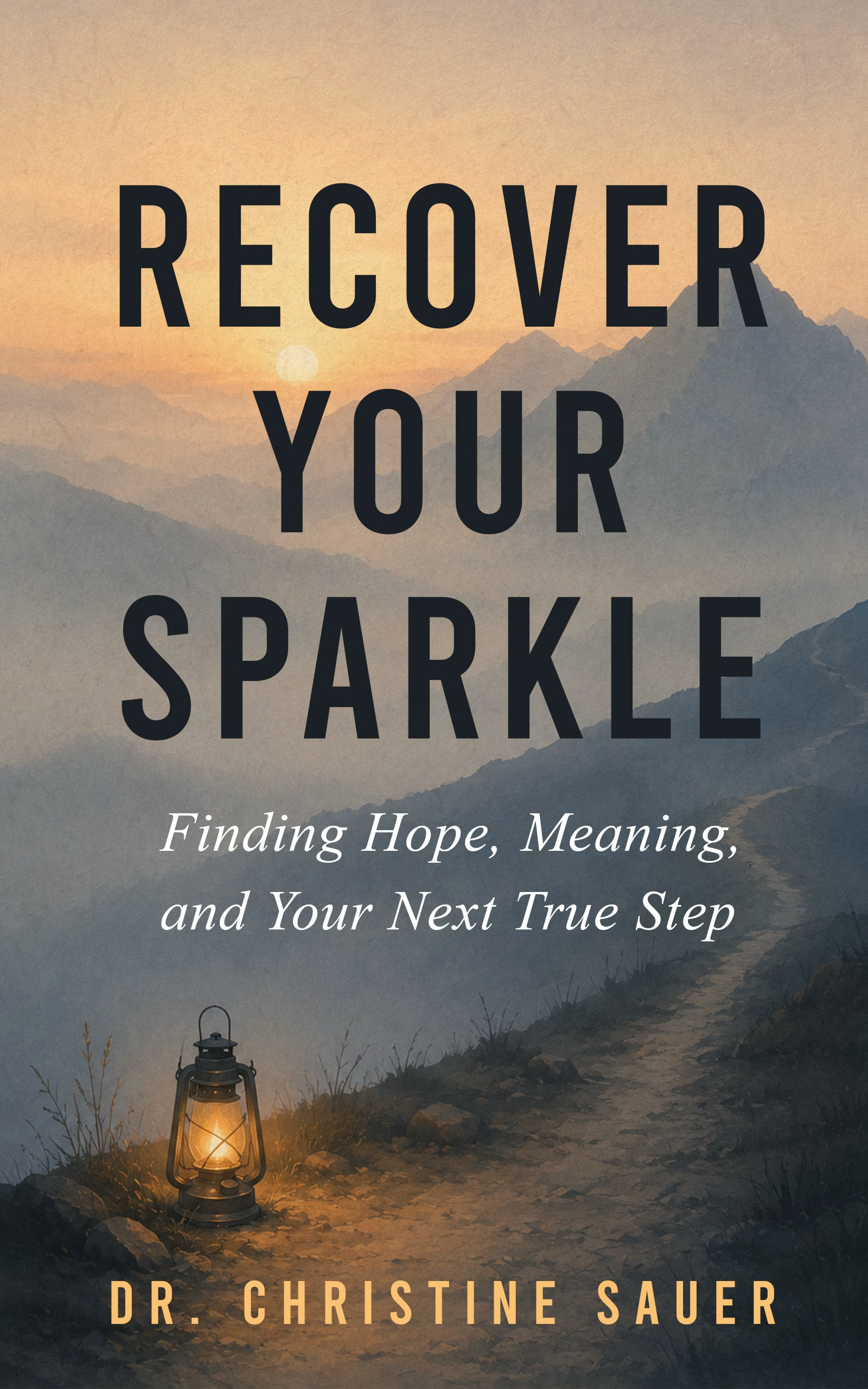
Recover Your Sparkle: The Book
A deeper journey into the Mountain of Life, emotional exhaustion, hope, meaning, and your next true step.
Learn more about the book →
Getting clear is the first genuinely useful step
Burnout and depression aren't interchangeable.
They share a surface that makes them feel identical from the inside, but their root causes, their trajectories, and the interventions that actually help are meaningfully different.
Use the 7 signs above to orient yourself.
Here's a simple checklist to bring to your next clinical conversation:
- Are your symptoms mostly tied to work or a specific role, or do they follow you everywhere?
- Does genuine rest, real time away from the stressor, bring any relief, even partial?
- Have you lost pleasure in things unrelated to work (hobbies, relationships, food)?
- Are feelings of worthlessness or excessive guilt part of the picture?
- Have you had any thoughts about not wanting to be here, even briefly?
- Complete a PHQ-9 screening and bring your score to the appointment.
If you're still unsure whether you're dealing with burnout vs. depression, seek a proper evaluation rather than waiting for certainty that may not come on its own. A clinician can use tools like the PHQ-9 and the Maslach Burnout Inventory together to get a clearer picture than either one provides alone.
Confusion between these two conditions is not a personal failure. It's a genuinely hard clinical question that even trained professionals take time to untangle. What matters is that you're asking it.
Wherever you fall on this spectrum, recovery is possible. Dr. Christine Sauer's "Recover Your Sparkle" framework and the evidence-informed resources at DocChristine.com offer a physician-led starting point, one that takes the whole picture seriously and builds a real path forward rather than offering a diagnosis without a plan to match it.
Depression Recovery Can Feel Like Climbing the Mountain of Life...
Start where you are...
Download the free guide:
7 Steps to Climb the Mountain of Life
Get the guide and take one gentle next step today.
You’ll also receive occasional educational emails from Dr. Christine Sauer about emotional wellness, resilience, brain health, and Recover Your Sparkle. You can unsubscribe anytime.

Frequently Asked Questions
Burnout is usually context-linked—most symptoms center around work or a caregiving role and often ease when the stressor is removed—whereas depression (Major depressive disorder, MDD) tends to be broader and persists across life domains. Both share fatigue, concentration problems, low motivation, and emotional numbness, so a clinical evaluation using tools like the PHQ-9 and the Maslach Burnout Inventory is often needed to tell them apart.
They both commonly cause exhaustion, difficulty concentrating, lost motivation, disrupted sleep, and emotional numbness. These overlaps reflect shared dysregulation of stress-response systems and a core state the article calls emotional exhaustion.
Occupational burnout is specifically linked to chronic stressors at work or in sustained caregiving roles and shows up as emotional exhaustion, cynicism, and reduced professional efficacy. People with burnout may still have rare or muted moments of enjoyment at home and often feel somewhat better when away from the stressor.
Improvement after genuinely stepping away from the stressor leans toward burnout, because burnout is context-dependent and often eases with rest or boundary changes. However, this clue isn't definitive—if low mood persists regardless of context, it more strongly suggests depression and warrants clinical assessment.
Wherever you fall on this spectrum, recovery is possible. Dr. Christine Sauer's "Recover Your Sparkle" framework and the evidence-informed resources at DocChristine.com offer a physician-led starting point, one that takes the whole picture seriously and builds a real path forward rather than offering a diagnosis without a plan to match it.
Burnout recovery typically focuses on workplace or caregiving changes—rest, boundary-setting, and addressing organizational causes—whereas depression may require psychotherapy, medication, or a combination to treat a medical syndrome. Mislabeling one as the other risks getting an ineffective intervention, such as medication for purely situational burnout or only taking a vacation when a medical condition needs treatment.
According to DSM-5 criteria described in the article, MDD involves depressed mood or loss of interest in nearly all activities plus at least five specific symptoms across multiple life areas, lasting a minimum of two weeks. If low mood and functional impairment persist regardless of changes in external stressors, that pattern points toward depression and should prompt medical evaluation.
Q: How can I tell whether I'm experiencing burnout or depression?
A: Burnout is usually context-linked—most symptoms center around work or a caregiving role and often ease when the stressor is removed—whereas depression (Major depressive disorder, MDD) tends to be broader and persists across life domains. Both share fatigue, concentration problems, low motivation, and emotional numbness, so a clinical evaluation using tools like the PHQ-9 and the Maslach Burnout Inventory is often needed to tell them apart.
Q: What symptoms do burnout and depression have in common?
A: They both commonly cause exhaustion, difficulty concentrating, lost motivation, disrupted sleep, and emotional numbness. These overlaps reflect shared dysregulation of stress-response systems and a core state the article calls emotional exhaustion.
Q: Is burnout only related to work?
A: Occupational burnout is specifically linked to chronic stressors at work or in sustained caregiving roles and shows up as emotional exhaustion, cynicism, and reduced professional efficacy. People with burnout may still have rare or muted moments of enjoyment at home and often feel somewhat better when away from the stressor.
Q: If I feel better after a vacation, does that mean it's burnout not depression?
A: Improvement after genuinely stepping away from the stressor leans toward burnout, because burnout is context-dependent and often eases with rest or boundary changes. However, this clue isn't definitive—if low mood persists regardless of context, it more strongly suggests depression and warrants clinical assessment.
Q: When should I see a clinician rather than trying self-care for burnout?
A: See a clinician if symptoms are severe, persist despite removing or changing the stressor, or meet criteria for broader dysfunction across life domains. A professional can use validated tools like the PHQ-9 and the Maslach Burnout Inventory to differentiate burnout from Major depressive disorder (MDD) and recommend appropriate treatment.
Q: How do treatment approaches differ for burnout versus depression?
A: Burnout recovery typically focuses on workplace or caregiving changes—rest, boundary-setting, and addressing organizational causes—whereas depression may require psychotherapy, medication, or a combination to treat a medical syndrome. Mislabeling one as the other risks getting an ineffective intervention, such as medication for purely situational burnout or only taking a vacation when a medical condition needs treatment.
Q: What indicates Major depressive disorder (MDD) rather than burnout?
A: According to DSM-5 criteria described in the article, MDD involves depressed mood or loss of interest in nearly all activities plus at least five specific symptoms across multiple life areas, lasting a minimum of two weeks. If low mood and functional impairment persist regardless of changes in external stressors, that pattern points toward depression and should prompt medical evaluation.