
Recovering Your Sparkle After Psychiatric Medication:
A Physician’s Journey Through Darkness, Withdrawal, and Healing
Psychiatric medication deprescribing is the careful, medically supervised reduction of psychiatric drugs when appropriate. This physician’s story explores depression, chronic pain, medication withdrawal, and the slow recovery of emotional vitality, purpose, and hope.
There are seasons in life when survival quietly replaces living.
This is the true story of a physician who lost her health, nearly lost her life, spent years on psychiatric medications, and slowly found her way back to meaning, vitality, and hope again — not through quick fixes or ideology, but through courage, careful healing, and the decision to believe there could still be light ahead.
This article is educational and reflective in nature and does not provide medical advice, diagnosis, or treatment. Psychiatric medications should never be stopped abruptly or changed without guidance from a qualified healthcare professional familiar with your individual medical history.
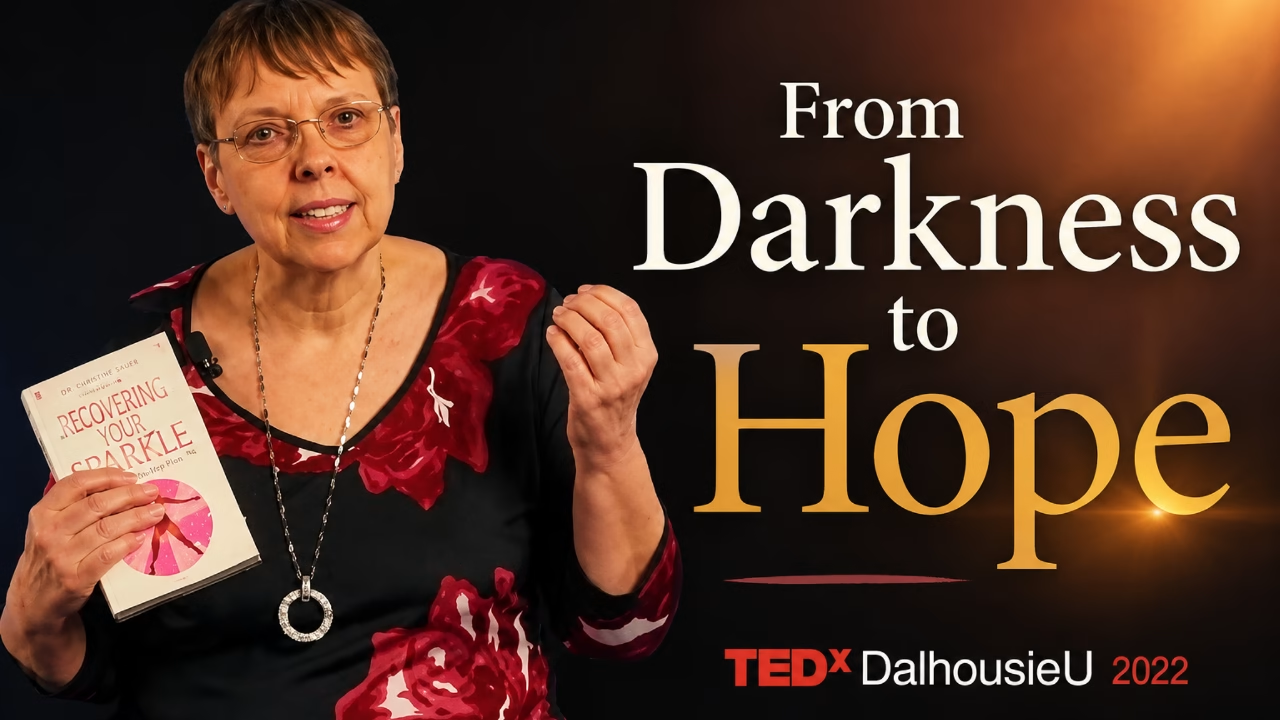
Click to play
In this TEDx talk, Dr. Christine Sauer explores depression, resilience, purpose, and the light at the end of the tunnel after profound personal loss.
Quick Summary
This physician’s story explores:
- depression and chronic pain
- psychiatric hospitalization
- emotional blunting on medication
- safe psychiatric medication deprescribing
- antidepressant withdrawal and akathisia
- nervous system healing
- recovering emotional vitality and hope
The article emphasizes:
- psychiatric medications can be life-saving
- withdrawal can be difficult and dangerous
- tapering should always be medically supervised
- healing is deeply individual
There Are Moments in Life When Suffering Arrives Quietly
Not dramatically...
Not all at once...
Sometimes it begins with a little exhaustion...
A little pain...
A little loss of joy...
And then one day, without fully understanding how it happened, life no longer feels like life.
For some people, that moment comes after grief, burnout, chronic illness, divorce, trauma, or years of silently carrying responsibilities while neglecting themselves.
For others, it emerges slowly after psychiatric medications are prescribed during a crisis — and another struggle quietly develops beneath the surface: the struggle to feel fully alive again.
This is my story.
Not a story against psychiatry.
Not a story against medication.
And certainly not a story encouraging anyone to stop medications abruptly or without medical supervision.
It is a story about something more human and more complicated.
How a physician lost herself.
How psychiatric medications helped me survive a crisis.
How those same medications eventually became part of another long struggle.
And how, slowly, carefully, and imperfectly, I recovered my sparkle again.
When the Healer Becomes the Patient
Before the collapse, I was the kind of doctor many patients hope to find.
A German-trained physician and naturopath working long hours in family medicine, dermatology, allergy medicine, and holistic care. Competent. Responsible. Productive. Needed.
From the outside, life looked successful.
Inside, it was becoming increasingly unsustainable.
There was an unhappy marriage. Endless workdays. Chronic stress. No time for rest. No time for grief.
No time to ask whether the person caring for everyone else was still being cared for herself.
Then came the first slipped disc.
One sharp moment while sitting in an office chair. A sudden pain. By evening I could barely tie my shoes. The next morning I could not walk.
An ambulance carried me to the hospital.
And there, one of the deepest psychological reversals in medicine occurred:
The doctor became the helpless patient.
I had to relearn how to walk.
I became dependent on others for the most basic human functions.
Medicine trains physicians to remain competent, composed, and useful.
Illness dismantles that illusion quickly.
I returned to work too early.
Then the second disc slipped.
This time, something inside me broke.
Start With One Gentle Next Step

If your sparkle feels dim right now, you do not need to fix your whole life today.
You only need a next step.
My free guide, 7 Steps to Climb the Mountain of Life, helps you pause, reflect, and find a gentle next step when life feels steep, foggy, or overwhelming.
A Brief Word About Me
I am a German-trained MD and ND with over 40 years of experience in integrative, functional, and mental health care.
After personally recovering from severe chronic illness, depression, psychiatric hospitalization, and long-term medication use, I now help clients navigate burnout, nervous system dysregulation, gut health, brain health, and safe psychiatric medication deprescribing in collaboration with their healthcare teams.
The Dangerous Intersection of Chronic Pain, Grief, and Isolation
Modern medicine often separates physical illness from emotional suffering.
Real life rarely does.
Chronic pain changes the nervous system. It affects sleep, stress hormones, inflammation, movement, cognition, relationships, identity, and hope itself.
Long-term pain is strongly associated with depression, anxiety, exhaustion, and suicidal thinking.
But just having back pain wasn't enough...
Tragedy struck again.
My husband died by suicide.
Suddenly I was physically disabled, emotionally shattered, caring for two teenage sons, and preparing to immigrate to Canada alone.
People often imagine suicidal crises as dramatic emotional explosions.
In reality, they are often much quieter.
- Exhaustion.
- Hopelessness.
- Emotional numbness.
- The belief that others would be better off without you.
One day, driving alone, I decided to end my life by crashing into a highway pillar.
And then something remarkable happened.
A small inner voice spoke up:
“You don’t want to die. You want help.”
That distinction matters more than many people realize.
Most suicidal people do not truly want death.
They want their unbearable suffering to stop.
I drove myself to the emergency room instead.
That decision likely saved my life.
When Psychiatric Medications Help — and When They Become Complicated
Psychiatric medications can be life-saving for some individuals. This article advocates thoughtful, individualized care — not ideological thinking.
I spent several weeks in a psychiatric hospital.
And I want to say something very clearly:
Psychiatric medications can absolutely save lives.
In public discussions, psychiatric medications are often portrayed either as miraculous cures or as inherently harmful. Reality is far more nuanced.
For some people, antidepressants, mood stabilizers, antipsychotics, or anti-anxiety medications provide essential stabilization during periods of severe suffering. They may reduce suicidal risk, improve functioning, or create enough emotional space for healing to begin.
But medications also have limitations.
Some people experience emotional blunting, cognitive slowing, fatigue, weight gain, sexual dysfunction, agitation, metabolic changes, or neurological side effects. Others gradually begin to feel disconnected from themselves after years on complex medication regimens.
That eventually happened to me.
Years later, although I was surviving, I no longer felt fully alive.
I often described myself as “existing, not thriving.” A “zombie.”
The medications may have helped prevent catastrophe during crisis.
But eventually I began asking another difficult question:
Was I truly living anymore?
The Sentence That Changed Everything
For years I had been told I would likely need psychiatric medications forever.
Many patients hear similar messages.
Sometimes that recommendation is medically appropriate.
Sometimes it may not be.
Psychiatric prognosis is extraordinarily difficult to predict because human beings are not static biological machines. People change. Trauma heals. Circumstances evolve. Nervous systems adapt. Meaning returns. Sleep matters. Nutrition matters. Relationships matter. Spiritual life matters.
Then one psychiatrist asked me a question that changed my life:
“Shouldn’t that be YOUR decision?”
Not pressure.
Not ideology.
Not anti-medication rhetoric.
A question.
A restoration of agency.
And agency is often where healing begins.
What Safe Psychiatric Medication Deprescribing Actually Means
Abrupt psychiatric medication withdrawal can sometimes cause severe physical and psychological symptoms. Medication changes should always be supervised by a qualified healthcare professional.
The word deprescribing has become increasingly important in modern medicine.
Psychiatric medication deprescribing does not mean recklessly stopping medications or rejecting psychiatry.
It means carefully evaluating whether a medication is still necessary, beneficial, tolerated, or aligned with a person’s current health goals — and if appropriate, reducing it slowly and safely under proper medical supervision.
This distinction matters enormously.
Abrupt psychiatric medication withdrawal can be dangerous.
In this educational video, Dr. Christine Sauer explains why psychiatric medication tapering should be slow, individualized, and done in collaboration with a qualified medical team.
Psychiatric medications can produce severe withdrawal syndromes, including:
- Insomnia (Sleeplessness)
- Anxiety
- Panic
- Depression
- Agitation
- Flu-like symptoms
- Neurological disturbances
- Akathisia (intense inner restlessness)
- Sensory disturbances
- Emotional instability
- Suicidal thinking
For certain people and medications, especially after long-term use, tapering may require months or even years.
That was my experience.
Over approximately two years, I slowly reduced psychiatric medications with careful support, education, nutritional strategies, nervous system support, lifestyle interventions, and close monitoring.
It was not easy.
There were sleepless nights.
Fear.
Setbacks.
Persistent symptoms.
Even years later, I still live with some degree of tardive akathisia — a neurological restlessness likely related to prior medication exposure.
This is important to acknowledge honestly.
Deprescribing is not a magical “natural cure.”
Sometimes there are lasting consequences.
Sometimes recovery is incomplete.
Sometimes the nervous system remains sensitive for years.
And yet…
Sometimes people regain themselves again.
Recovering Your Sparkle
Healing did not happen all at once.
It returned in fragments.
Energy.
Motivation.
Curiosity.
Reading books again.
Writing again.
Wanting to contribute something meaningful again.
One of the tragedies of severe depression and overmedication is not only suffering itself.
It is the disappearance of vitality.
The sparkle.
That subtle aliveness that makes a human being feel connected to meaning, creativity, relationships, purpose, and hope.
Slowly, that sparkle returned.
Signs Your Sparkle May Be Returning
- curiosity returning
- laughing again
- reading again
- caring again
- feeling emotion again
- wanting connection again
I trained as a health coach.
I rebuilt my life.
I eventually found myself helping others navigate complex physical and emotional struggles with compassion born not only from medical education, but from lived experience.
Today I describe my life this way:
“Life is good. Not perfect, by all means, but I can honestly say that I am living my best life.”
There is wisdom in that sentence.
Not perfect.
Not symptom-free.
Not endlessly happy.
But alive again.
In this BLU Talks presentation, Dr. Christine Sauer shares the 7 steps that helped her slowly rebuild vitality, resilience, and meaning after burnout, depression, chronic illness, and emotional exhaustion.
That subtle aliveness that makes a human being feel connected to meaning, creativity, relationships, and hope.
Slowly, that sparkle returned.
She trained as a health coach.
She rebuilt her life.
She eventually found herself helping others navigate complex physical and emotional health struggles with compassion born not only from medical education, but from lived experience.
Today she describes her life this way:
“Life is good. Not perfect, by all means, but I can honestly say that I am living my best life.”
There is wisdom in that sentence.
Not perfect.
Not symptom-free.
Not endlessly happy.
But alive again.
A Difficult But Necessary Conversation in Modern Mental Health Care
Psychiatric medication deprescribing remains controversial for understandable reasons.
Some people genuinely need long-term psychiatric medications and do very well on them.
Others struggle profoundly with side effects, emotional flattening, or the difficult overlap between medication effects and withdrawal effects.
Both realities exist simultaneously.
The problem is that modern healthcare systems are often poorly designed for individualized tapering support.
Appointments are short.
Clinicians are overwhelmed.
Withdrawal symptoms may be mistaken for relapse.
Patients may feel frightened, dismissed, or alone.
This is why collaborative, medically supervised deprescribing support matters.
Not ideology.
Not internet myths.
Not anti-psychiatry activism.
Careful, individualized, evidence-informed collaboration between patients and qualified healthcare professionals.
That may include:
- comprehensive assessment
- risk-benefit evaluation
- slow tapering strategies
- nervous system stabilization
- sleep optimization
- nutritional support
- trauma-informed care
- lifestyle medicine
- psychological support
- flexibility and patience
And perhaps most importantly:
Respect for the patient’s lived experience.
Who This Story Is — and Is Not — For
This story may resonate with:
- people who feel emotionally flattened on psychiatric medications
- individuals considering discussing deprescribing with their doctor
- families trying to understand a loved one’s experience
- healthcare professionals seeking a more humane perspective
- people recovering from burnout, trauma, grief, or chronic illness
This story is not encouragement to stop medications independently.
Abrupt psychiatric medication withdrawal can be dangerous and, in some cases, life-threatening.
Any medication changes should always be discussed with a qualified healthcare professional familiar with your medical history.
The Light at the End of the Tunnel
One metaphor stayed with her throughout the darkest years.
The tunnels through the European Alps.
When you first enter them, the darkness feels endless.
You cannot yet see the exit.
Only concrete.
Only shadow.
Only distance.
And then eventually, somewhere far ahead, a small light appears.
Not because the tunnel was imaginary.
Not because the suffering was unreal.
But because tunnels, by their nature, are passages.
Not destinations.
Her message today remains simple:
“If you are stuck in a dark place, don’t give up. There is a light at the end of the tunnel for you.”
Sometimes recovering your sparkle begins with one small voice inside saying:
“You do not want to die.One metaphor stayed with me throughout the darkest years.
The tunnels through the European Alps.
When you first enter them, the darkness feels endless.
You cannot yet see the exit.
Only concrete.
Only shadow.
Only distance.
And then eventually, somewhere far ahead, a small light appears.
Not because the tunnel was imaginary.
Not because the suffering was unreal.
But because tunnels, by their nature, are passages.
Not destinations.
My message today remains simple:
“If you are stuck in a dark place, don’t give up. There is a light at the end of the tunnel for you.”
Sometimes recovering your sparkle begins with one small voice inside saying:
“You do not want to die. You want help.”
Frequently Asked Questions About Psychiatric Medication Deprescribing
What is psychiatric medication deprescribing?
Deprescribing is the careful, supervised reduction or discontinuation of medications when the risks may outweigh the benefits or when a patient wishes to explore reducing medications safely with medical guidance.
Is it dangerous to stop antidepressants or antipsychotics suddenly?
Yes. Abrupt discontinuation can cause significant withdrawal symptoms and sometimes serious medical or psychiatric complications.
How long does psychiatric medication tapering take?
It varies greatly. Some people taper over weeks, while others require many months or years depending on the medication, dosage, duration of use, and nervous system sensitivity.
What is akathisia?
Akathisia is a neurological condition involving intense inner restlessness, agitation, and difficulty remaining still. It can occur as a side effect of certain psychiatric medications or during withdrawal.
Can people recover fully after long-term psychiatric medication use?
Some do. Others experience partial recovery or persistent symptoms. Outcomes are highly individual and should not be oversimplified.
Are psychiatric medications always bad?
No. Psychiatric medications can be life-saving and medically necessary for some individuals. The goal is individualized, thoughtful care rather than ideological thinking.
Educational Disclaimer
This article is educational and reflective in nature and does not constitute medical advice, diagnosis, or treatment. Psychiatric medications should never be stopped abruptly or changed without consultation with a qualified healthcare professional familiar with your medical history. Individual situations vary greatly.
References & Resources
Psychiatric medication deprescribing is a complex and evolving area of medicine. The following evidence-informed resources may help patients, families, and healthcare professionals better understand psychiatric medications, withdrawal effects, nervous system healing, and safe tapering practices.
As with all medical information online, individual situations vary greatly. Any medication changes should always be discussed with a qualified healthcare professional familiar with your medical history.
Professional & Clinical Resources
The Maudsley Deprescribing Guidelines
One of the most respected evidence-informed clinical resources on psychiatric medication tapering and withdrawal management.
The Maudsley Deprescribing Guidelines
Royal College of Psychiatrists — Stopping Antidepressants
Balanced guidance discussing antidepressant withdrawal symptoms, tapering principles, and the importance of medical supervision.
Royal College of Psychiatrists: Stopping Antidepressants
NICE Guidelines (National Institute for Health and Care Excellence)
UK clinical guidance on depression, antidepressants, and safe withdrawal considerations.
Deprescribing.org
Canadian evidence-based deprescribing resources designed for healthcare professionals and patients.
Research & Educational Reading
Dr. Mark Horowitz
Psychiatrist and researcher known for important work on antidepressant withdrawal and tapering strategies.
Dr. Mark Horowitz Research & Articles
Mad in America
A broad platform featuring discussions and research related to psychiatry, withdrawal, trauma, and mental health reform. Readers are encouraged to evaluate content thoughtfully and critically.
SurvivingAntidepressants.org
A peer-support community focused on antidepressant withdrawal experiences and tapering support. While not a substitute for medical care, many individuals have found shared experiences helpful.
Nervous System & Mental Health Support
National Alliance on Mental Illness (NAMI)
Educational mental health resources, crisis support information, and advocacy.
NAMI – National Alliance on Mental Illness
Mental Health America
Resources related to mental health education, emotional wellbeing, screening tools, and support.
Additional Mentors & Educational Resources
Dr. Daniel Amen — Brain Health & Functional Psychiatry
Dr. Daniel Amen is a psychiatrist, brain imaging researcher, author, and founder of the Amen Clinics. His work helped bring greater public awareness to the relationship between brain function, mental health, lifestyle, trauma, nutrition, and emotional wellbeing. His integrative and brain-based approach to psychiatry has influenced many clinicians seeking a broader understanding of mental health beyond symptom management alone.
Amen Clinics & Dr. Daniel Amen
Dr. Joseph McClendon III — Personal Transformation & Neuropsychology
Dr. Joseph McClendon III is a neuropsychology researcher, educator, speaker, and expert in human behavior, mindset, resilience, and transformational coaching. His work emphasizes the powerful relationship between language, emotional state, nervous system conditioning, and human potential. His teachings have influenced Dr. Christine Sauer’s understanding of mindset, emotional resilience, and personal transformation during recovery and healing.
Havening Techniques® — Trauma & Nervous System Healing
Havening Techniques® is a psychosensory therapeutic approach developed by physicians Dr. Ronald Ruden and Dr. Steven Ruden to help support emotional healing, trauma resolution, stress reduction, and nervous system regulation.
Dr. Christine Sauer is trained in Havening Techniques and values the method as part of a compassionate, integrative approach to emotional wellbeing and recovery.
Havening Techniques® Official Website
Personal Note from Dr. Christine Sauer
Throughout my own healing journey, I have been deeply grateful for the teachers, physicians, researchers, mentors, and healing communities that helped expand my understanding of the brain, nervous system, trauma, resilience, meaning, and human healing.
No single person or method has all the answers.
But thoughtful, compassionate, and evidence-informed perspectives can sometimes help illuminate the path forward — especially during life’s darkest seasons.
Additional Resources from Dr. Christine Sauer
- TEDx Talk: From Darkness to Hope
- BLU Talks: Recover Your Sparkle
- Articles on nervous system regulation, burnout recovery, gut health, inflammation, stress physiology, and emotional healing
- Integrative and functional mental health education
- Safe psychiatric medication deprescribing support in collaboration with healthcare professionals
Learn more at:
Download the free guide:
7 Steps to Climb the Mountain of Life
Get the guide and take one gentle next step today.
You’ll also receive occasional educational emails from Dr. Christine Sauer about emotional wellness, resilience, brain health, and Recover Your Sparkle. You can unsubscribe anytime.
A Final Thought
Mental health recovery is rarely linear.
Some people benefit greatly from long-term psychiatric medications. Others may eventually explore reducing medications carefully with professional support. Many experience a combination of both realities over the course of their lives.
The goal should never be ideology.
The goal should be compassionate, individualized, evidence-informed care that respects both science and lived human experience.
Last Updated on June 29, 2026 by Dr. Christine Sauer